

Some links on this page are affiliate links. If you buy through them, we may earn a commission at no extra cost to you, and it never affects our recommendations. See our affiliate disclosure.
Do you need a different night guard for clenching than for grinding? In one important way, yes. Clenching and grinding are different muscle behaviors. They put different kinds of force on your teeth, and the standard buying advice was written for grinders. So when you shop for a night guard for clenching teeth, choose on hardness first and thickness second. Almost every buying guide online does the opposite. It sorts its recommendations by how hard you grind.
Key Takeaways
- Clenching and grinding are different muscle patterns. Clenching is a sustained squeeze lasting more than two seconds. Grinding is rhythmic bursts of a quarter second to two seconds each.
- A night guard does not stop either behavior. It protects your teeth from the damage, which is still worth doing.
- When you pick a night guard for clenching, material matters more than thickness. The one study that compared them head to head found soft splints increased muscle activity in half the subjects. Hard splints reduced it in eight of ten.
- Thickness buys lifespan, not force reduction. Two millimeters is the standard and three is for heavy cases. Above three usually causes more jaw discomfort than it solves.
- A dual-laminate guard bills to insurance as a hard guard, code D9944. The code follows the biting surface, not the soft liner underneath.
Clenching vs. Grinding: What Your Jaw Is Actually Doing
Both behaviors fall under bruxism. Sleep researchers separate them by the pattern of muscle activity they produce. In studies that record jaw muscles overnight, phasic episodes are defined as three or more rhythmic bursts lasting 0.25 to 2 seconds each. Tonic episodes are a single sustained contraction lasting longer than two seconds. Grinding is mostly phasic. Clenching is mostly tonic. A third group, called mixed, does both in the same night, and that group is large.
This matters for buying a guard because the two patterns damage teeth differently. Grinding drags the upper and lower teeth across each other, so the damage is abrasive. It flattens cusps, polishes wear facets into enamel, and slowly grinds down whatever sits between your teeth. Clenching does not move much at all. It loads the teeth straight down and holds. The damage shows up as cracks, fractured cusps, and sore jaw muscles rather than visible wear.
How to tell which one you do
Most people never get a sleep study, so you are working from indirect signs. Grinding tends to announce itself. A partner hears it, and your dentist can point to flattened wear facets and chipped edges. Clenching is quieter and easier to miss. Look for these signs instead: waking with a tight or tired jaw, a dull morning ache at the temples, teeth that feel sore without looking worn, scalloped indentations along the edges of your tongue, and bony ridges inside the lower jaw. If you have morning jaw fatigue but your dentist sees no real wear, clenching is the likely explanation.
Does a Night Guard Stop Clenching?
No, and it is worth being direct about that. Most of the pages selling guards imply otherwise. The Cochrane review of occlusal splints for sleep bruxism pooled five randomized trials. It concluded that there is not sufficient evidence to state that the occlusal splint is effective for treating sleep bruxism, while noting there may be some benefit with regard to tooth wear. That review dates to 2007 and the trials were small. Nothing since has overturned the core finding.
So what does a guard actually do? It absorbs and spreads the load and keeps enamel from contacting enamel. The Cleveland Clinic describes mouth guards as appliances that protect your teeth from the effects of grinding and clenching, which is exactly the right framing. Most people also report less morning jaw soreness. The muscles work against a surface with some give rather than against a locked bite.
That is damage control, not a cure, and framing it that way changes what you should shop for. You are not buying a treatment. You are buying a durable barrier, which makes material and build quality the whole decision.
The behavior itself usually traces back to something upstream, commonly stress, sleep quality, or an airway issue. A dentist can help sort out which, and that conversation is worth having separately from the guard purchase.
Hard or Soft for Clenching? What the Evidence Says
This is where the advice written for grinders misfires, and a specific study sits behind that claim. In a 1987 study published in the Journal of the American Dental Association, researchers recorded overnight muscle activity in ten people. Each person wore first a hard splint and then a soft one. The hard splint significantly reduced muscle activity in eight of the ten. The soft splint reduced it in only one person and significantly increased it in five.
That result has an intuitive mechanism behind it. A compressible surface under a sustained squeeze gives the jaw something to bite into, and the muscles respond to that. A rigid surface gives nothing back. The load spreads across the arch instead of concentrating where the jaw wants to sink in.
Two caveats worth stating
That study had ten participants and it is nearly four decades old. Later reviews of splint therapy have been mixed. So this is not a reason to throw out a soft guard that already works comfortably for you. It is a reason not to choose a night guard for clenching in soft EVA specifically because you clench, which is the opposite of what a lot of product copy suggests.
| Material | How it behaves under a sustained clench | Typical online lab price | Bills as |
|---|---|---|---|
| Soft EVA | Compresses under load, can invite the jaw to bite in, wears through fastest | $95 to $165 | D9945, soft, full arch |
| Dual-laminate (hybrid) | Soft liner for comfort with a hard biting surface that does not give | $130 to $190 | D9944, hard, full arch |
| Hard acrylic or copolyester | No give at all, distributes load across the whole arch, longest lifespan | $190 to $235 | D9944, hard, full arch |
For a fuller comparison of how these materials hold up and where each route makes sense, see our guide to custom night guards versus boil-and-bite.
How Thick Should a Night Guard Be for Clenching?
Here is something you can verify yourself in about five minutes. Open the thickness guide published by any custom night guard lab and read how it sorts its recommendations. Every one of them sorts by grinding severity. ClearClub’s guide, for example, labels its tiers by light and moderate teeth grinding. None of them sorts by clenching.
That framing makes sense for grinding. Grinding is abrasive, so it wears material away. More material genuinely buys more protection and a longer service life. Clenching is compressive. A thicker soft guard is still a soft guard, and it still compresses. So thickness buys you lifespan. Hardness is what changes how the muscle responds.
The practical ranges are consistent across labs. Roughly 1 to 1.5 mm suits light cases, 2 mm is the standard for most people, and 3 mm covers heavy or dentist-confirmed severe bruxism. Above 3 mm rarely adds protection. It commonly causes enough jaw discomfort that people stop wearing the guard, which protects nothing.
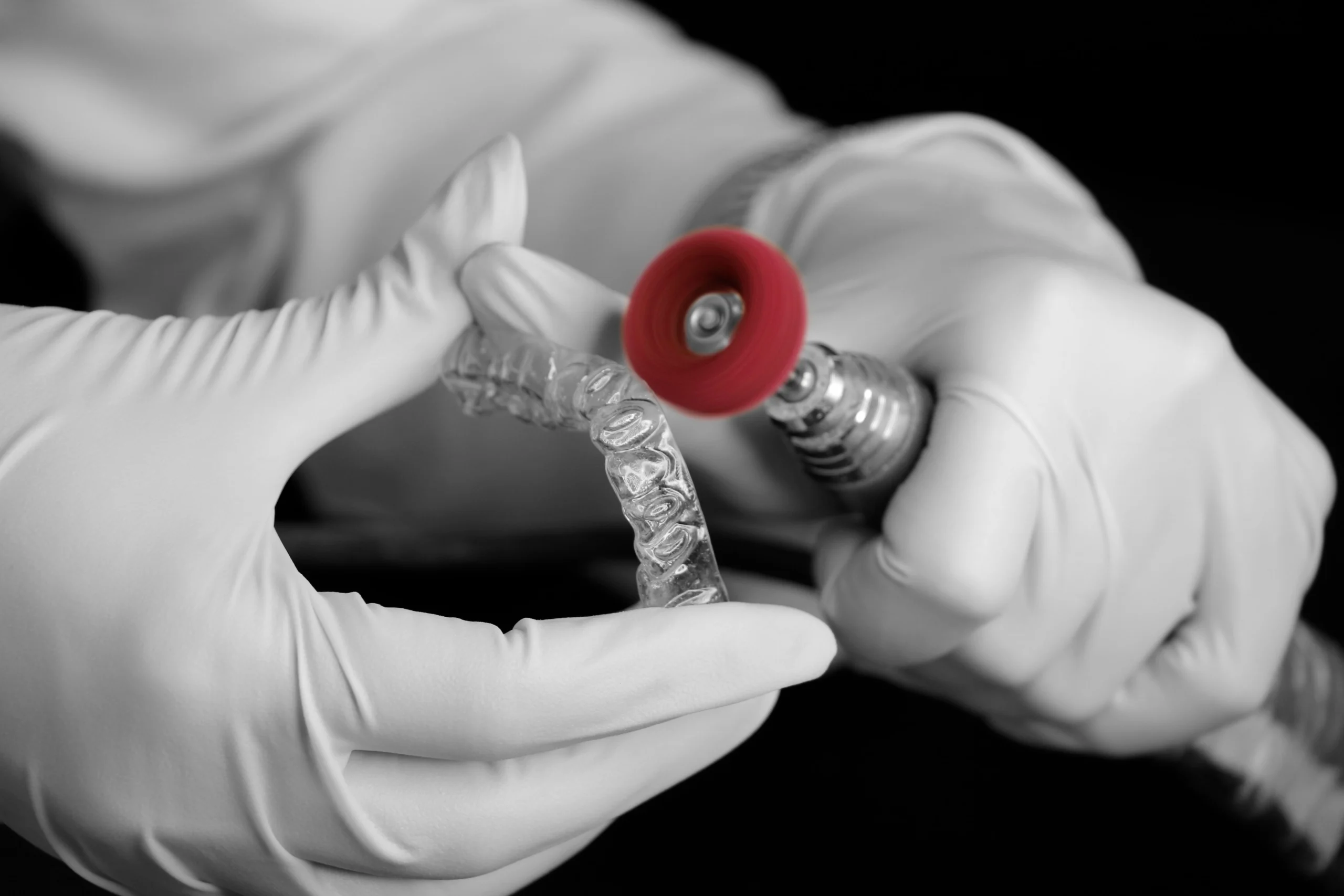
Named options with real specifications: Sentinel runs 2 mm across its Comfort guard in soft EVA at $165 and its Hybrid at $190. Its Hard Guard in copolyester runs $215, and a 3 mm Durability Guard at $235 targets dentist-confirmed severe cases. ClearClub offers 1.3, 2 and 3 mm. Cheeky offers 1.5, 2 and 3 mm.
All three label those tiers by grinder severity, so translate for yourself. Pick the hardness that matches the clenching first. Then pick the thickness that matches how long you want it to last. If you are comparing specific products rather than materials, our picks by severity go through the named options in detail.
Anterior Guards and Front-Teeth-Only Devices
Search for a mouth guard for jaw clenching and you will run into the anterior bite splint, sold under names like the NTI-tss. It is a small device that covers only the front teeth and holds the back teeth out of contact. Your jaw generates far less force when the molars cannot meet. So the device reduces clenching intensity rather than just absorbing it, which is a genuinely different approach from a full-arch guard.
One thing is worth knowing about how that recommendation reaches you. On the first page of Google results for this question, the page arguing that an anterior bite splint is the best option for jaw clenching is published by a company that sells anterior bite splints. That does not make the claim wrong. It does mean you should look for the part they do not lead with.
The catch
The published systematic review of the NTI-tss device reports bite changes, including open bite, in roughly 5% of users. Standard guidance also limits how long it should be worn without supervision. Holding the back teeth apart every night is exactly the kind of thing that can let teeth drift. This is a dentist-fitted, dentist-monitored device. It is not something to order online because a product page recommended it. If it sounds like a fit for you, raise it at your next appointment.
What Your Guard Choice Does to the Insurance Claim
The material you pick also changes the code your dentist bills, which changes what your plan pays. Three codes matter here. D9944 covers a hard appliance on a full arch, D9945 a soft appliance on a full arch, and D9946 a hard appliance on a partial arch.
Here is the detail that surprises people: a dual-laminate guard bills as D9944, the hard code, not the soft one. This is not a gray area. The ADA’s own coding guidance states that an appliance containing both hard and soft components is properly reported as a hard appliance. The determining factor is the material that contacts the occlusal surface, the part your teeth actually bite against. A soft liner underneath a hard biting surface does not make it a soft appliance for billing. An anterior device bills as D9946, partial arch, and some plans treat partial-arch appliances differently from full-arch ones.
None of that changes which guard is right for your jaw, but it does affect the paperwork. For what plans generally cover, see whether dental insurance covers night guards. Real numbers on what you pay are in night guard cost with insurance. For the approval process, including predeterminations and appeals, see how to get insurance to pay for a night guard. If the terminology on your paperwork is confusing, occlusal guard versus night guard sorts out which words mean the same thing.
Daytime Clenching Is a Different Problem
Plenty of people who clench do it while awake, at a desk, in traffic, or mid-conversation. That is a separate behavior from what happens during sleep. A 2 mm nighttime guard is not a realistic answer for it. You cannot talk normally through one, and almost nobody sustains the habit of wearing a bulky appliance through a workday.
What tends to work instead is habit interruption. Keep your teeth apart unless you are actually chewing. The resting position of a relaxed jaw has the teeth slightly separated. Set a recurring reminder or leave a note where you will see it, and check in on your jaw each time. If the daytime clenching persists, a dentist can look at whether it ties back to stress, bite alignment, or the jaw joint. For the thin low-profile appliances some people use during the day, our product guide covers the daytime options.
Frequently Asked Questions
Does a night guard help with teeth clenching?
It helps with the damage, not the behavior. A guard prevents the cracks, fractures and wear that clenching causes, and most people report less morning jaw soreness. The Cochrane review found insufficient evidence that splints reduce the bruxism itself.
Is a hard or soft night guard better for clenching?
Hard, based on the available evidence. A 1987 JADA study found a hard splint significantly reduced overnight muscle activity in eight of ten subjects. The soft splint increased it in five of ten. A soft surface gives a clenching jaw something to bite into.
How thick should a night guard be for clenching?
Two millimeters suits most people, with 3 mm for heavy or dentist-confirmed severe cases. For clenching, thickness mainly determines how long the guard lasts. Hardness is what affects the muscle response, so choose material first.
What is the best mouth guard for clenching teeth?
A hard or dual-laminate custom guard from an online lab or a dentist. For named products ranked by severity, with prices and the cases where each pick is wrong, see our guide to the best night guard for teeth grinding and clenching.
Can a night guard make clenching worse?
A soft guard can increase muscle activity in some people. That is what the 1987 comparison found in half its subjects. If your jaw feels worse after switching to a soft guard, that effect is real and documented, and worth raising with your dentist.
What is the difference between clenching and grinding?
Clenching is a sustained squeeze lasting more than two seconds. It loads teeth straight down and causes cracks and jaw fatigue. Grinding is rhythmic bursts of 0.25 to 2 seconds that slide teeth across each other, causing visible wear. Many people do both.
The Bottom Line
If you clench, the decision rule is short. Choose a night guard for clenching on hardness first and thickness second, and treat it as protection rather than a cure. That inverts how nearly every buying guide is organized. Those guides are written for grinders, and grinding is a genuinely different problem. A 2 mm hard or dual-laminate guard covers most clenchers well. Move to 3 mm if a dentist has confirmed severe bruxism. If you have jaw pain, locking, or clicking, see a dentist before buying anything. Those symptoms need a diagnosis, not a product. For the full picture on types, costs and buying routes, start with our complete night guard guide. Once you have one, keeping it clean determines how long it lasts.
This guide is general information, not dental advice. Persistent jaw pain, locking, or clicking should be evaluated by a dentist before you buy any appliance.