
Some links on this page are affiliate links. If you buy through them, we may earn a commission at no extra cost to you, and it never affects our recommendations. See our affiliate disclosure.
How do you clean a night guard? Rinse it every morning with cool water and a soft toothbrush, then deep clean it once a week with vinegar, hydrogen peroxide, or a denture tablet, whichever one matches the problem you actually have. Every dental blog says roughly the same three steps and stops there. This guide goes one step further: which method fixes tartar, which one fixes odor, whether Dawn is safe to use, whether an ultrasonic cleaner is worth buying, and the point where cleaning stops being the answer.
Key Takeaways
- Rinse and brush your guard every morning with a soft toothbrush and mild soap, never toothpaste, which is abrasive enough to scratch the plastic.
- Deep clean it once a week. Vinegar breaks down mineral and tartar buildup. Hydrogen peroxide targets odor and bacteria. Denture tablets are the mildest, no-mixing option.
- Plain, unscented dish soap like Dawn is fine for the daily brush step. Antibacterial or heavily scented versions can leave residue.
- Never use hot water, bleach, alcohol-based mouthwash, or the dishwasher. All four break down the plastic or warp the fit.
- If a guard still smells or looks stained after a proper weekly deep clean, or it no longer fits snugly, that is a replacement problem, not a cleaning one.
The Daily Cleaning Routine (Every Morning)
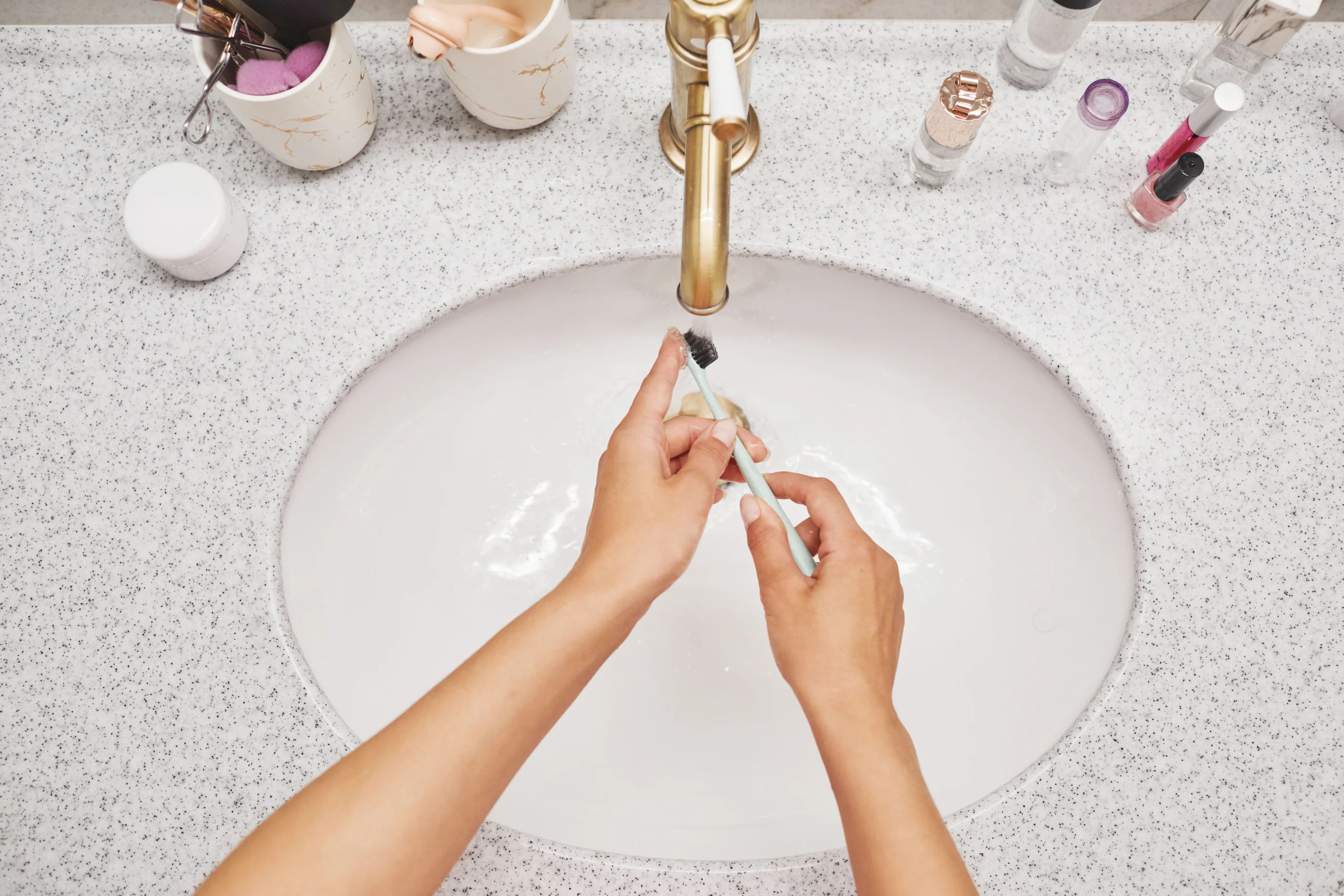
Rinse your guard in cool or lukewarm water the moment you take it out. This washes away saliva and loose debris before it has a chance to dry and stick. Then brush it gently with a separate, soft-bristled toothbrush and a drop of mild dish soap or fragrance-free hand soap. Skip regular toothpaste here. It is formulated to be mildly abrasive against enamel, which is exactly what scratches a plastic night guard and gives bacteria more surface to cling to.
Let it air dry completely, 15 to 30 minutes on a clean towel, before you put it back in its case. A guard that goes into its case still damp traps moisture, and a damp, enclosed space is what actually breeds the bacteria that cause odor. If you wear a soft or dual-laminate guard, brush a little more gently than you would a hard acrylic one. Softer materials are more porous and mark more easily under firm scrubbing.
Weekly Deep Cleaning: Vinegar vs. Hydrogen Peroxide vs. Denture Tablets
The daily rinse handles surface debris. Once a week, your guard needs a deeper soak, and which one you reach for should depend on the actual problem, not habit. Dental blogs tend to list all three methods as interchangeable. They are not quite.
| Method | Mix / ratio | Soak time | Best for |
|---|---|---|---|
| White vinegar soak | 1 part white vinegar to 3 parts water | 15 to 30 minutes | Mineral and tartar buildup, chalky white residue |
| Hydrogen peroxide soak | Equal parts 3% hydrogen peroxide and cool water | 10 to 15 minutes (30 max) | Odor and bacterial film |
| Denture or retainer tablet | One tablet in a glass of cool water, per package directions | As directed on the package | Convenience, no measuring or smell, the mildest of the three |
Rinse thoroughly after any soak, and never wear the guard straight out of the solution. If you see a chalky, white mineral buildup, that is tartar, and a vinegar soak is the right tool for it. If the problem is more about a smell that will not go away, hydrogen peroxide is the stronger choice because of how it oxidizes odor-causing bacteria rather than just loosening deposits. Denture tablets sit between the two: gentler than either soak, good for routine weekly maintenance once your guard is already in decent shape.
Can You Use Dawn or Other Dish Soap?
Yes. A drop of plain, original Dawn or another mild, unscented dish soap on your daily brush is safe and, honestly, what most dentists already recommend without naming a brand. What to avoid is antibacterial dish soap, anything heavily scented, or dye-added formulas, which can leave a residue or an aftertaste and, in rare cases, irritate the inside of your mouth. And regardless of which soap you use, keep it off the toothpaste. Toothpaste’s mild abrasives are built for enamel, not for the softer plastic a night guard is made from.
What Actually Kills Bacteria and Removes Tartar
These are two different problems with two different fixes, and conflating them is why generic cleaning advice feels vague. Bacteria and the odor they cause respond best to hydrogen peroxide’s oxidizing action in the weekly soak, backed by a consistent daily rinse that keeps buildup from starting in the first place. Tartar, the hard, chalky mineral deposit that forms from saliva, responds best to the acidity in a diluted vinegar soak, which breaks the mineral bond rather than just scrubbing at the surface.
If you are dealing with both at once, alternate weeks: vinegar one week for tartar, peroxide the next for odor and bacteria. Running both in the same session is not necessary and adds no real benefit over spacing them out.
Do Ultrasonic Cleaners Work?
Yes, as a convenience layer on top of the basics, not a replacement for them. An ultrasonic cleaner works by generating high-frequency sound waves in a small water bath. Those waves create microscopic bubbles that collapse against the guard’s surface and loosen debris from crevices a toothbrush bristle cannot reach. Some units add a UV light stage on top, aimed at reducing bacteria on the surface after the ultrasonic cycle finishes.
Are they worth buying?
If you already keep up with the daily rinse and a weekly vinegar, peroxide, or tablet soak, an ultrasonic cleaner is not required. It is genuinely useful for people who want a consistent, low-effort routine, or who travel and want a compact all-in-one option. Treat it as an add-on to the fundamentals above, not a shortcut past them, and check current stock and pricing before buying, since availability on these devices shifts.
Cleaning Mistakes That Damage a Night Guard
Never use hot or boiling water on a night guard. Heat is what warps the plastic and quietly ruins the fit you paid for, whether the guard came from a dentist or an online lab. Skip bleach and alcohol-based mouthwash too. Both break down the material over repeated use, even if a single exposure looks harmless.
The dishwasher is not a shortcut. Between the heat and the detergent, it does the same damage as hot water and bleach combined, just faster. And do not forget the case itself. Wash it with dish soap every few days and let it dry fully. A perfectly clean guard stored in a dirty case picks up bacteria again almost immediately, which undoes the point of the whole routine.
When Cleaning Isn’t Enough: Signs It’s Time to Replace
A night guard that still smells or looks stained after a real weekly deep clean, done correctly and consistently, is not a cleaning failure. It is a sign the guard itself has reached the end of its useful life. The same goes for one that has cracked, thinned at the bite points, or stopped fitting snugly. At that point, no soak fixes it, and continuing to wear a guard that does not seat properly protects your teeth poorly.
If you are at that point, a custom night guard from an online lab like Sentinel runs $165 to $235, well under the $300 to $800 or more a dentist-made guard typically costs. For the full cost breakdown by material and where you buy, see what a night guard actually costs, and for picks matched to how hard you grind, see the best night guard for teeth grinding. If your plan might help with the cost, check whether dental insurance covers night guards before you buy.
Frequently Asked Questions
How often should you clean your night guard?
Rinse and brush it every morning after you take it out. Deep clean it once a week with a vinegar soak, a hydrogen peroxide soak, or a denture tablet, and wash the storage case itself every few days.
Can I use Dawn to clean my mouthguard?
Yes. Plain, unscented Dawn or another mild dish soap is fine for the daily brush step. Avoid antibacterial or heavily scented versions, which can leave a residue.
What kills bacteria on a night guard?
A weekly hydrogen peroxide soak is the main at-home method that directly targets bacteria and odor. A consistent daily rinse prevents buildup from starting in the first place.
How do I remove tartar from my night guard?
Soak it in a diluted white vinegar solution, one part vinegar to three parts water, for 15 to 30 minutes. The acidity breaks down the mineral buildup that causes tartar.
Can I put my night guard in the dishwasher?
No. The heat and detergent in a dishwasher break down the plastic and can warp the fit, the same way hot water and bleach do separately.
Is it safe to clean a night guard with mouthwash?
Only an alcohol-free mouthwash, and only occasionally. Alcohol-based mouthwash dries out and gradually degrades the material with repeated use.
The Bottom Line
Rinse and brush every morning with a soft toothbrush and mild soap, deep clean once a week with the method that matches your actual problem, and keep heat, bleach, and the dishwasher away from the guard entirely. Watch for the point where cleaning stops working. That is not a routine problem, it is a replacement one. For the full picture on buying, materials, and cost, see the complete night guard guide.
This guide is general information, not dental advice. If you have ongoing mouth irritation or a guard that no longer fits despite regular cleaning, a dentist can check the fit and rule out other issues.