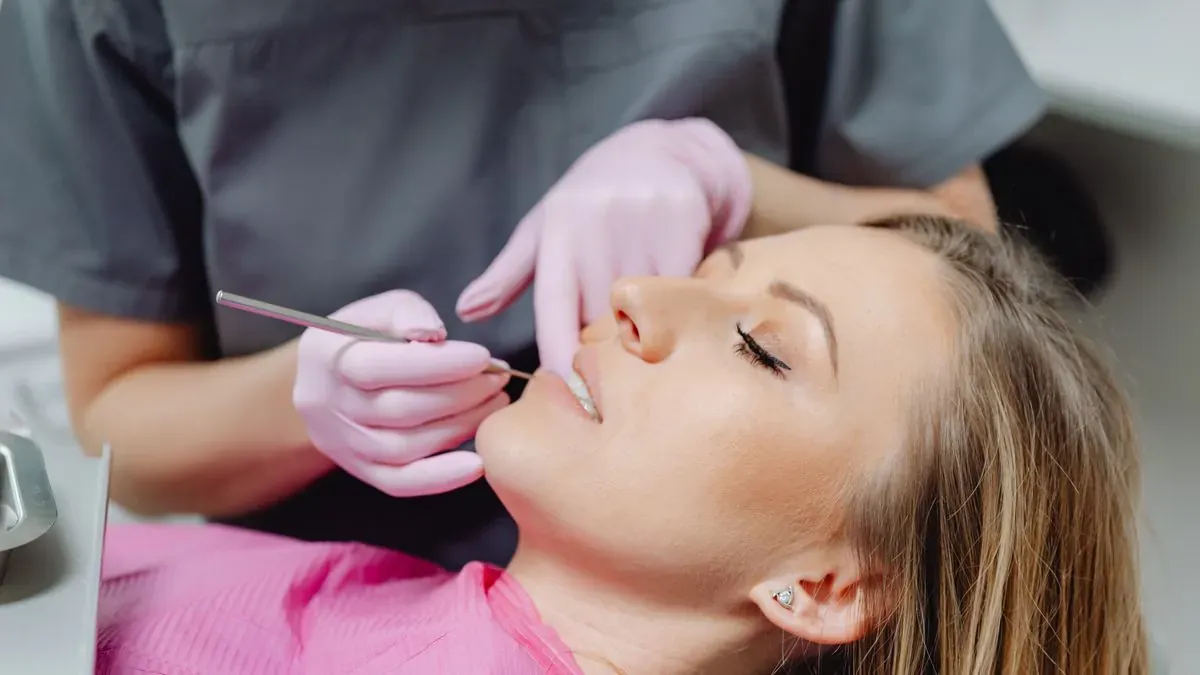
Can a night guard shift your teeth? A hard guard that covers every tooth in one arch rarely does when you wear it only at night. The risk comes from other devices that people also call mouth guards. By contrast, guards that cover only the front teeth, store-bought guards that leave teeth uncovered, and sleep apnea mouthpieces that push the jaw forward can all change your bite. The last group is the only one with measured tooth movement in trials.
Key Takeaways
Can a Night Guard Shift Your Teeth? It Depends on the Device
"Night guard" covers several appliances that work in very different ways. So the question that matters is which teeth the device covers and which way it pushes your jaw. Here's how the four common types compare.
| Device | What it covers | Evidence that it moves teeth | Who should check it |
|---|---|---|---|
| Full-coverage hard night guard (custom or lab-made) | Every tooth in one arch | Unlikely with night-only wear, per a systematic review | Your dentist at regular checkups |
| Front-teeth-only device (NTI-type) | A few front teeth | Trial and case reports of bite changes, an open bite and loose front teeth | A dentist, with planned follow-up visits |
| Store-bought or boil-and-bite guard | Often uneven, may skip back teeth | Specialist case reports; no trials | You, then a dentist if your bite feels different |
| Sleep apnea or snoring mouthpiece | Both arches, jaw held forward | Measured in trials and meta-analyses | A dentist trained in sleep appliances, for as long as you wear it |
Sources are linked in each section below. The clinical name for a full-coverage guard is an occlusal splint or stabilization splint; our guide to occlusal guards vs. night guards sorts out the terms.
Full-Coverage Night Guards: Unlikely at Night, With One Catch
A full-coverage guard is designed to spread the force of grinding across every tooth it covers, rather than push on a few. Also, insurers don't treat it as an orthodontic device. UnitedHealthcare's 2026 dental policy states that occlusal guards are not indicated "as an appliance intended for orthodontic tooth movement" (UHC DCP019.13 (opens in a new tab)).
The best evidence comes from a 2008 systematic review in BMC Oral Health (opens in a new tab). Its authors wrote that if a stabilization guard "is worn at night only," an appliance-induced bite change is "unlikely." The rare bite change they flagged came after full-time use. In other words, the risk grows when the guard stays in day and night.
Still, a well-made guard can press on a tooth. The same review says this tension "can mostly be eliminated by careful adjustments." So pressure isn't a reason to stop protecting your teeth. Instead, it's a reason to have the guard trimmed.
Front-Teeth-Only Devices: Where Bite Changes Get Documented
Some devices cover only a few front teeth, which keeps the back teeth apart and limits how hard you can clench. For instance, the NTI-tss is the best-known one. Because the back teeth sit free, though, the bite can change around the device.
The same systematic review collected the problems reported in trials and case reports. Among them, one patient developed an open bite after wearing the device 24 hours a day for an extended period. In one trial, 1 of 14 patients had a measurable bite change, with the front overlap reduced by one millimeter. Other cases also describe loose upper front teeth with local bone loss. As a result, the authors advised choosing this device only when the patient will keep follow-up appointments. Our guide to night guards for clenching explains when a dentist might still use one.
Store-Bought Guards and Uncovered Teeth
A store-bought guard can shift your bite when it leaves teeth uncovered. John E. Dinan, an orofacial pain specialist in New York, describes the mechanism: when back teeth aren't covered, "they may slowly rise upward," which changes how your teeth meet (New York TMJ & Orofacial Pain (opens in a new tab)). However, he adds that bite changes "often improve once you discontinue the poorly fitting appliance."
No trial has measured how often this happens, so treat it as a known risk rather than a rate. Still, the practical point is simple: a guard should cover every tooth in the arch and sit evenly. Our comparison of custom and boil-and-bite night guards also covers fit in detail.

A snoring or sleep apnea mouthpiece pulls the jaw forward every night, and that is the device with measured tooth movement.
Sleep Apnea and Snoring Mouthpieces Do Move Teeth
A sleep apnea mouthpiece, called a mandibular advancement device, holds your lower jaw forward to keep your airway open. Because the teeth anchor that pull every night, they slowly move. In fact, this is the one device where tooth movement is well measured.
A 2025 meta-analysis in the Journal of Prosthodontics (opens in a new tab) pooled 23 studies of people who wore these devices for six months or longer. On average, the overlap of the front teeth decreased by 0.87 mm vertically (overbite) and 0.86 mm horizontally (overjet). Moreover, both kept decreasing over the years. A randomized trial in Clinical Oral Investigations (opens in a new tab) compared a mouthpiece with CPAP for about two years:
Over two years, the mouthpiece moved the bite at least seven times more than CPAP on every measure.
Chart description
In a randomized trial, overbite decreased 1.2 mm with a mouthpiece and 0.1 mm with CPAP. Overjet decreased 1.5 mm and 0.2 mm. The front-to-back bite shifted 1.3 mm and 0.1 mm.
None of this means you should stop treating sleep apnea. Instead, the trial's authors call it a lifelong treatment that needs a dentist's follow-up. The AASM and AADSM guideline (opens in a new tab) agrees: it suggests dentist oversight "to survey for dental-related side effects or occlusal changes."
These mouthpieces are also billed differently. For example, Medicare covers a custom one (code E0486) only after a qualifying sleep test, and a licensed dentist must provide and bill it. A prefabricated one (E0485) is denied as not reasonable and necessary (CMS LCD L33611 (opens in a new tab)).
Signs Your Guard Is Moving Your Teeth
Some soreness in the first weeks is common while you adjust. But if you're asking "can a night guard shift your teeth" because your bite already feels different, look for these signs and bring the guard to your dentist:
- your teeth don't meet the way they did, and it doesn't settle once you've been awake for a while;
- your front teeth no longer touch, or only one side of your mouth makes contact;
- one tooth feels sore, loose or pushed every time you put the guard in;
- new gaps open between teeth, or a retainer stops fitting;
- jaw pain gets worse instead of better after the first few weeks.

A tooth that feels pushed or sore every time the guard goes in is a reason for an adjustment, not for wearing the guard longer.
Meanwhile, don't start wearing the guard during the day to "fix" the problem, since full-time wear is what raises the risk. If you just finished braces, a guard can't hold your teeth in place; our guide to night guards vs. retainers explains why.
Other Night Guard Side Effects
Beyond the bite, a few other side effects are common, and most are short-lived:
- Sore teeth or jaw at first. These usually ease as you adjust, and a trim fixes a guard that presses on one spot.
- More saliva or a dry mouth. The 2008 review calls changes in saliva "usually short-lasting."
- Gum irritation or odor. These usually trace back to cleaning. Our guide to cleaning a night guard covers what works.
- More jaw muscle activity with a soft guard. One small study (opens in a new tab) found it in half its participants, though a 2024 review (opens in a new tab) found no clear effect. Our clenching guide weighs both.
For the full list of downsides and alternatives, see our dental night guard guide.
What Insurance Pays to Fix a Guard That Doesn't Fit
Fixing a guard is billed separately from making one. UnitedHealthcare's 2026 policy lists four related dental codes:
- D9943 for an occlusal guard adjustment;
- D9942 for a repair or reline;
- D9936 for cleaning and inspecting a guard, which UnitedHealthcare added to the list in 2026;
- D9944 to D9946 for the guard itself, by material and coverage.
However, plans decide separately whether each code is covered and how often. So before an adjustment, ask your dentist two things. First, is the adjustment included in what you paid for the guard? Second, if not, will your plan pay for D9943? Meanwhile, our guides to night guard coverage and the cost with insurance cover the guard itself.
If You're Worried, Pick a Guard That Covers Every Tooth
The guard least likely to move your teeth is a hard or dual-laminate guard that covers every tooth in the arch and fits evenly. See a dentist first if you have loose teeth, gum disease, a recent crown or bridge, jaw pain that's getting worse, or braces you just finished. In that case, have the guard checked in your mouth, not just made from an impression.
Otherwise, a lab-made custom guard from an impression kit is a reasonable middle route. Our picks by grinding severity compare the options.
Frequently Asked Questions
Can a night guard change your bite?
A full-coverage guard worn only at night rarely does, according to a systematic review. Instead, bite changes are documented with front-teeth-only devices, store-bought guards that leave teeth uncovered, and sleep apnea mouthpieces. Full-time wear also raises the risk.
Can a mouth guard stop teeth from shifting?
Not reliably. A night guard isn't built to hold teeth in position, and UnitedHealthcare's policy says guards aren't meant for orthodontic tooth movement. Instead, after braces you need a retainer.
Will my bite go back to normal if I stop wearing the guard?
Often, yes. An orofacial pain specialist reports that bite changes from a poorly fitting guard often improve once you stop using it. Some cases still need orthodontic or restorative work, so have a dentist check before you replace the guard.
How many hours should I wear a night guard?
Wear it while you sleep, unless your dentist prescribes more. The 2008 systematic review linked the rare bite changes from full-coverage guards to full-time use, not night-only wear.
Can a boil-and-bite guard move your teeth?
It can if it fits unevenly or leaves some teeth uncovered, since those teeth can drift. However, no trial has measured how often that happens. A guard that covers every tooth and sits evenly lowers the risk.
The Bottom Line
So, can a night guard shift your teeth? A full-coverage guard worn only at night rarely does. The documented changes come from front-teeth-only devices, guards that leave teeth uncovered, and sleep apnea mouthpieces, which need a dentist's follow-up for as long as you use them. If your bite feels different, bring the guard to your dentist and ask about an adjustment before you buy a new one.
This guide is for general information and isn't medical or dental advice. If your bite has changed or your jaw hurts, see a dentist.
Sources
- Stapelmann H, Türp JC. The NTI-tss device for the therapy of bruxism, temporomandibular disorders, and headache: a qualitative systematic review. BMC Oral Health, 2008
- Chen Y, Alhozgi AI, Almeida FR. Dentoskeletal changes of long-term oral appliance treatment in patients with obstructive sleep apnea: a systematic review and meta-analysis. Journal of Prosthodontics, 2025
- Doff MH et al. Long-term oral appliance therapy in obstructive sleep apnea syndrome: a controlled study on dental side effects. Clinical Oral Investigations, 2013
- Ramar K et al. Clinical Practice Guideline for the Treatment of Obstructive Sleep Apnea and Snoring with Oral Appliance Therapy: An Update for 2015. AASM and AADSM
- CMS: Local Coverage Determination L33611, Oral Appliances for Obstructive Sleep Apnea
- UnitedHealthcare Dental Clinical Policy DCP019.13: Occlusal Guards (effective January 1, 2026)
- New York TMJ & Orofacial Pain: Can a Store-Bought Nightguard Change Your Bite? (December 2025)
- Okeson JP. The effects of hard and soft occlusal splints on nocturnal bruxism. JADA, 1987
- Ferreira GF et al. Influence of occlusal appliances on the masticatory muscle function in individuals with sleep bruxism: a systematic review and meta-analysis. European Journal of Oral Sciences, 2024