

Some links on this page are affiliate links. If you buy through them, we may earn a commission at no extra cost to you, and it never affects our recommendations. See our affiliate disclosure.
How much does a night guard cost with insurance? On a plan that covers occlusal guards, usually $150 to $500 out of pocket at the dentist. The plan pays a percentage, often 50%, of its own allowed amount rather than the dentist’s fee, after your deductible, and only up to your remaining annual maximum. The final bill is almost always more than half the quote.
Below you will find three worked examples with real numbers, why the bill differs from the estimate, what a replacement costs, whether insurance actually saves money here, and what you pay with no coverage.
Key Takeaways
- With insurance, a dentist night guard usually costs $150 to $500 out of pocket, set by the coverage percentage, the deductible, the allowed amount, and your remaining annual maximum.
- The plan pays its percentage of the allowed amount it sets, not the dentist’s fee. On a $600 fee that is often a $475 base, so 50% coverage pays about $212, not $300.
- If your annual maximum is nearly used from other work this year, you pay more of the guard yourself.
- Ask the dentist to bill D9944, D9945, or D9946. The old code D9940 was retired in 2019 and a claim filed with it is denied.
- Insurance pays for one guard every three to five years. A replacement inside that window is your full cost.
- When your plan pays 50% of a low allowed amount, an uncovered online guard at $95 to $165 can cost less than the “covered” one.
Night Guard Cost With Insurance: the Realistic Range
Where a plan covers occlusal guards, the night guard cost with insurance lands between $150 and $500 out of pocket at the dentist. Four things set the exact number: the coverage percentage (often 50%, sometimes 70% or 80% on a basic-tier plan), your annual deductible, the plan’s allowed amount, and how much of your annual maximum is still available.
This assumes your plan covers guards at all. As Humana notes, not all plans pay for night guards, and many basic and budget plans exclude them. Our guide on does dental insurance cover night guards explains how to check. The rest of this page shows the arithmetic once coverage is confirmed.
Three Worked Examples
These figures are an illustration built from the standard framework, not a quote for your plan. Use them as a template and swap in your own numbers.
A clean case
Say the dentist fee is $600, your plan covers occlusal guards at 50% under major services, you have not met your $50 annual deductible, and your full $1,500 annual maximum is available. The plan’s allowed amount for the guard is $475. First, $50 comes off for the deductible, leaving $425. The plan pays 50% of $425, which is $212.50. You pay the $50 deductible plus $212.50 in coinsurance plus the $125 gap between the $600 fee and the $475 allowed amount, for a total of $387.50. Your annual maximum drops by $212.50.
When your annual maximum is nearly used
Same $600 fee, but a crown and two fillings earlier this year already used most of your $1,500 maximum, leaving $150. The plan still calculates $212.50, yet it can only pay the $150 that remains. You pay $450, and your maximum is now spent for the year.
A plan that covers guards under basic services
By contrast, a few plans file occlusal guards as basic at 80% with no waiting period. On the same $475 allowed amount, $50 comes off for the deductible, leaving $425. The plan pays 80% of $425, which is $340. You pay $260. This is the best common case.
Why Your Bill Won’t Match the Estimate
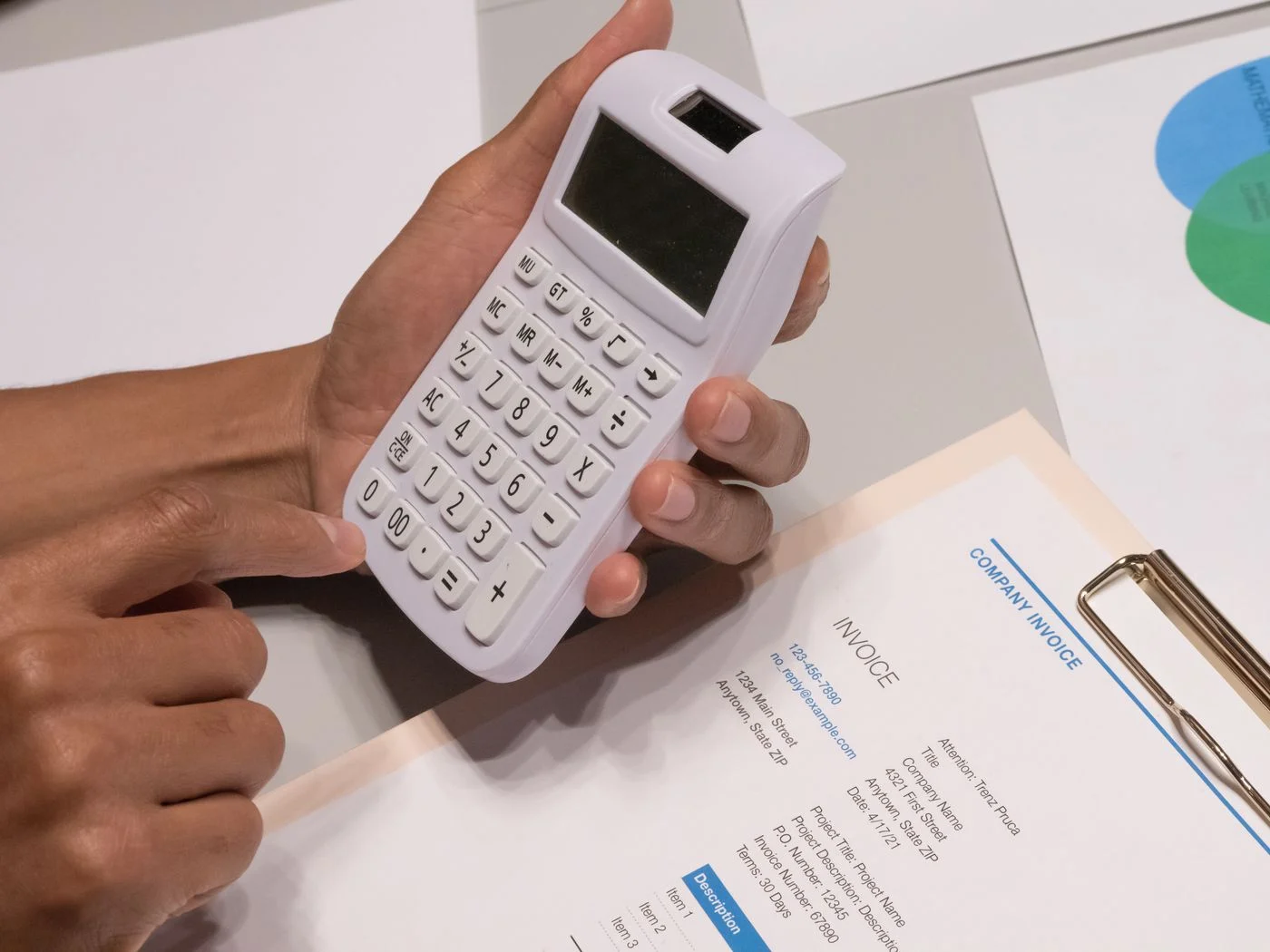
In practice, the dentist quotes one fee while the insurer pays from a different number, its own allowed amount, also called the usual and customary rate or the plan’s fee schedule, which is almost always lower than the fee.
If your dentist is in network, the practice has agreed to write off the difference, so you only owe your share of the allowed amount. If your dentist is out of network, you can be balance-billed for the gap between the fee and the allowed amount. That gap is the single most common reason an explanation of benefits does not match the treatment estimate. Ask which network status applies before you agree to the guard. On the $600 example above, an in-network dentist leaves you owing your $387.50 share, while an out-of-network dentist could add the $125 write-off on top, for about $512.
Ask for the Right Billing Code
The correct codes for a custom occlusal guard are D9944 (hard, full arch), D9945 (soft, full arch), and D9946 (hard, partial arch). A later adjustment bills as D9943. For the full sequence from a documented diagnosis through an appeal, see how to get insurance to pay for a night guard.
However, Google’s AI answer and several older pages still tell you to ask for code D9940. That code was retired from the dental code set on January 1, 2019, and a claim filed with it today is denied. So if an estimate shows D9940, ask the office to update it before submitting.
Also ask the dentist to file a predetermination, a pre-treatment estimate the carrier answers in writing before the guard is made. A useful predetermination request confirms three things: the allowed amount the plan uses for the code, the coverage percentage that applies, and how much of your annual maximum is still open. With those three numbers you can predict the bill within a few dollars. For a denied claim, our appeal guide is coming.
Does Insurance Pay for a Replacement?
Most plans that cover a guard pay for one every 36 to 60 months. A replacement inside that window is your full cost at the dentist, even if the guard cracked or you lost it.
Still, two responses keep that cheap. Keep the worn guard as a backup rather than throwing it out, and buy a low-cost online spare at $95 to $165 instead of a second full-price dentist guard. The covered-replacement clock starts on the date of service of your last D9944 claim.
Is a Night Guard Cheaper With or Without Insurance?
Not always cheaper with insurance. Run the comparison before you assume coverage helps.
If your plan pays 50% of a $400 allowed amount after a $75 deductible, your dentist share is roughly $237 plus any balance bill, and the guard also uses about $162 of your annual maximum that a filling or crown might need later in the year. An uncovered custom guard from an online lab runs $95 to $165 with no claim, no waiting period, and no draw on the cap. Sentinel Mouthguards prices its guards from $165 to $235, and ClearClub, SportingSmiles, and Chomper Labs start near $95 to $119.
The dentist guard still earns its premium for heavy grinding with existing tooth damage, a complex bite, or TMJ under treatment, where the professional fit and adjustments matter. For that judgment, see the dental night guards guide. For the full cash breakdown by route, see how much does a night guard cost.
What You Pay Without Insurance
Night guard cost without insurance runs $15 to $50 at the drugstore, $95 to $235 from an online custom lab, and $300 to $800 or more at the dentist. Our full cost guide breaks down each route, and our custom night guard vs boil-and-bite comparison covers which route is worth it.
Three ways to soften a no-coverage bill:
- HSA or FSA money. A night guard treats bruxism, so it counts as a qualified medical expense under IRS rules, from a dentist or an online lab. Our guide on HSA and FSA rules for dental work covers the mechanics.
- A dental school clinic. A student-made guard under faculty supervision runs roughly $100 to $250.
- A discount plan. A membership on the Careington or Aetna Dental Access network takes roughly 20 to 50 percent off the occlusal-guard fee. 1Dental is one such plan, with no waiting period. You pay the discounted fee yourself, so confirm your dentist participates first. See a dental discount plan versus insurance.
Frequently Asked Questions
How much does a night guard cost with insurance?
Usually $150 to $500 out of pocket at the dentist, on a plan that covers occlusal guards. The plan pays a percentage, often 50%, of its allowed amount after your deductible, up to your remaining annual maximum, so the bill is more than half the fee.
Why did my dentist charge more than my insurance estimate?
The dentist quotes a fee, but the insurer pays from its lower allowed amount. In network, you owe your share of the allowed amount. Out of network, you can be billed for the difference between the fee and the allowed amount, which is the usual reason the explanation of benefits surprises people.
What billing code does a dentist use for a night guard?
D9944 for a hard full-arch guard, D9945 for a soft full-arch guard, and D9946 for a hard partial-arch guard. D9943 covers a later adjustment. The older code D9940 was retired in 2019, so a claim filed with it is denied.
Does insurance pay for a replacement night guard?
Once every 36 to 60 months on most plans. A replacement inside that window is your full cost at the dentist, so keep the old guard as a backup or buy a low-cost online spare.
Is a night guard cheaper with or without insurance?
Not always cheaper with insurance. When your plan pays 50% of a low allowed amount, or your annual maximum is nearly used, the night guard cost without insurance from an online lab, about $95 to $165, can come in lower and carries no claim or waiting period.
Can I use HSA or FSA money for a night guard?
Yes. Because it treats a diagnosed condition, a night guard qualifies for HSA and FSA spending, with no letter of medical necessity needed, whether you buy from a dentist or an online lab. Keep the receipt with your tax records.
The Bottom Line
The night guard cost with insurance usually lands at $150 to $500, set by the coverage percentage, the deductible, the allowed amount, and your remaining annual maximum. Ask for a predetermination, insist on codes D9944 to D9946, and compare the after-insurance number against a $95 to $165 online guard before you commit. For heavy grinding with tooth damage or a complex bite, the dentist route earns the premium.