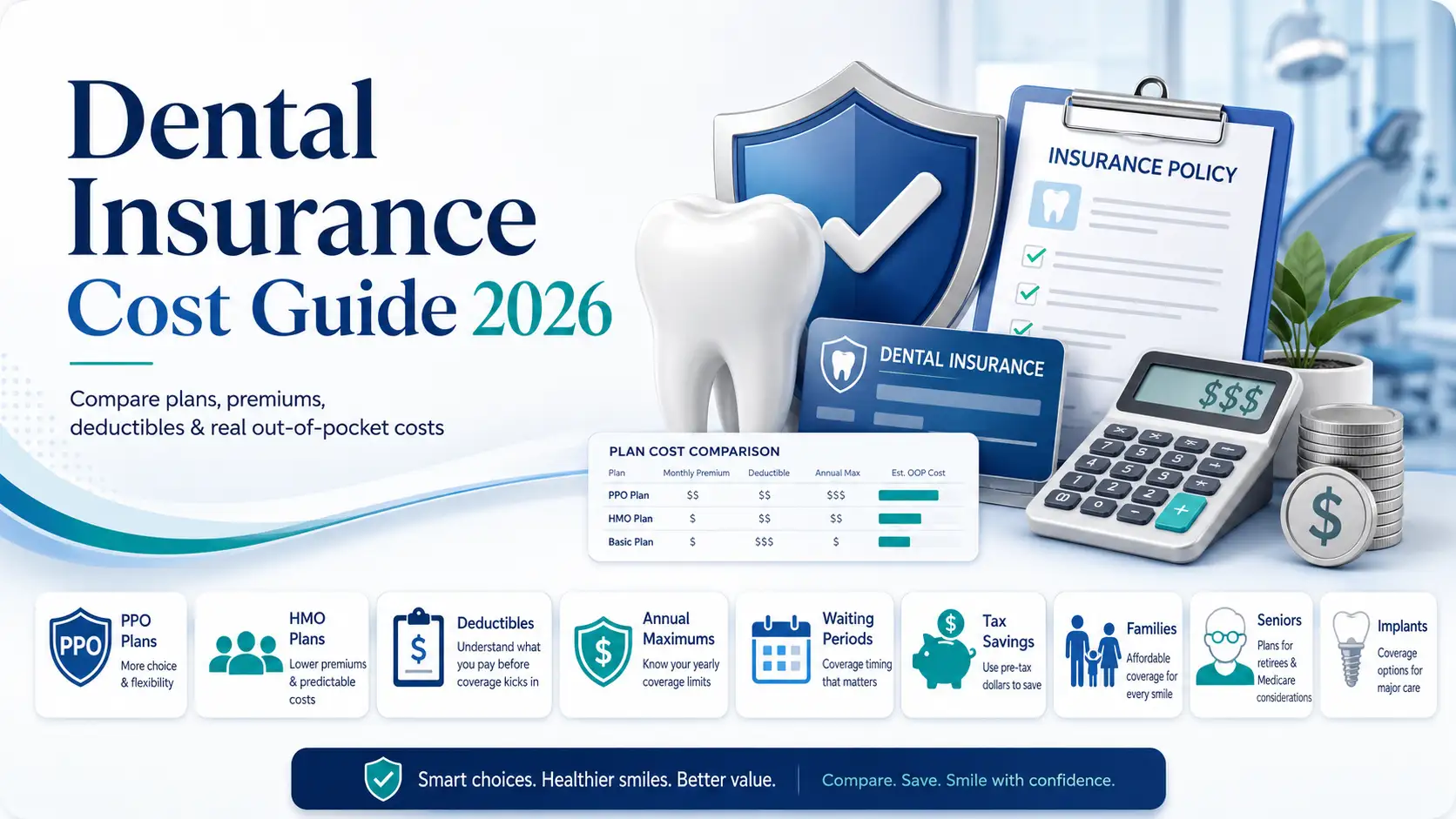
Dental insurance premiums, deductibles, annual maximums, waiting periods — dental plan costs have a lot of moving parts. The national average for an individual PPO plan runs around $30/month, but the number that matters is what you actually pay net of the tax deduction, after your specific deductible, for the procedures you actually need.
This hub covers every dimension of dental insurance cost: benchmark prices by plan type, cost breakdowns by life situation, the plan mechanics that drive your real bill, and the tax rules most people miss. Use the guides below to find the section that matches your situation.
Key Takeaways
Individual PPO dental plans average $27–$50/month; HMOs average $14–$22/month — premium tier matters more than carrier brand.
Standard annual maximums cap at $1,000–$2,000 per year; once you exceed that, you pay 100% of remaining costs out-of-pocket.
Most plans impose a 6–12 month waiting period on major work (crowns, root canals, dentures) — only Spirit Dental and select Ameritas tiers waive this.
Self-employed workers can deduct 100% of dental premiums on Schedule 1, Line 17 — effectively cutting the real monthly cost by their marginal tax rate.
A single root canal + crown averages $2,564 without insurance (Guardian/Synchrony, 2024) — more than six years of a $35/month plan.
What Does Dental Insurance Actually Cost?
The benchmark number most people start with is the monthly premium — but that is only one of five cost components. A plan with a low premium can still produce a higher real-world cost if it carries a large deductible, a low annual maximum, strict waiting periods, or weak major-service coverage.
PPO plans are the most common individual purchase despite higher premiums — driven by network flexibility. HMOs and discount plans offer lower entry costs at the expense of provider choice.
Plan type sets the price floor. From there, three factors widen or narrow the gap: your state, your age, and whether you are buying as an individual or through an association/employer. The guides below address each of these dimensions in detail.
Cost Benchmarks: What the Average Person Pays
These three guides establish the baseline numbers — what individual dental insurance actually costs across plan types, age groups, and employment situations. Start here if you are comparison shopping for the first time.
The definitive benchmark guide. Covers average monthly premiums by plan type (HMO, PPO, indemnity, discount), how state and age affect pricing, what deductibles and annual maximums to expect, and how to estimate your real annual out-of-pocket cost before you enroll. Includes data from CMS marketplace and MoneyGeek.
Read the average cost guide →
Self-employed workers face the full individual market without employer negotiation or subsidies. This guide breaks down what 1099 contractors, freelancers, and sole proprietors pay per month by plan tier and state, and how the Schedule 1 tax deduction changes the effective cost. Includes real marketplace price examples.
Read the self-employed cost guide →
Why does a plan that costs $22/month cover the same services as one that costs $48/month? This guide explains what drives premium differences — network size, coinsurance rates, coverage tiers (preventive/basic/major), annual maximum levels, and underwriting approach. Useful for comparing quotes side by side.
Read the premiums guide →
Cost by Situation: What You Specifically Pay
Average costs only tell you so much. Your actual premium depends on whether you are covering just yourself, a family, a senior parent, or whether you need implant-level coverage. These four guides break down costs by situation.
Family dental plans can cost anywhere from $50 to $180/month depending on the number of dependents and the plan type. This guide breaks down family pricing structures — shared vs. individual deductibles, embedded vs. aggregate maximums, and how the per-child premium stacks up against individual policies for each family member.
Read the family cost guide →
Seniors pay 30–40% more than younger adults for the same plan — and face a more complex decision between individual insurance, Medicare Advantage dental add-ons, and standalone discount plans. This guide covers what those higher costs look like in practice and which plan types offer the best value for adults 60+.
Read the seniors cost guide →
Buying dental coverage outside of an employer plan means paying the full premium yourself, with no pre-tax payroll deduction to soften the cost. This guide covers what the individual market actually costs in 2026, how COBRA dental compares, and what options exist for workers between jobs or in part-time roles without benefits.
Read the no-employer cost guide →
A single implant averages $3,000–$6,000 without insurance, but most standard dental plans cap implant coverage at 50% of a $1,500 annual maximum — leaving you with a large out-of-pocket balance regardless. This guide explains what implant-focused dental plans actually cover, what they cost, and when a discount plan makes more financial sense.
Read the implants cost guide →
Plan Mechanics That Drive Your Real Bill
Monthly premiums are visible. The costs that surprise people are the ones buried in plan documents: the annual maximum that stops coverage mid-year, the waiting period that delays your first crown claim, the cost calculation method that determines what the insurer actually pays. These guides explain the mechanics.
The annual maximum is the total dollar amount your dental insurer will pay in any 12-month period. Most individual plans set this at $1,000 to $2,000. Once you hit it, you are responsible for 100% of remaining costs — even mid-treatment. This guide explains how annual maximums work, how to find yours, and why a higher maximum costs more but may be worth it if you need major work.
Read the annual maximum guide →
The real cost of a dental plan is not the premium — it is the premium plus deductible plus your coinsurance share of every procedure you use, capped at the annual maximum. This guide walks through the exact math: how to estimate your likely annual spend, how to compare two plans head-to-head, and how to build a break-even analysis before you enroll.
Read the cost calculation guide →
Dental procedure costs have risen faster than general healthcare inflation for three consecutive years. This guide looks at what is driving the trend — material costs, lab fees, dentist shortage in rural areas, and post-pandemic demand — and what it means for how you should structure your coverage in 2026 and beyond.
Read the cost trend guide →
Reducing Your Dental Costs: Tax and Budget Strategies
The two guides below cover what to do when insurance is unaffordable and how to legally reduce your dental insurance cost through the tax code — topics that often get skipped in standard plan comparison guides.
Self-employed workers can deduct 100% of dental insurance premiums as a self-employed health insurance deduction — reducing taxable income dollar-for-dollar without needing to itemize. This guide covers IRS Form 7206, the Schedule 1 deduction, who qualifies, the S-corp two-percent shareholder rule, and how the deduction interacts with HSA and HRA accounts.
Read the tax rules guide →
When insurance is out of reach and dental work cannot wait, there are real options: dental school clinics (work at 50–70% off), Federally Qualified Health Centers (sliding-scale fees), CHIP/Medicaid dental for qualifying adults, and negotiated cash-pay pricing directly with dentists. This guide maps out each option with cost expectations and eligibility basics.
Read the no-money dental guide →
How much does dental insurance cost per month on average?
The national average for an individual dental plan is approximately $30/month for a PPO, with HMOs averaging closer to $18/month and indemnity plans running $35–$50/month. State, age, and plan tier all affect the final premium. Employer-sponsored dental costs employees considerably less — typically $5–$15/month — because the employer covers the majority of the premium.
Is dental insurance worth the cost?
For most people who visit the dentist at least once a year, yes — especially PPO plans where two cleanings and X-rays alone often exceed the annual premium. The calculus changes if you need major work: a plan with a $1,000 annual maximum will not cover a $4,000 dental bill regardless of what you pay in premiums. For major-work scenarios, implant-specific plans or discount plans may deliver better value than standard insurance.
What is a dental deductible and how much is it?
A dental deductible is the amount you pay out-of-pocket before insurance begins covering costs. Most individual dental plans set deductibles at $50 to $150 per year. Many plans waive the deductible for preventive services (cleanings, X-rays, exams) — so the deductible primarily affects basic and major services. Family plans often have a combined family deductible of $150–$300.
Do dental insurance costs go up with age?
Yes — most dental carriers use age-based rating, with adults 55+ typically paying 30–40% more than adults 30–40 for the same plan. Unlike health insurance under the ACA, dental insurance is not age-band limited, so carriers can apply steeper age adjustments. Dental insurance for older adults covers the pricing in detail and compares Medicare Advantage dental to standalone plans.
Can I get dental insurance with no waiting period?
A small number of carriers — most notably Spirit Dental and select Ameritas tiers — offer plans with no waiting periods on major services. Most standard plans impose a 6–12 month wait before covering crowns, root canals, or dentures, and some plans delay orthodontic coverage for 12–24 months. If you need work done soon, a no-waiting-period plan or a dental discount card may be a faster path to affordable care.