
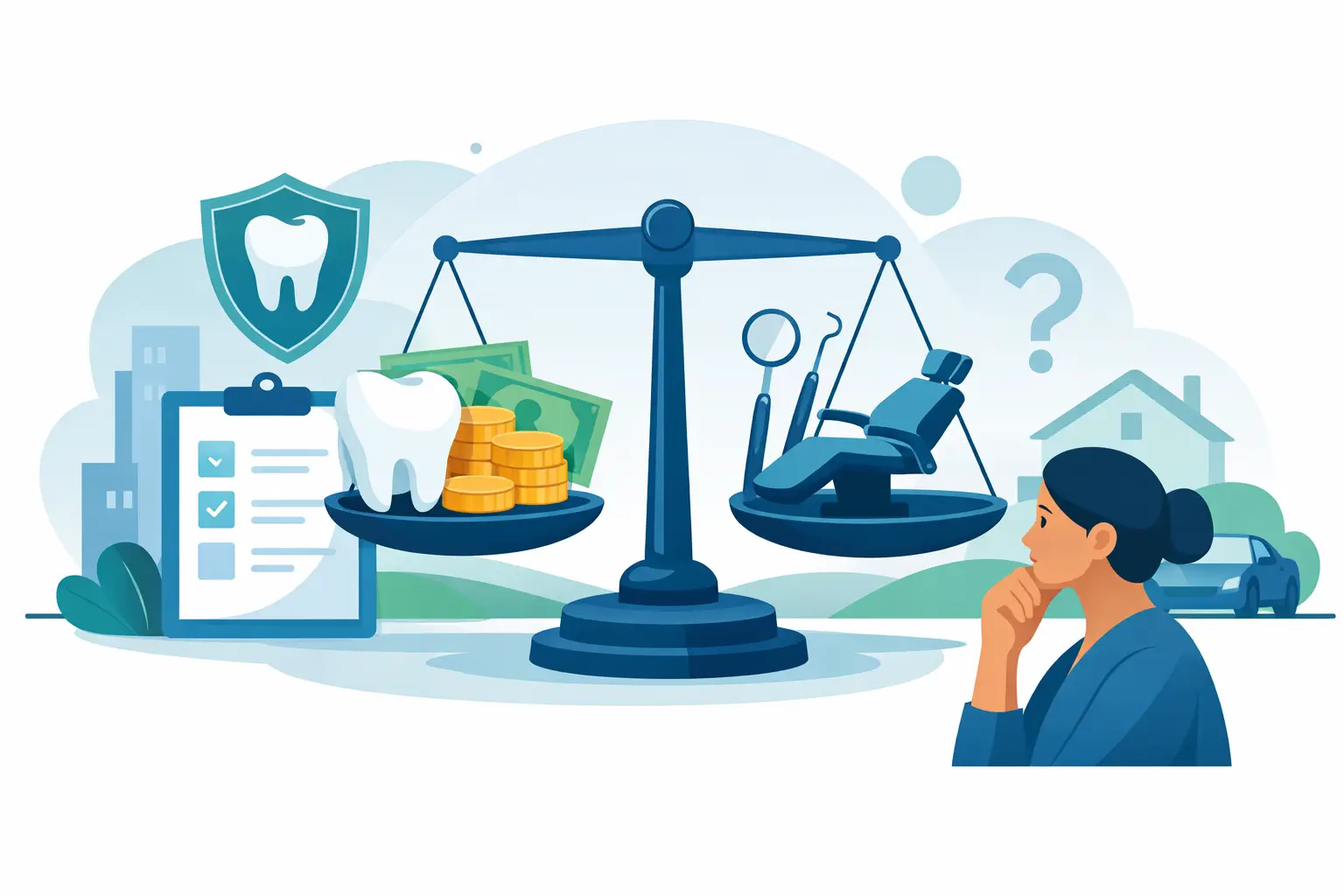
About 74 million Americans have no dental coverage at all, according to the American Dental Association’s Health Policy Institute (2024). Most of them are skipping the dentist, not because they don’t want to go, but because they can’t predict what it’ll cost. A single crown averages $1,093 to $1,430 nationally (FAIR Health, 2025). A root canal on a molar runs roughly $1,165. Two cleanings and an exam cost $300 to $500 per year at cash prices. A standard individual PPO plan costs $22 to $35 per month. Whether dental insurance is worth it comes down to one question: does what the plan pays out exceed what you pay in premiums, for your specific situation?
The answer isn’t the same for everyone. It depends on how often you use dental care, what procedures you expect to need, and whether your dentist is in-network. This guide works through the math for the most common scenarios.
- Dental insurance pays off most clearly when you get two cleanings per year and have occasional fillings. Two preventive visits cost $300-$500 cash; a $27/month plan covers them at 100% for $324/year.
- It rarely pays off in the first year for major work. Most plans have 12-month waiting periods on crowns and root canals — you’ll pay premiums for a year before the plan touches those procedures.
- Annual maximums ($1,000-$1,500 on most base plans) cap total benefits. One crown plus a root canal can exceed the full-year payout, regardless of how long you’ve been enrolled.
- For self-employed workers, the 100% Schedule 1 premium deduction changes the math. A $35/month plan costs roughly $27/month net at the 22% bracket.
The Break-Even Numbers That Decide Whether Dental Insurance Is Worth It
Dental insurance breaks even for most people who visit the dentist twice a year. Two cleanings, an exam, and X-rays cost $300 to $500 per year at typical cash prices, according to the American Dental Association’s Health Policy Institute (2024). A $27/month PPO plan covering preventive at 100% costs $324 per year. If your dentist’s cash price is $400 for the annual preventive package, the math already works in insurance’s favor before you factor in a single filling.
The break-even shifts once you add basic restorative work. Two composite fillings average $150 to $300 each at cash rates. A plan paying 80% on basic services after a 6-month wait reduces a $200 filling to roughly $40 out of pocket (plus the $50 deductible on first basic use). Add one filling to a preventive-only scenario and insurance usually wins by $100 to $200 per year.
This calculation looks different for seniors, who tend to need more major work per year and face different provider networks — see our dedicated best dental insurance for seniors guide for that comparison.
One number most people overlook: the network discount. Even on preventive visits covered 100% by insurance, your plan’s negotiated rate with the dentist is typically 15 to 30 percent below the dentist’s standard fee. That discount applies whether or not you’ve hit your deductible, and it narrows the gap between insurance and cash-pay even in low-use scenarios.
When Dental Insurance Is Worth It
Based on ADA Health Policy Institute data (2024), people with dental insurance are significantly more likely to visit the dentist at least once a year. The coverage doesn’t just pay claims. It changes behavior in ways that prevent more expensive problems down the line. That said, insurance delivers measurable financial value in three specific situations.
You get regular preventive care. Two cleanings, an exam, and bitewing X-rays cost $300 to $500 at cash prices nationwide. A $22 to $30/month PPO covers preventive services at 100% in-network from Day 1. No deductible, no waiting period. If your dentist’s cash rate for the annual preventive package is $380, a $25/month plan at $300/year already saves money. Add the network discount on the visits themselves, and you’re often paying less than cash even before the first filling.
You expect fillings or basic work this year. At 80% coinsurance after a 6-month waiting period, a plan cuts a $200 composite filling to roughly $40 to $60 out of pocket (after a $50 deductible on the first basic-service claim). Two fillings plus preventive care puts most mid-tier plans well ahead of cash-pay. The break-even accelerates with each additional basic procedure.
You want predictable monthly costs over unpredictable one-time bills. For freelancers, the self-employed, and anyone managing a variable income, this matters beyond the raw math. A $30/month premium is a known, plannable expense. A $600 dental bill that arrives unannounced is not. That cost predictability is worth something real, even when the actuarial math is close.
For a practical comparison of individual plan options, see our best dental insurance for self-employed workers guide.
When Dental Insurance Is Not Worth It

Standard dental insurance fails the math test in four situations that come up more often than you’d think.
You need a crown or root canal in the next 12 months. Most individual plans impose a 12-month waiting period on major restorative services. If you need a crown now, a standard PPO won’t cover it for a full year. You’ll pay 12 months of premiums while covering the crown entirely out of pocket. Total cost: $360 in premiums plus $1,100 to $1,400 for the crown. Cash-paying the crown without insurance costs the same amount and skips the premiums. In this case, a no-waiting-period dental plan or a dental savings plan is a better tool for the immediate need.
You rarely visit the dentist. If you go once a year or less and don’t get fillings, the math rarely works. One cleaning and exam at cash prices runs $150 to $200. A $22/month plan costs $264/year. You’re paying more for insurance than the care you’re receiving, and the network discount on a single visit doesn’t close the gap. Worth noting: this is also the scenario where preventive neglect tends to compound into more expensive problems over time.
The annual maximum is too low for your actual needs. Base-tier plans cap total annual benefits at $1,000 to $1,500. One crown averages $1,093 to $1,430 nationally (FAIR Health, 2025). A single crown can consume the full-year benefit before you’ve had a cleaning. If you expect significant restorative work, a plan with a $2,000 or higher annual maximum justifies the higher premium. A plan with a $1,000 max and a $50/month premium is often worse value than a plan with a $2,000 max and a $38/month premium.
Your preferred dentist is out of network on all plans worth buying. Out-of-network coverage on a PPO pays a percentage of the “allowed amount,” not the dentist’s actual fee. The dentist can bill the difference. If your dentist isn’t in any major carrier’s network, insurance coverage erodes significantly. Call the office before comparing plans. Ask which carriers they participate with. Network directories on carrier websites run 30 to 60 days behind real-world status.
How Plan Type Changes the Math
Not every dental plan works the same way, and the type you choose affects whether coverage makes financial sense at your usage level.
PPO plans ($19 to $45/month) give you the most flexibility. You can visit in-network dentists at negotiated rates or go out of network at a higher cost share. PPOs are the right choice if you want to keep your current dentist or prefer not to be restricted to a single provider list. Annual deductibles ($50 to $100) and annual maximums ($1,000 to $2,000) apply.
HMO/DHMO plans ($8 to $22/month) require you to choose a primary dentist from the plan’s network. No deductible, no annual maximum on most procedures, fixed co-pays per visit. The lower premium is real savings if there are strong participating dentists near you. For cleanings and basic work only, a DHMO often beats a PPO on total cost. The trade-off is restricted provider choice and the need to get referrals for specialists.
Dental savings plans ($8 to $15/month) aren’t insurance. You pay a membership fee and receive 20 to 50 percent off participating dentists’ listed fees. No waiting periods. No annual maximums. No claims to file. You pay the discounted fee yourself at each visit. These plans work best when you need work now and can’t wait out a 12-month insurance waiting period, or when your usage is too low to justify an insurance premium. For a detailed comparison, see our guide to dental savings plans vs insurance.
Dental Insurance After Losing Employer Coverage
Three groups face the “is it worth it” question most acutely — and each has a different answer based on timing and expected care.
Retirees (65+): Medicare Parts A and B cover almost no routine dental. A retiree needing two cleanings plus an annual exam pays $350–$500 at cash prices. A $30/month PPO costs $360/year and adds a safety net for crowns or extractions. For anyone who still sees a dentist regularly, individual coverage is worth it — the break-even arrives with a single filling.
Young adults (26+) aging off a parent’s plan: Buying an individual plan for the first time feels optional until the first cavity. Two composite fillings at cash price run $300–$600. A $25/month plan at $300/year pays for itself before any major work is needed. The network discount on preventive visits alone often closes the gap.
People between jobs: COBRA dental continuation typically runs $40–$60/month — well above what an individual PPO costs. If you’ve lost employer coverage and need to bridge a gap, a $25/month individual plan is usually cheaper than COBRA and available without a qualifying life event on most carrier platforms.
If you’re self-employed or a 1099 contractor, premiums are 100% tax-deductible on Schedule 1, which changes the math further. See: is dental insurance worth it if you’re self-employed?
Insurance vs. Discount Plan vs. Cash: Quick Comparison
| Option | Monthly cost | Crowns covered? | Best for |
|---|---|---|---|
| PPO dental insurance | $22–$45 | 50% after 12-mo wait | Regular preventive + restorative users |
| Dental HMO / DHMO | $8–$22 | Fixed copay $150–$350 | Budget buyers with in-network dentist |
| Dental savings plan | $8–$15 | 20–50% discount, no wait | Immediate major work; low-usage patients |
| Cash-pay (no plan) | $0 | $1,100–$1,600 full cost | Rare dental users with low-cost dentist |
Sources: NADP 2026; FAIR Health 2025. Copays and plan costs vary by carrier and region.
For a full carrier comparison with network sizes and annual maximums, see the best dental insurance guide for 2026. If insurance makes sense for your situation, our step-by-step guide to buying individual dental insurance covers where to shop, how to read plan documents, and what to verify before you enroll.
Frequently Asked Questions
Is dental insurance worth it if I only need cleanings?
Not always. Two cleanings plus an exam and X-rays average $300 to $500 per year at cash prices (ADA Health Policy Institute, 2024). A $22 to $27/month PPO covering preventive at 100% costs $264 to $324/year. If your dentist’s cash prices are at the lower end, insurance may not save money for preventive-only use. The math tips in insurance’s favor once the plan’s negotiated network discount reduces your preventive visit cost below what you’d pay cash, or once you add a single filling to the year.
Is dental insurance worth it for major dental work?
Usually not in the first year. Most individual plans impose a 12-month waiting period on crowns, root canals, bridges, and dentures. If you need that work now, the plan won’t help until the wait expires. After the waiting period, a standard plan pays 50% of major services up to the annual maximum ($1,000 to $1,500 on base plans). One crown averaging $1,100 to $1,400 (FAIR Health, 2025) can exceed the full-year benefit. If major work is your primary need, look at no-waiting-period plans or a dental savings plan instead.
When is dental insurance not worth it?
Four situations where it typically fails the math test: you need a crown or root canal within 12 months (waiting periods apply), you visit the dentist once a year or less at reasonable cash prices, your preferred dentist is out of network on every plan worth buying, or you expect major work that will exceed the plan’s annual maximum before the year ends. In any of those cases, a dental savings plan or an in-office membership plan from your dentist often delivers better value than a standard PPO.
How much does dental insurance cost per month?
Individual dental PPO plans start at $19/month (Cigna, limited network) and run to $45/month for Delta Dental Premier-tier plans. The typical midrange is $27 to $35/month for a standard 100/80/50 PPO. For self-employed workers, the Schedule 1 tax deduction reduces net cost by 22 to 37 percent depending on your bracket. See the average dental insurance cost guide for state-level pricing breakdowns.
Is dental insurance worth it for a family?
Usually yes, especially with children. Kids need cleanings, sealants, and periodic X-rays. Two adults plus a child using preventive care regularly can justify a family premium easily. The calculus gets complicated when any family member needs major restorative work — verify that the annual maximum applies per person, not as a shared family limit. Family plans run $50 to $150/month depending on carrier and tier. For a full plan comparison, see our guide to dental insurance for families.
Dental insurance is worth it when you use preventive care regularly, expect fillings or basic work in the next year, and your dentist is in-network. It’s less useful for immediate major work (waiting periods apply), infrequent dental users, or out-of-network dentists. For plans ranked for self-employed workers specifically, see is dental insurance worth it for self-employed.
This guide is part of the Dental Insurance FAQs resource — plain-language answers to the most common dental coverage questions.
Wondering about enrollment timing? See can you buy dental insurance anytime? for how open enrollment and special enrollment periods work.