
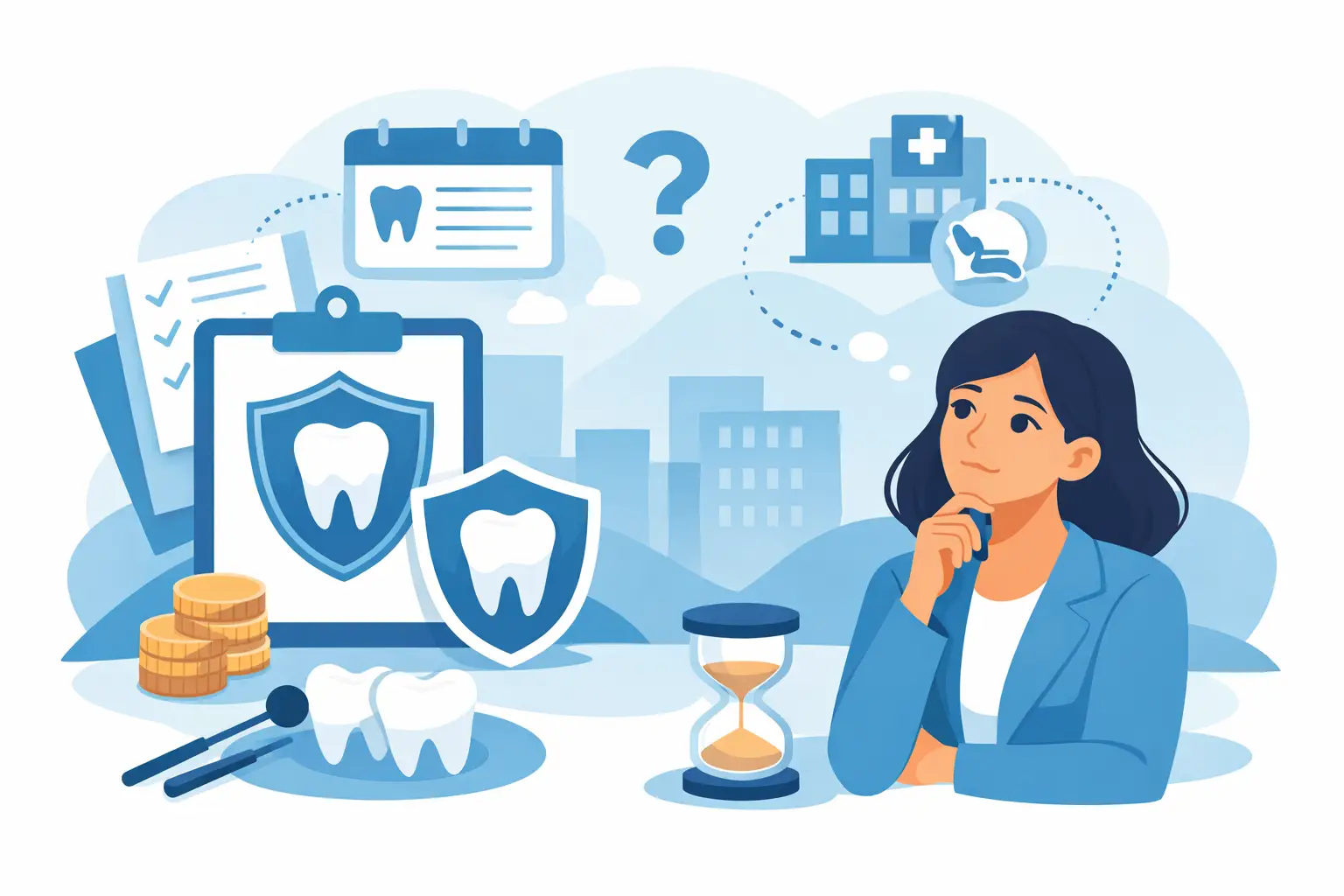
If you are asking when should you get dental insurance, the answer is usually earlier than most people expect.
Many people start shopping only after a tooth starts hurting or after a dentist recommends a crown, root canal, deep cleaning, extraction, or periodontal treatment. By that point, timing can work against you because many dental plans have waiting periods, annual maximums, network rules, and exclusions that can limit how much help you get right away.
That does not mean everyone needs to buy dental insurance immediately. It means the best time depends on your oral health, your budget, your expected dental care, and whether you are planning ahead or trying to solve an urgent problem.
Quick Answer: When Should You Get Dental Insurance?
The best time to get dental insurance is usually before you need major dental work. Dental insurance often works best as a planning tool, not as a last-minute rescue plan.
If you are healthy, between jobs, self-employed, aging off a parent’s plan, or buying coverage without employer benefits, it may be smart to compare dental plans before your next problem becomes urgent. That gives you time to use preventive care, understand your dentist network, and get through any waiting periods before more expensive treatment is needed.
If you already need urgent dental work, dental insurance may still be worth comparing, but you should check waiting periods, annual maximums, exclusions, and whether the procedure is covered. In some short-term situations, a dental discount plan or payment arrangement may be more useful than an insurance plan with delayed benefits.
Key Takeaways
- The best time to get dental insurance is usually before you need crowns, root canals, dentures, oral surgery, or periodontal treatment.
- Waiting periods can delay benefits for basic or major dental services.
- Preventive care may be available sooner than major services, depending on the plan.
- Annual maximums can limit how much the plan pays in a plan year.
- Dental insurance may not help much immediately if you already need expensive treatment.
- Dental discount plans are not insurance, but they may offer faster reduced-fee access through participating dentists.
- If you are leaving employer coverage, compare options before your current plan ends.
- Always check the provider network, plan documents, waiting periods, and exclusions before enrolling.
Why Timing Matters With Dental Insurance
Dental insurance is different from medical insurance. Many dental plans are designed to support routine care and share some treatment costs over time. They are not always designed to pay for a large dental bill immediately after you enroll.
This matters because a plan may treat services differently:
- Preventive care may include cleanings, exams, and routine X-rays.
- Basic care may include fillings, simple extractions, and some gum treatment.
- Major care may include crowns, bridges, dentures, oral surgery, and some root canals, depending on the plan.
Coverage varies by plan. Some plans may make preventive services available quickly, while basic or major services may have waiting periods. Some plans may also limit how much they pay in a year through an annual maximum.
If you wait until a dentist has already recommended major work, you may find that the plan you want does not help right away.
When You Should Get Dental Insurance
There are several situations where getting dental insurance sooner may make sense.
You Do Not Currently Have Dental Coverage
If you have no dental coverage and want to stay current with cleanings, exams, and X-rays, buying a plan before your next routine visit may help you build a more predictable care routine.
Even if the plan mainly helps with preventive care at first, having coverage in place may give you more options later if you need fillings or other treatment.
You Are Leaving a Job With Benefits
If your employer dental benefits are ending, try to compare your options before the plan ends. A long coverage gap can leave you paying cash for routine care and may reset your planning timeline.
Some plans may treat prior coverage differently, and some may not give credit for it. Do not assume your next plan will waive waiting periods automatically. Check the plan documents before enrolling.
You Are Self-Employed or Freelancing
If you are self-employed, a freelancer, or an independent contractor, dental insurance can make budgeting more predictable. You may pay the full premium yourself, but you also have more control over which plan you choose.
The key is to compare the total yearly cost, not just the monthly premium. If you want help choosing, read our guide to how to choose a dental plan as a freelancer.
You Have a History of Dental Problems
If you have had several fillings, gum problems, crowns, missing teeth, or past root canals, waiting until a new problem becomes urgent can limit your choices.
Buying coverage earlier may give you time to complete exams, understand your treatment needs, and prepare for future care.
You Are Building a Family Budget
Families often benefit from planning ahead. Children may need regular preventive care, X-rays, sealants, fillings, orthodontic evaluations, or specialist referrals over time.
Not every plan covers orthodontics, and family benefits can vary. If orthodontic care may matter later, compare those rules before you need them.
When It May Be Better to Compare Alternatives
Dental insurance is not automatically the best move for everyone in every situation.
You Only Need Occasional Preventive Care
If you rarely need treatment, have excellent oral health, and mainly want one or two cleanings per year, compare the premium against what you would pay cash at your dental office.
Some dental offices also offer in-office membership plans or cash-pay pricing. These are not insurance, but they may be worth comparing if your dental needs are limited.
You Need Expensive Treatment Immediately
If you already need a crown, root canal, denture, extraction, implant-related care, or periodontal treatment, a new insurance plan may not help right away if waiting periods apply.
In this situation, compare:
- traditional dental insurance;
- dental discount plans;
- cash pricing from your dental office;
- payment plans, if offered by the dental office;
- community clinics or dental schools, if available in your area.
A dental discount plan is not insurance. It may reduce fees at participating dentists, but you still pay the discounted amount yourself.
The Plan Has Long Waiting Periods and a Low Annual Maximum
A plan may look affordable but provide little short-term value if it delays benefits for the services you need and has a low annual maximum.
Before enrolling, ask whether the plan helps with your likely care during the first year, not just after the waiting period ends.
The Biggest Timing Issue: Waiting Periods
A waiting period is the amount of time you must be enrolled before certain benefits become available.
Waiting periods can vary by plan. Some plans may cover preventive care sooner than basic or major services. Other plans may delay coverage for fillings, crowns, bridges, dentures, oral surgery, or root canals.
| Type of care | Examples | Timing issue to check |
|---|---|---|
| Preventive care | Cleanings, exams, routine X-rays | May be available sooner, but frequency limits and network rules may apply. |
| Basic care | Fillings, simple extractions, some gum treatment | May have a waiting period, deductible, copay, or coinsurance. |
| Major care | Crowns, bridges, dentures, oral surgery, some root canals | Often the most important category to check before buying if you expect treatment. |
If you are buying dental insurance because you already need major work, waiting periods are one of the first details to verify.
For a deeper explanation, read our guide to dental insurance waiting periods.
How Annual Maximums Affect Timing
The annual maximum is the most your dental insurance plan will pay for covered care during a plan year. After the plan reaches that limit, you usually pay the remaining covered costs yourself.
This matters because even if your waiting period has passed, the plan may still only pay up to its annual maximum.
For example, if you need several procedures in one year, the plan’s annual maximum may be reached quickly. That does not mean the plan is useless, but it does mean you should understand the limit before relying on it for major treatment.
For more detail, see our guide to annual maximum in dental insurance.
How to Decide Based on Expected Care
A simple way to decide when to get dental insurance is to look at the next 12 to 24 months.
| Your situation | Possible timing decision | What to check |
|---|---|---|
| You mainly need cleanings and exams | You may compare insurance, cash pricing, or an in-office membership plan. | Premium vs routine care cost, dentist network, frequency limits. |
| You expect fillings or basic care | Getting coverage before treatment becomes urgent may help. | Waiting periods, deductible, coinsurance, network. |
| You may need crowns, dentures, or root canals | Shop early if possible, before treatment is scheduled. | Major service waiting periods, annual maximum, exclusions. |
| You already need urgent major work | Compare insurance with discount plans and payment options. | Immediate benefit availability, fee schedules, treatment estimate. |
| You are losing employer coverage | Compare replacement options before coverage ends. | Start date, network, waiting period rules, prior coverage rules. |
The goal is not to predict every dental expense. The goal is to avoid buying too late for the plan to help the way you expected.
What to Check Before You Enroll
Two dental plans can have similar monthly premiums but work very differently. Before enrolling, check the details carefully.
Provider Network
Confirm that your dentist accepts the exact plan you are considering. Do not rely only on the insurer name. A dentist may accept one plan from an insurer but not another.
If you need a specialist, also check whether specialists are available in network.
Waiting Periods
Look for waiting periods for basic and major services. This is especially important if you expect treatment beyond cleanings and exams.
Annual Maximum
Check how much the plan will pay during the plan year. A low annual maximum can limit the value of coverage for major care.
Deductible, Copay, and Coinsurance
A deductible is the amount you may need to pay before the plan starts sharing costs for some services. A copay is a fixed amount you pay for a service. Coinsurance is your percentage of the covered cost after the plan applies its rules.
Covered Services and Exclusions
Read the schedule of benefits. Do not assume crowns, implants, orthodontics, periodontal care, or replacement teeth are covered just because the plan includes “major services.”
Pre-Authorization or Pre-Treatment Estimate
For more expensive treatment, ask whether the dental office can request a pre-treatment estimate. This can help you understand how the plan may handle the claim before treatment begins.
When Should You Get Dental Insurance If You Are Between Plans?
If you recently lost employer coverage or are moving from one individual plan to another, try to avoid a long gap if you can.
A coverage gap can leave you paying out of pocket for routine visits and may affect how you plan future treatment. Some plans may not give credit for prior coverage. Others may have rules that depend on how long the gap was or what type of coverage you had. This varies by plan.
If you know a life change is coming, compare your dental options before your current coverage ends rather than after.
When Should Families Get Dental Insurance?
Families may benefit from getting dental insurance before a child or adult needs more than routine care.
Family dental needs can change quickly. One person may need only cleanings, another may need fillings, and a child may need an orthodontic evaluation later. Since orthodontic benefits vary widely and may not be included, it helps to compare plans early.
Before choosing a family plan, check:
- pediatric dentist access;
- family premium;
- annual maximums;
- orthodontic benefits, if relevant;
- waiting periods;
- local provider availability.
When Should Self-Employed People Get Dental Insurance?
Self-employed workers often need to think about timing because there is no employer choosing benefits for them.
If you are freelancing long term, dental insurance may help make dental care more predictable. But the plan still needs to make sense based on your cash flow, dentist network, annual maximum, waiting periods, and expected care.
It can be tempting to skip coverage during a slow month. But if re-enrolling later puts you back at the start of a waiting period, the short-term savings may not be worth it if you expect treatment soon.
For broader guidance, read our guide to best dental insurance for self-employed.
Is It Ever Too Late to Get Dental Insurance?
It is not necessarily too late to get dental insurance, but it may be too late for a new plan to help with a specific procedure right away.
If a dentist has already recommended major dental work, a new plan may still be useful for future care, preventive visits, and treatment after waiting periods end. But you should not assume it will pay for the immediate procedure.
In that situation, ask the dental office for a written estimate and compare:
- what insurance may cover now;
- what insurance may cover later;
- discount plan fees;
- cash-pay options;
- payment timing;
- whether delaying treatment is clinically appropriate.
Do not delay needed dental treatment only to wait for insurance benefits without discussing the risks with a licensed dentist.
Final Thoughts: When Should You Get Dental Insurance?
So, when should you get dental insurance? For most people buying their own coverage, the best time is before dental problems become urgent.
Dental insurance is usually most useful when you have time to use preventive care, understand your network, get through waiting periods, and plan for future treatment. If you wait until you already need major work, coverage may still help later, but it may not solve the immediate bill.
The practical answer is this: shop when you can still compare calmly, not when you feel pressured by pain, a treatment deadline, or a large estimate.
If you are still comparing options, review waiting periods, annual maximums, discount plans, and total yearly costs before enrolling. The right plan should be clear, usable, and matched to the kind of dental care you are likely to need.
This article is for informational purposes only and does not replace advice from a licensed dentist, insurance provider, benefits administrator, or qualified professional. Dental coverage, costs, eligibility, and benefits can vary by plan, provider, location, and policy terms.
Frequently Asked Questions About When to Get Dental Insurance
When should you get dental insurance?
You should usually get dental insurance before you need major dental work. That gives you more time to use preventive care, confirm your dentist network, and get through waiting periods before expensive treatment is needed.
Should I buy dental insurance before going to the dentist?
If you do not have urgent treatment needs, buying before your next routine visit may help you use preventive benefits. However, check plan start dates, provider networks, and whether your dentist accepts the plan.
Is it too late to get dental insurance after a dentist recommends a crown?
It may not be too late to buy coverage for future care, but a new plan may not help with the crown right away if waiting periods, annual maximums, or exclusions apply.
Do dental insurance plans have waiting periods?
Many dental plans may have waiting periods, especially for basic or major services. Waiting periods vary by plan, so check the policy documents before enrolling.
Can dental insurance help with immediate dental work?
Sometimes, but not always. Preventive care may be available sooner in some plans, while major services may be delayed. If you need immediate work, compare insurance with discount plans and dental office payment options.
Should self-employed people get dental insurance?
Self-employed people may benefit from dental insurance if the plan fits their budget, dentist network, expected care, and cash flow. The right choice depends on total yearly cost, not just monthly premium.
Should I keep dental insurance between jobs?
If you expect dental care soon, avoiding a long gap may be helpful. Gaps can leave you paying cash and may affect timing for future benefits, depending on the next plan’s rules.
What should I check before buying dental insurance?
Check the premium, provider network, waiting periods, annual maximum, deductible, copays, coinsurance, exclusions, and whether your expected services are covered.
Sources and References
- HealthCare.gov – Dental Coverage in the Marketplace
- National Association of Dental Plans – Understanding Dental Benefits
- Delta Dental – Dental Insurance Waiting Periods Explaine
- Federal Trade Commission – Medical Discount Plans and Insurance Scams
Related guides: is dental insurance worth it, dental insurance waiting period guide, average dental insurance cost, best dental insurance plans hub.
This guide is part of the Dental Insurance FAQs resource — plain-language answers to the most common dental coverage questions.
Have more timing or eligibility questions? See our dental insurance FAQ hub.