Most dental coverage in the United States runs through an employer, and enrollment keeps sliding (NADP, 2025). Individual, non-employer plans are a small slice of the market, and self-employed workers are heavily represented among the roughly 72 million U.S. adults with no dental coverage at all (CareQuest Institute, 2024). Without an employer paying part of the premium, dental insurance becomes a math problem you have to solve yourself. Is the monthly cost worth it, or would you come out ahead paying cash or funding a health savings account? The answer depends on your dental history, your cash flow, and a few options a salaried worker never has to think about.
Key Takeaways
- You pay the whole premium. An individual PPO runs about $25 to $45 a month with no employer match, so the bar for "worth it" is higher than it is for someone with a workplace plan.
- The premium is tax-deductible. Self-employed workers deduct 100% of dental premiums above the line on Schedule 1, which knocks a 22% bracket buyer's effective cost down to roughly $20 to $35 a month.
- Preventive care is where the automatic value sits. Cleanings, exams, and X-rays are covered at or near 100% from day one on nearly every plan.
- If your history is clean and your income is uneven, a dental discount plan or an HSA often fits better than a monthly premium. Run your own numbers once a year, not just at first enrollment.
Why the Math Is Different When You're Self-Employed
A salaried worker sees a small dental premium on their paycheck, often $10 to $20 a month, because the employer quietly covers the rest. You see the full price. Buying your own PPO at $30 a month is not "expensive dental insurance." It is the un-subsidized cost of the same product, and most "dental insurance is fine" advice is written for someone getting it half off.
Three things change the decision when you work for yourself:
- No employer contribution. The full premium lands on you, so the plan has to earn its keep on your usage alone.
- A fixed cost against a moving income. A monthly premium is easy in a strong quarter and irritating in a slow one. A discount plan (one annual fee) or an HSA (fund it when cash allows) can sit better with self-employed cash flow, separate from the raw math.
- You get the deduction they often cannot. The self-employed health insurance deduction covers dental premiums and reduces your income tax whether or not you itemize.
Premium figures: CMS marketplace data via MoneyGeek, assuming a $15/month employee share against a $35/month full premium. Procedure costs: Synchrony/ASQ360 studies (crown 2024, root canal 2026).
The Real Break-Even, With Self-Employed Numbers
Start with the swing case. One root canal averages $978 and its crown averages $1,399 without insurance (Synchrony/ASQ360 studies, 2026 and 2024). Run both in a single year and you are looking at $2,377 in cash, which is more than six years of a $30 a month premium. That is the scenario where a plan clearly pays for itself. Insurers negotiate lower rates with in-network dentists, and a plan that covers 50% of major work after a small deductible turns that four-figure bill into something closer to $1,200.
The harder case is the quiet year. If you have healthy teeth, go once for a cleaning, and have no work coming, the premium can exceed what you would spend in cash. Here is the same decision across three usage levels, using the un-subsidized numbers:
| Clean history, low use | Occasional filling or crown | Major work likely in 12 months | |
|---|---|---|---|
| Realistic annual cash cost | ~$350 to $500 (two cleanings plus X-rays) | ~$900 to $1,500 | $2,500 or more |
| PPO premium, 12 months | ~$300 to $540 | ~$300 to $540 | ~$300 to $540 |
| Plus deductible on basic or major work | $50 to $100 | $50 to $100 | $50 to $100 |
| Minus self-employed tax saving (22% bracket) | about $70 to $120 back | about $70 to $120 back | about $70 to $120 back |
| Bottom line | Close to a wash. A discount plan or HSA often wins. | Insurance usually wins. | Insurance wins clearly. Enroll before the waiting period. |
Illustrative ranges built from figures cited in this article. Your own numbers depend on your state, age, plan, and dental history.
For the universal version of this calculation, including how plan type changes the coinsurance math, see is dental insurance worth it. This page keeps the focus on the self-employed inputs.

No employer contribution means the full premium lands on you.
The Tax Deduction, in One Paragraph
Self-employed workers deduct 100% of dental insurance premiums for themselves, a spouse, and dependents on Schedule 1, Line 17 of Form 1040, calculated on IRS Form 7206. It is an above-the-line deduction, so it lowers your adjusted gross income whether or not you itemize. For someone in the 22% bracket paying $30 a month, the premium effectively drops to about $23. Two limits matter: you cannot deduct more than your business earns, and you cannot take it for any month you were eligible for a spouse's employer-subsidized plan, even if you turned it down. The deduction reduces income tax, not self-employment tax. Our self-employed dental tax rules guide covers the business-structure details and the records to keep.
Four Ways to Cover Your Teeth When You're Self-Employed
Insurance is one option, not the default. Here are the four routes, with the tradeoff for each:
| Route | Cost | Best when | Watch out for |
|---|---|---|---|
| Individual PPO or DHMO | $25 to $45 a month, tax-deductible | You use preventive care and expect basic or major work, and your dentist is in network | Waiting periods of 6 to 12 months; annual maximum around $1,000 to $1,500 |
| Dental discount plan | About $100 to $150 a year, flat | Uneven income; mostly preventive and basic care; you need work done soon | Not insurance. You pay a reduced cash rate, and the cut on major work (20 to 30%) is smaller than a PPO's 50% coinsurance |
| HSA (needs an HDHP) | Contribute up to $4,400 self or $8,750 family in 2026 | You already carry a high-deductible health plan and want flexible, pre-tax dollars | Requires an HSA-qualifying HDHP. It is a payment method, not a plan, so there are no negotiated rates |
| Self-funding | Whatever you set aside | High earner, clean history, disciplined saver | One bad year (implant, gum surgery) lands in full, with no negotiated rate |
The discount plan is worth a direct look if your income is lumpy. You pay once a year instead of every month, there is no waiting period, and it activates within a few business days. The tradeoff is a smaller discount on crowns and root canals. Our discount plan versus insurance comparison runs the full side by side. If you want a plan and just need the cheapest route in, start with the most affordable dental plans, then narrow with the best dental insurance for self-employed workers.
The HSA Route Most Self-Employed Guides Skip
If you carry a high-deductible health plan, you can open your own health savings account with no employer involved, and dental care is a qualified expense (IRS Publication 502). That means cleanings, fillings, crowns, and non-cosmetic work all get paid with pre-tax dollars. The account has a triple tax advantage: contributions are deductible, growth is untaxed, and qualified withdrawals are untaxed.
For 2026, the contribution limit is $4,400 for self-only coverage and $8,750 for family coverage, plus a $1,000 catch-up at age 55 or older. To qualify, your health plan needs a deductible of at least $1,700 self-only or $3,400 family, with an out-of-pocket cap no higher than $8,500 or $17,000.
An HSA is not a substitute for a plan's negotiated rates. What it does well is make self-funding tax-efficient. When people on forums tell self-employed workers to "skip dental insurance and fund an HSA instead," this is the mechanism they mean. If you are already on an HDHP for your health coverage, funding the HSA and paying dental costs from it is often the better move than adding a separate dental premium.
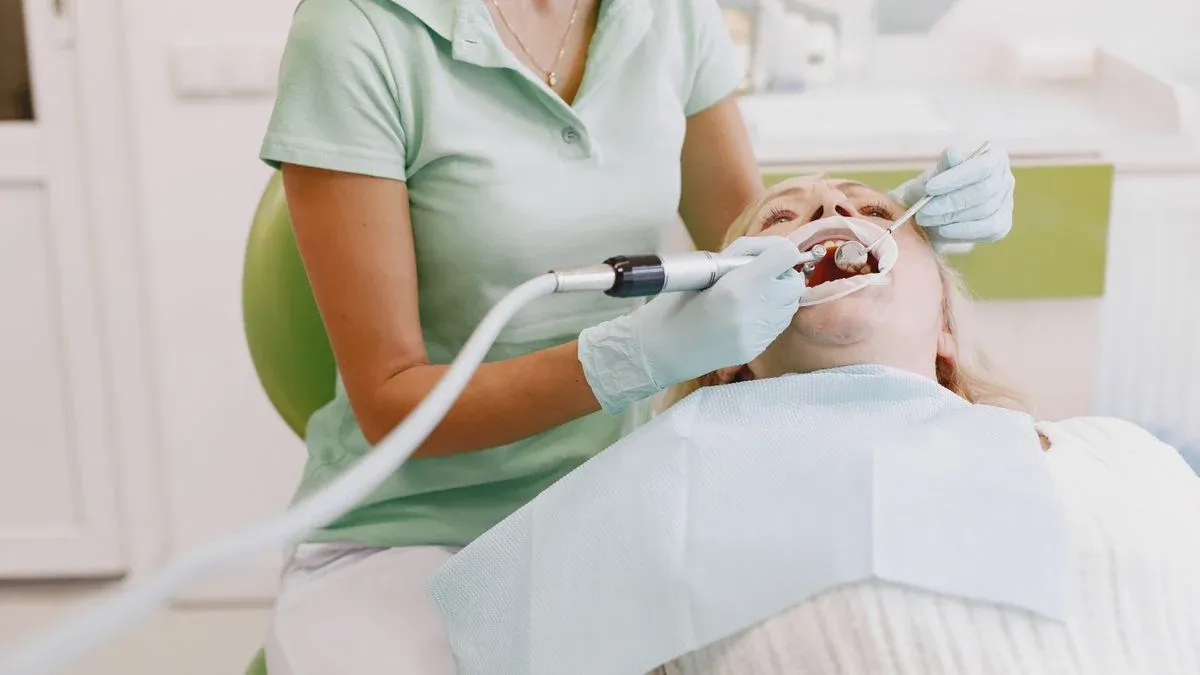
Two cleanings a year is the baseline the whole calculation rests on.
Is Self-Employed Dental Insurance a Rip-Off?
The skeptical case has real points. Individual plans cap out around a $1,500 annual maximum, so a single implant blows past what the plan will pay. Major work waits 6 to 12 months. In a quiet year you pay more in premiums than you get back. Critics argue the product works less like insurance and more like a pre-paid discount card. For a low-use buyer, that is a fair description.
The rebuttal is also concrete. Preventive care is covered at or near 100% from day one. In-network negotiated rates apply even before your deductible, so the "sticker" price is not what you pay. And the premium is deductible, which the discount-card framing ignores. A self-employed worker who goes twice a year and has any basic work usually still comes out ahead.
So who are the skeptics right about? A high earner with a decade-long clean record and the discipline to save. That person should self-fund, ideally through an HSA. Everyone who actually uses their teeth should run the table above before writing insurance off. See how the annual maximum works for the number that drives most of this argument.
When Enrolling Early Matters
You control the timing, which a salaried worker does not. There is no annual open-enrollment lock for individual dental plans, so you can buy one any month (see can you buy dental insurance anytime). Use that. If you know a crown is coming, enroll a few months ahead so the waiting period runs down before you need the work. A plan bought the same week you get the diagnosis usually will not pay for that specific treatment. Our waiting period guide breaks down the tiers: preventive from day one, basic around 6 months, major around 12.
Run Your Own Numbers, Every Year
Add up your realistic annual dental costs at cash prices: two cleanings plus anything you already expect. Compare that to the annual premium plus deductible, minus your tax saving. If the cash total is higher, a plan is very likely worth it. If it is lower, compare a discount plan or an HSA before you assume insurance is the answer.
Do this each year at renewal. Self-employed income moves, and so do your teeth. A plan that made sense two years ago may not fit now, and someone who skipped coverage then may have developed a recurring need since.
Frequently Asked Questions
Is dental insurance worth it for self-employed workers?
For most self-employed adults who go to the dentist twice a year and have the occasional filling or crown, yes. The negotiated in-network rates and the Schedule 1 premium deduction usually outweigh the premium. For someone with a clean dental history and no expected major work, a discount plan or an HSA often comes out ahead instead.
What does Dave Ramsey say about dental insurance?
The common "skip it" argument is that a small annual maximum, around $1,500, plus waiting periods make dental insurance behave like a pre-paid discount card. That holds for a low-use, high-income buyer. For someone who uses preventive care and has any basic work, the coverage plus the tax deduction still usually nets positive.
Is $40 a month good for dental insurance if I'm self-employed?
It sits at the higher end of the individual PPO range, which runs about $25 to $45 a month. An employee pays less only because an employer covers part of it. Compare the $40 against your realistic annual cash costs, not against a coworker's paycheck deduction.
Can I use an HSA to pay for dental care?
Yes. If you have an HSA-qualifying high-deductible health plan, you can open your own HSA and pay for cleanings, fillings, crowns, and other non-cosmetic dental care with pre-tax dollars. For 2026 you can contribute up to $4,400 for self-only coverage or $8,750 for a family, plus $1,000 more at age 55 or older.
Is dental insurance tax-deductible for the self-employed?
Yes. Self-employed individuals deduct 100% of dental premiums for themselves, a spouse, and dependents on Schedule 1, Line 17, using Form 7206. It is an above-the-line deduction that does not require itemizing. You cannot claim it for any month you were eligible for a spouse's employer plan, and it does not reduce self-employment tax.
Is it cheaper to just pay cash for dental work?
For routine cleanings only, sometimes. Once a filling, crown, or root canal enters the picture, the negotiated in-network rate plus a plan's coinsurance usually lands well below the cash price. A root canal and crown that cost $2,377 in cash might run about $1,200 under a PPO, which is why enrolling ahead of known work matters.
Sources: NADP Dental Benefits Report, 2025; CareQuest Institute, 2024; CMS marketplace data via MoneyGeek (2026); Synchrony/ASQ360 procedure cost studies (2024, 2026); IRS Form 7206; IRS Publication 502; IRS 2026 HSA and HDHP limits.
Related guides: Compare named plans in the best dental insurance for self-employed, check the monthly price in how much dental insurance costs, get the tax detail in self-employed dental tax rules, run the universal math in is dental insurance worth it, and see low-cost options in how to fix your teeth with no money.
This article is educational and not tax or financial advice. Confirm current limits and your own eligibility with a tax professional.