A single dental implant – post, abutment, and crown – costs $3,000 to $7,000 without insurance (SmartArches, 2025). Most standard plans either exclude implants entirely or cover them at 50% under major services, subject to annual maximums of $1,000–$2,000 – well below what a single implant costs. This guide covers 2026 cost ranges, how different plan structures affect your out-of-pocket total, and strategies for maximizing whatever coverage you have.
Understanding Dental Implants: Why They Cost More
Implants cost more than bridges or dentures because the procedure involves multiple separately-billed components and stages:
- The implant post: a small, screw-like post, usually titanium, surgically placed into the jawbone to act as an artificial tooth root.
- The abutment: once the post has fused with the jawbone (osseointegration, which can take several months), a connector piece is attached to support the crown.
- The crown: the visible, tooth-shaped cap, custom-made to match your existing teeth in color, shape, and size.
Each stage – plus diagnostic imaging, anesthesia, and follow-up appointments – is billed separately. This multi-component structure is why many insurers classify implants differently from routine care.
How Dental Insurance Typically Covers Implants
Coverage varies widely between plans. Common scenarios:
- Exclusion: many standard plans simply exclude implants altogether, classifying them as cosmetic or experimental even though they're widely accepted as the best long-term solution for tooth loss.
- Partial coverage: some plans cover a percentage of specific components – for example, 50% of the implant post but not the abutment or crown, or vice versa.
- Coverage as "major restorative": a smaller number of plans categorize implants as major restorative work, covering a percentage subject to the annual maximum – which, on a $4,000 implant, can mean the plan pays only a few hundred dollars before the maximum is reached.
- Waiting periods: even plans that do cover implants often require 6-12 months of enrollment before that coverage becomes active.
- Deductibles: most plans require you to meet a deductible before insurance starts paying for covered services.
- Cosmetic vs. medically necessary: a missing tooth affecting chewing, speech, or causing bone loss in adjacent teeth is more likely to be treated as medically necessary than one missing purely for appearance.
Always request a pre-determination from your insurer before treatment begins – it confirms exactly what the plan will pay for each billed component.
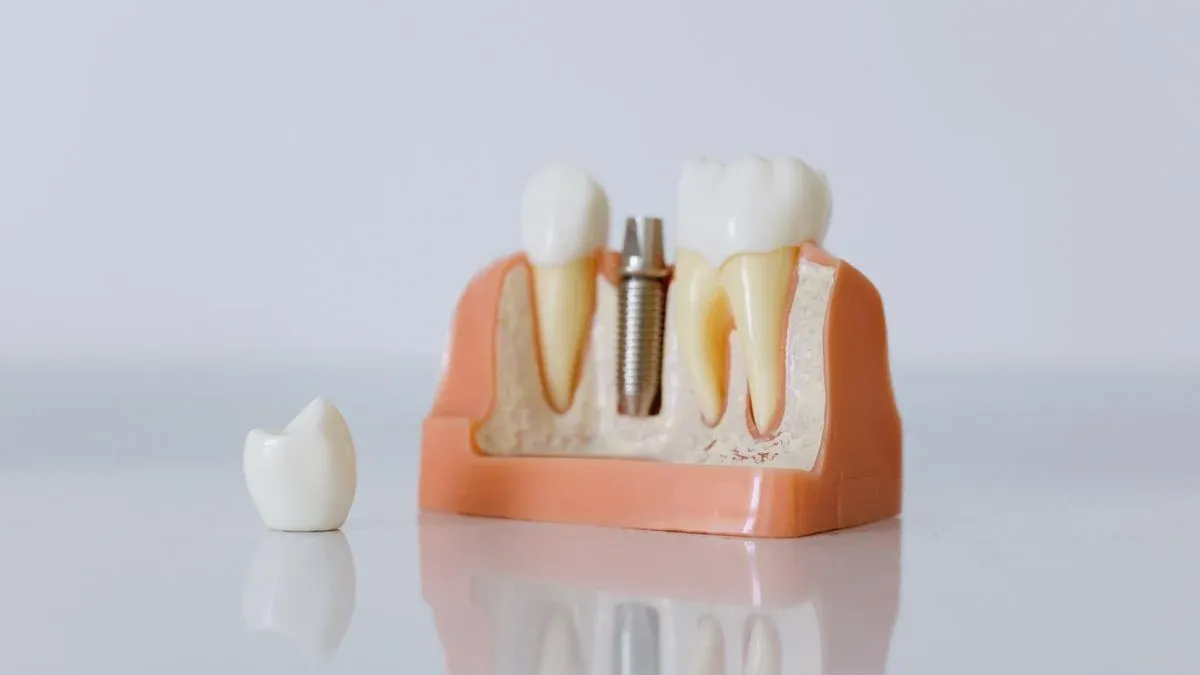
An implant is billed in three parts: the post, the abutment, and the crown.
Factors Influencing Dental Implant Costs in 2026
1. Geographic location
Costs for dental procedures, including implants, vary significantly by region. Major metropolitan areas or regions with a higher cost of living often have higher dental fees.
2. The dentist's experience and specialization
A periodontist or oral and maxillofacial surgeon typically performs implant surgery, and their specialized training and reputation influence fees. The restorative dentist who places the abutment and crown has separate fees.
3. Type of implant and materials used
Titanium is standard, but implant design varies. The custom-made crown – porcelain, ceramic, or zirconia – also affects price; zirconia is often more expensive but offers strong aesthetics and durability.
4. Complexity of the procedure
- Number of implants: replacing multiple teeth costs more than a single tooth.
- Bone grafting: insufficient jaw bone density may require a graft – an additional surgical procedure and cost.
- Sinus lift: upper-jaw implants sometimes need this procedure to create additional bone volume.
- Extractions: if the tooth being replaced needs extraction first, that's billed separately.
5. Diagnostic imaging
3D cone-beam CT (CBCT) scans provide detailed views of the jawbone for precise planning, but add to upfront cost and aren't always fully covered.
6. Anesthesia
Local anesthesia, sedation, or general anesthesia each come with their own fees, depending on complexity and comfort level.
Source: illustrative scenarios based on common plan structures; SmartArches (2025) implant cost data.
Estimated Costs for Dental Implants in 2026
Exact figures vary widely because of the factors above, but general estimates for the total cost per implant, before any insurance benefit, are:
- Single dental implant (post, abutment, crown): $3,000 – $7,000+
- Implant surgery (post placement): $1,500 – $4,000+
- Abutment: $300 – $1,000+
- Custom crown: $1,000 – $3,000+
- Bone grafting (if needed): $300 – $2,500+
- Sinus lift (if needed): $2,000 – $3,500+
These are broad ranges – your actual cost depends on your specific needs and location. If you're comparing coverage options, our guide to the best dental insurance for implants explains what to check before choosing a plan, including implant coverage, waiting periods, annual maximums, and provider networks.
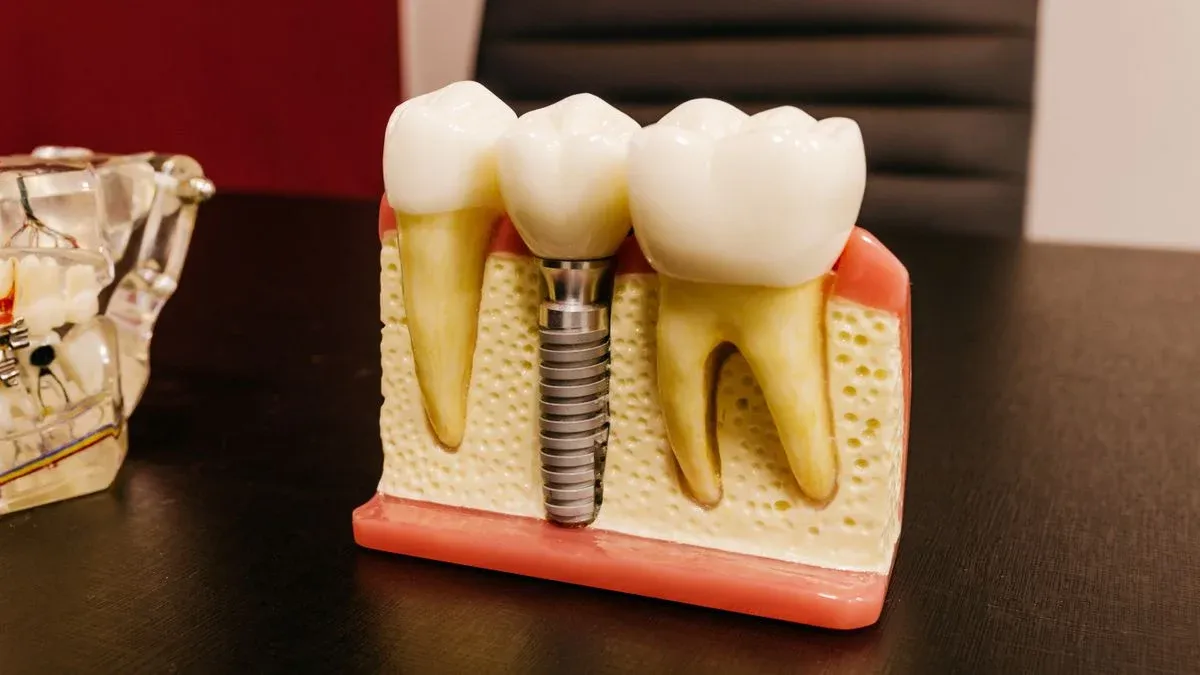
Annual maximums usually run out before the third component is paid for.
How Different Dental Insurance Scenarios Affect Your Out-of-Pocket Costs
Scenario 1: Your plan excludes implants
If your plan has an explicit exclusion for implants, insurance contributes nothing, and you're responsible for 100% of the cost. This is when exploring dental discount plans or financing becomes particularly important. See the most expensive dental services without insurance guide for the full set of levers on a large bill.
Scenario 2: Your plan offers partial coverage (e.g., 50%, $1,000 annual maximum)
Say a single implant costs $4,500 total ($1,500 surgery/post, $500 abutment, $2,500 crown), with a plan covering 50% of implant components subject to a $1,000 annual maximum and a $100 deductible. Insurance considers the post and abutment ($2,000 combined) as the core implant components, covering 50% ($1,000) – but capped at the $1,000 annual maximum. The crown, treated separately, may get little or no remaining benefit once the maximum is hit. Total out-of-pocket in this scenario: $100 deductible + $1,000 (maxed-out implant portion) + $2,500 (crown, no remaining benefit) = $3,600.
Scenario 3: Your plan has higher limits ($1,500 annual maximum, 50% coverage)
With the same $4,500 total cost, a plan considering $3,000 as the implant cost base and covering 50% would normally pay $1,500 – which happens to match this plan's annual maximum exactly. Out-of-pocket: $4,500 – $1,500 = $3,000 – still substantial, but meaningfully less than Scenario 2.
These examples illustrate how deductibles and annual maximums, not just the coverage percentage, drive the real out-of-pocket number.
Strategies to Maximize Your Dental Insurance Benefits for Implants
1. Understand your policy inside and out
Get your plan's Summary of Benefits and Coverage (SBC) or Evidence of Coverage (EOC) and check implant coverage status, coverage percentages, deductibles, annual maximums, waiting periods, and pre-authorization requirements. Call your insurer directly with specific implant questions – don't hesitate to ask them to explain complex terms.
2. Coordinate benefits if you have multiple plans
If you or a spouse have two dental plans (two employer plans, or an employer plan plus COBRA), coordination of benefits may let a secondary plan cover part of what the primary plan doesn't. The rules are complex – discuss with both insurers directly.
3. Use FSA or HSA funds
Flexible Spending Accounts and Health Savings Accounts can pay for qualified dental expenses, including implants, with pre-tax dollars. HSA funds roll over year to year; FSA funds typically follow a "use it or lose it" rule, though some employers offer a grace period.
4. Consider timing treatment across calendar years
If treatment spans multiple stages, scheduling the implant post in late one year and the crown placement in early the next can let you apply two separate annual maximums to the same procedure. Discuss this timing with your dentist and insurer beforehand to confirm it aligns with their billing practices.
5. Look for specialized dental plans
Some insurers offer plans specifically designed for better major-procedure coverage, often at a higher premium. For the self-employed, best dental insurance for self-employed covers more customizable options worth comparing on implant benefits specifically.
6. Negotiate with your dentist
Some practices offer a discount for paying in full upfront, or payment plans through third-party financing. It's worth discussing your situation directly with the billing department.
7. Explore dental discount plans
Not insurance – a flat annual membership fee for reduced rates at network dentists. Savings on implants can be significant, but confirm the network and exact discount percentage before relying on one. 1Dental (opens in a new tab) is one option, on the Careington and Aetna Dental Access networks, starting around $175 a year.
8. Check what else might be covered
Related services – routine X-rays, certain bone grafts – may fall under different benefit categories even if the implant itself has limited coverage. Always clarify coding and benefits for each individual service.
Dental Insurance Cost for Family and Seniors
For family dental plans, premiums run higher than individual coverage, and the annual maximum needs to be sufficient across multiple family members – the same limitations (coverage percentage, deductible, annual maximum) apply per person needing implant work, so it's worth weighing the added premium against realistic per-person implant risk.
For seniors, the situation is more complex: Medicare typically doesn't cover routine dental care, including implants, and Medicare Advantage dental benefits (where they exist) often carry significant exclusions or low annual maximums for major work. Seniors generally need supplemental or private dental coverage, and should compare plans specifically for how they handle major restorative work rather than assuming any Medicare-adjacent plan covers implants adequately.
Does Dental Insurance Cover Implants? The Bottom Line
Most plans cover implants at 50% of major services if they cover them at all – and annual maximums of $1,000–$2,000 rarely cover more than a fraction of the total $3,000–$7,000 cost. Request a pre-determination from your insurer before treatment starts, and ask your dentist whether staging treatment phases across calendar years can let you apply two separate annual-maximum payouts to the same implant.
Frequently Asked Questions About Dental Implant Insurance Costs
What is the average cost of a dental implant in 2026?
A single dental implant, including the post, abutment, and crown, typically ranges from $3,000 to $7,000 or more, varying by geographic location, dentist expertise, procedure complexity, and materials used.
Will my dental insurance cover the entire cost of a dental implant?
It's highly unlikely. Most plans have annual maximums, deductibles, and coinsurance, and may exclude implants altogether or cover only specific components.
How can I find out if my specific plan covers implants?
Review your Summary of Benefits and Coverage or Evidence of Coverage, call your insurer directly with implant-specific questions, or have your dentist's office submit a pre-estimate on your behalf.
If my insurance doesn't cover implants, what are my options?
Pay out-of-pocket, use a dental discount plan for reduced network rates, ask about third-party financing (such as CareCredit) through your dental office, use FSA/HSA pre-tax funds if available, or consider whether a bridge or denture might be a more affordable alternative with better coverage.
How do annual maximums affect implant coverage?
Annual maximums (commonly $1,000–$2,000) are the total amount insurance pays in a benefit year. Because implants often cost several thousand dollars, this limit is typically reached quickly, leaving the remaining balance entirely out-of-pocket – which is why staging treatment across two calendar years can be worth discussing with your dentist.
Source: Implant cost data via SmartArches (2025).
Related guides: Best dental insurance for implants — Does dental insurance cover implants — Cash pay dentist vs. dental plan.
This guide is part of the Dental Insurance Cost Guide — a complete resource on dental plan costs, premiums, and annual limits.