
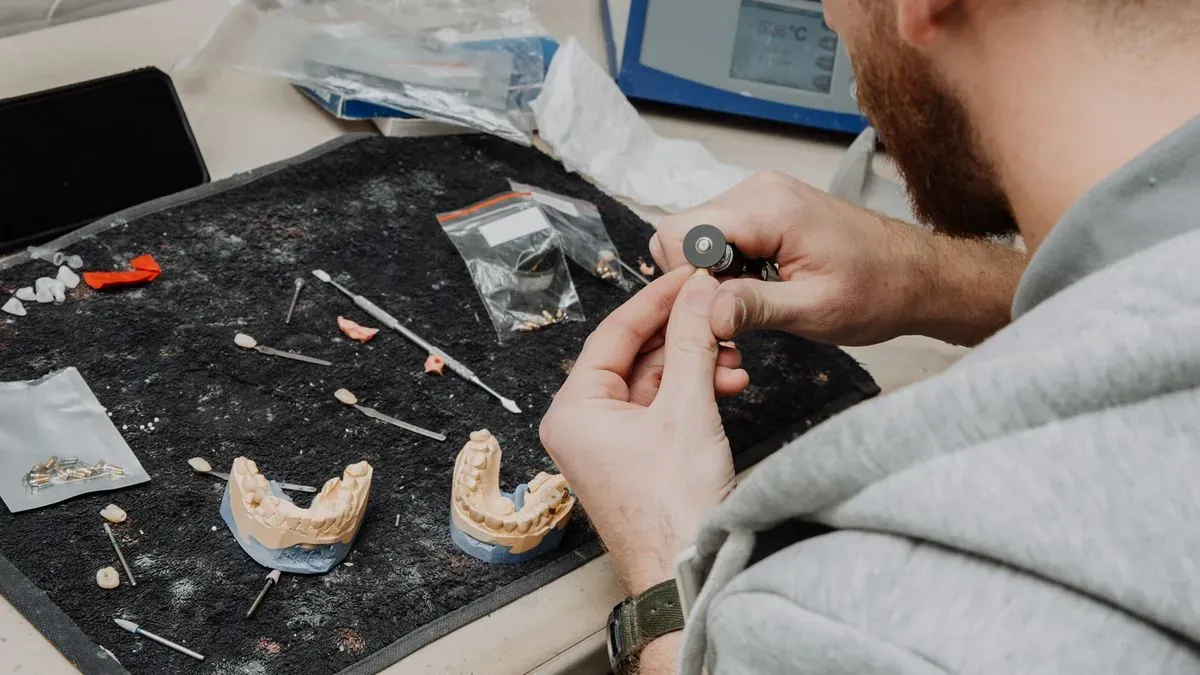
Does Medicare cover dentures? Original Medicare (Parts A and B) doesn't. It won't pay for the dentures, and it also won't pay for surgery to prepare your mouth for them, apart from one rare exception after cancer or jaw surgery. Most Medicare Advantage plans do cover dentures, though. We also counted CMS plan data for 2027: 68% of general plans include them, but more plans now leave you half the bill. Open enrollment runs October 15 to December 7.
Key Takeaways
Does Medicare Cover Dentures? The Answer by Part
You're far from alone if you need them. According to the CDC, 15.2% of adults 65 and older had no natural teeth in 2017 to 2020, and the share rises to 19.7% at age 75 and older. Even so, the parts of Medicare you get by default pay almost nothing toward dentures. So here's the answer for each part.
| Part of Medicare | Does it pay for dentures? |
|---|---|
| Part A (hospital insurance) | No. It can cover a hospital stay when your health or the procedure requires admission, but not the denture. |
| Part B (medical insurance) | No, except a denture built into a covered prosthesis, explained below. |
| Part C (Medicare Advantage) | Often. 68% of general plans include dentures in 2027, up to a yearly dollar limit. |
| Part D (drug plans) | No. Drug coverage only. |
| Medigap (supplement plans) | Generally no dental coverage. |
| Medicaid and dual-eligible plans | Depends on your state. In 2027, 84% of dual-eligible special needs plans cover dentures. |
| PACE | Includes dentistry, for people 55 and older who need nursing-home-level care and live in a PACE area. |
Sources: Medicare.gov, Dental services (opens in a new tab); Choosing a Medigap Policy, 2026 (opens in a new tab); Medicare.gov, PACE (opens in a new tab); CDC, 2024 Oral Health Surveillance Report, Table 18 (opens in a new tab); our analysis of CMS plan files (method below).
The Rare Exception: Dentures Built Into a Covered Prosthesis
Medicare's manual for the companies that process its claims is blunt: "Dentures are excluded from coverage." The next sentence holds the exception, however. When a denture or part of one is built into a covered prosthesis, "it is covered as part of that prosthesis." The manual's example is an obturator, a device that fills an opening in the roof of the mouth (Medicare Benefit Policy Manual, chapter 15, section 120 (opens in a new tab)).
In practice, then, it helps people who lost part of the palate or jaw to cancer surgery or an injury. Section 120 also lists maxillofacial devices among covered prosthetics, so the teeth attached to one are covered along with it. By contrast, an ordinary denture for teeth lost to decay or gum disease doesn't qualify, however necessary it feels.
The same line runs through surgery before dentures. CMS (opens in a new tab) pays to rebuild the jaw ridge when that's done during tumor removal. Yet the same procedure done to prepare your mouth for dentures isn't covered. The same goes for reshaping the bone (alveoplasty), a frenectomy or removing a bony growth on the palate when it's done for that purpose. Our guide to what Medicare covers for dental care also lists every medical exception.
If you think you qualify, ask your surgeon's office to coordinate with the dentist before work starts. That's because CMS requires the medical and dental providers to share information, and the dentist must be enrolled in Medicare.
Do Medicare Advantage Plans Cover Dentures? What 2027 Plan Data Shows
Most do. To get current numbers, we downloaded the benefit files plans submit to CMS for 2026 and 2027, since national studies are years old. Then we counted every general plan, meaning a plan anyone with Medicare in the area can join. Employer plans were left out, while special needs plans appear separately below. Note that the counts are plans, not members, because the public files don't include enrollment.
For 2027, there are 3,553 general plans. Of those, 2,418 (68%) include dentures in the plan itself. Another 288 (8%) cover dentures only through a dental add-on with its own premium, and the remaining 24% don't cover them at all. Coverage is also spread across big insurers. Devoted Health, Aetna, Humana and UnitedHealthcare each filed hundreds of plans with dentures built in, although not every plan from each company has them.
| General Medicare Advantage plans | 2026 | 2027 |
|---|---|---|
| Number of plans | 3,754 | 3,553 |
| Dentures built into the plan | 68.2% | 68.1% |
| Dentures only as a paid add-on | 8.7% | 8.1% |
| Plans with dentures built in that charge you 50% | 39.6% | 52.2% |
| Plans with dentures built in that charge you $0 up to the limit | 40.8% | 30.2% |
| Median yearly dental limit | $2,000 | $1,750 |
| Yearly dental limit of $1,000 or less | 27.6% | 30.6% |
| Prior approval required for dentures | 43.9% | 31.8% |
Source: our analysis of the CMS Plan Benefit Package files (opens in a new tab) for 2026 and 2027. Rows from the 50% line down cover plans with dentures built in; limits cover plans with a yearly dollar limit.
So the answer to "does Medicare cover dentures" depends on your plan. Original Medicare says no, while most Advantage plans say yes, up to a point.
What Changed for 2027
Overall, the share of plans that cover dentures barely moved. Instead, what changed is how much of the bill they leave you. Among plans with dentures built in, those charging 50% rose from about 4 in 10 to more than half. Meanwhile, plans charging nothing up to the limit fell from 41% to 30%. On top of that, the median yearly dental limit dropped by $250, to $1,750.
There's one improvement, though. Fewer plans require approval before you get dentures, down from 44% to 32%. So if you're keeping your current plan, read the Annual Notice of Change (opens in a new tab) it sent you in September. Your share can change even when the premium doesn't.
Dental Add-Ons: What $44 a Month Buys
In addition, some plans sell dental as a separate package. For 2027, 846 general plans offer an add-on that includes dentures. The median premium is $44 a month, or $528 a year, and the typical yearly limit is $1,500. Before you buy one for a denture, do the math. In the worked example below, the add-on still leaves you about $1,500 to pay in the first year.
If You Also Have Medicaid
Plans for people with both Medicare and Medicaid, called dual-eligible special needs plans, are more generous. In 2027, 84% of them cover dentures, and nearly all of those charge nothing up to a median yearly limit of $2,500. Your state's Medicaid program may also cover dentures. Our guide to Medicaid dental coverage for adults shows which states do.
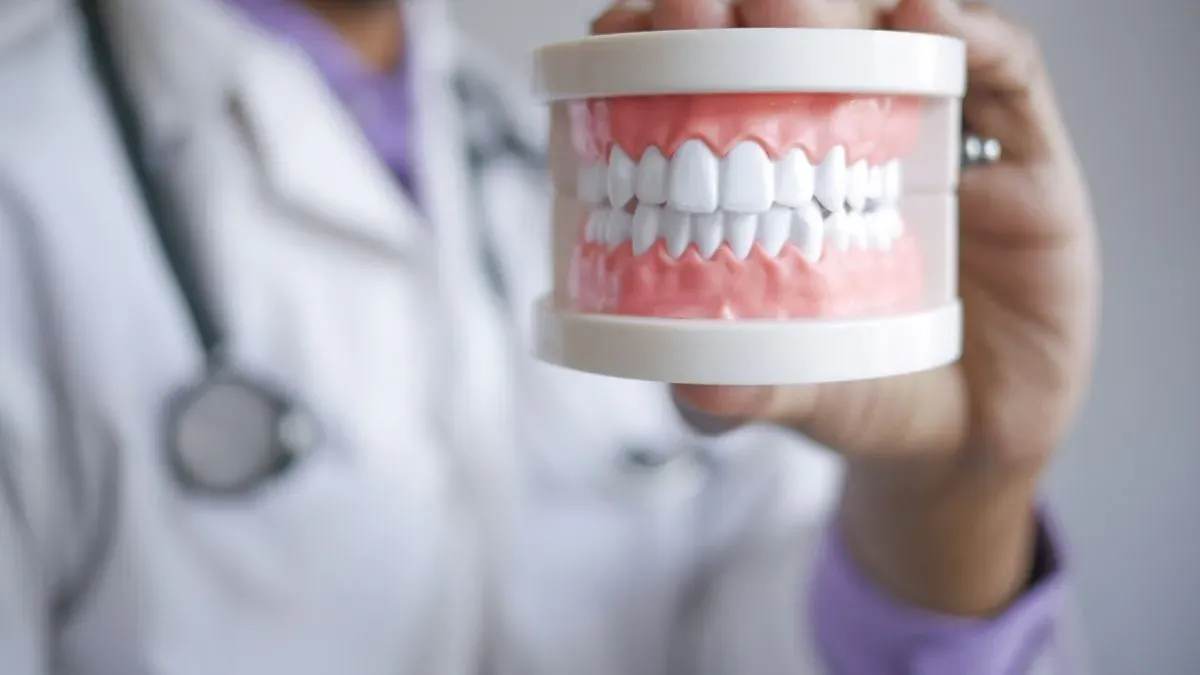
Plans that cover dentures commonly replace them once every five years, and only up to the yearly dental limit.
How Much Dentures Cost With Medicare Advantage
Without coverage, you pay the dentist's full price. CareCredit's 2026 survey of dental practices puts the national average for a traditional full denture at $2,022. A full denture replaces all the teeth in one jaw. Prices also vary by state, from $1,742 in Arkansas to $2,455 in California.
| Type of denture | National average | Typical range |
|---|---|---|
| Low-cost removable full denture | $460 | $340 to $760 |
| Traditional removable full denture | $2,022 | $1,493 to $3,309 |
| Immediate full denture (placed the day teeth are removed) | $2,243 | $1,670 to $3,573 |
| Partial denture, resin base | $1,784 | $1,335 to $2,873 |
| Partial denture, metal frame | $2,293 | $1,700 to $3,717 |
| Snap-on denture held by implants | $2,540 | $1,886 to $4,124 |
Source: CareCredit, How Much Do Dentures Cost? (opens in a new tab), research by ASQ360° in 2026. Prices leave out exams, extractions and insurance.
A Worked Example: One $2,022 Denture
Here's what one traditional full denture at the national average costs you under five setups we found in the CMS files. All of them assume an in-network dentist, since that's where plan limits apply.
- Original Medicare only: you pay all $2,022.
- 50% coinsurance, $1,000 limit, $600 already used on fillings: only $400 of the limit is left, so you pay $1,622.
- A dental add-on at $44 a month, 50% coinsurance, $1,500 limit: the plan pays $1,011. You pay $1,011 plus $528 in add-on premiums, or $1,539.
- 50% coinsurance, $1,750 limit (the 2027 median): the plan pays $1,011, and you pay $1,011.
- $0 cost share, $1,500 limit: the plan pays up to its limit, and you pay $522. One Nevada plan we checked worked this way in 2026.
The yearly limit and your share matter more than the word "dentures" in a plan summary.
Chart description
Original Medicare only: $2,022. Fifty percent coinsurance with a $1,000 limit and $600 already used: $1,622. Dental add-on at $44 a month with 50% coinsurance and a $1,500 limit, including $528 in premiums: $1,539. Fifty percent coinsurance with a $1,750 limit: $1,011. Zero cost share with a $1,500 limit: $522.
This is an illustration, not a quote. In-network fees are often lower than the average cash price, so your real share can be smaller. Plan premiums are left out, since many Advantage plans charge none. Also, if you need dentures for both jaws, the bill roughly doubles. In that case, at 50% with a $1,750 limit, you'd pay $2,294.
The Fine Print That Decides Your Bill
Two plans can both say "dentures covered" and still leave you very different bills. So check these five details in the plan's documents:
- How often. The most common rule is one new set every five years. Nearly half of 2027 plans with dentures (47%) state it word for word, while about 22% list no limit on how often, so only the dollar limit applies.
- A shared limit. In 71% of these plans, dentures come out of the same yearly dental limit as cleanings and fillings. As a result, fillings early in the year leave less for a denture later.
- Prior approval. About a third of plans want approval before work starts. Without it, the claim can be denied.
- Relines and repairs. Many plans list relines, rebases and adjustments under the same benefit, each with its own limit, such as once a year.
- The network. Limits and shares usually apply in network only. Plan directories aren't always right, so read our guide to finding a dentist who takes Medicare Advantage.
In contrast, implants are a separate benefit with their own rules. Our guide to implant coverage for seniors covers them.
Other Ways to Pay for Dentures on Medicare
If you stay on Original Medicare, or your plan's denture benefit is thin, then these are the realistic routes:
- A standalone dental plan. You can usually buy one any time. However, many make you wait 6 to 12 months for major work, and some have a missing tooth clause that refuses to replace teeth lost before coverage began. Plans with no waiting period for dentures often pay less in year one. For example, see our review of AARP dental insurance, or compare standalone plans with Medicare Advantage dental.
- Medicaid. If you qualify for both programs, your state may cover dentures, often with approval rules.
- VA dental care. Some veterans qualify for VA dental services or the VA dental insurance program. See our guide to dental insurance for veterans.
- Dental schools and health centers. The National Institute of Dental and Craniofacial Research (opens in a new tab) points to dental school clinics for reduced-cost care supervised by licensed dentists. Federally funded health centers charge based on your income.
- A dental discount plan. It isn't insurance and won't pay a claim. Instead, you pay a reduced fee at participating dentists, with no waiting period. It makes sense mainly when you need dentures soon and a participating dentist near you does them. Ask that office for the discounted price first, and read our discount plan vs. insurance guide.
How to Check a Plan's Denture Benefit Before December 7
During open enrollment, five checks tell you what a plan will really pay:
- Use Medicare Plan Finder (opens in a new tab) to list the plans in your ZIP code that include dental benefits.
- Open each plan's Summary of Benefits and find the line for dentures. It's often labeled "Prosthodontics, removable" under comprehensive dental.
- Write down your share, the yearly dental limit, and whether that limit also covers cleanings.
- Next, look in the Evidence of Coverage for how often dentures are replaced and whether approval is needed first.
- Finally, call your dentist and ask whether the office is in that plan's dental network.

Before December 7, compare each plan's denture line, yearly limit and dental network, not just the premium.
Then the plan you pick by December 7 starts on January 1. If you're already in Medicare Advantage, you can also switch once between January 1 and March 31 (opens in a new tab). After that, our guide to the best dental insurance for seniors helps you compare the rest of the plan.
Frequently Asked Questions
Does Medicare Part C cover dentures?
Often, yes. Part C is Medicare Advantage, and 68% of general Advantage plans for 2027 include dentures. They pay up to a yearly dollar limit, often with a five-year replacement rule, so check the specific plan before you enroll.
How often will a Medicare Advantage plan pay for new dentures?
Once every five years is the most common rule, and nearly half of 2027 plans with dentures state it. Some plans set no frequency limit, while relines and repairs often have shorter limits, such as once a year. Still, the exact rule for your plan is in its Evidence of Coverage.
Does Medicare cover dentures after cancer surgery?
Sometimes. If the denture is part of a covered prosthesis, such as an obturator after part of the palate is removed, Medicare covers it as part of that device. A regular denture afterward isn't covered by Original Medicare.
Are there free dentures for seniors on Medicare?
Not from Original Medicare. Some Advantage plans and most dual-eligible plans charge $0 up to the yearly limit, and some states' Medicaid programs cover dentures. However, be careful with ads that promise free dentures from a government program. For instance, the NIDCR warns that ads claiming it provides implants or pays for dental treatment are likely fraudulent.
Does Medicare cover denture repairs or relines?
Original Medicare doesn't. However, many Medicare Advantage plans list relines, rebases and repairs with their denture benefit, usually with their own frequency limits.
The Bottom Line
So, does Medicare cover dentures? Original Medicare doesn't, except for a denture built into a covered prosthesis after surgery or injury. Most Medicare Advantage plans do, but 2027 plans leave you more of the bill. Before December 7, compare plans by your share, the yearly limit and the five-year rule, not by the word "dentures" in an ad.
This guide is for general information and isn't legal, medical or insurance advice. Plan benefits change each year, so confirm details with Medicare, your plan or a licensed advisor before you decide.
Sources
How we analyzed the CMS data: we used the CMS Plan Benefit Package files for 2026 and 2027 (2027 file dated October 1, 2026). We counted individual Medicare Advantage plan segments (HMO, HMO-POS, PPO, PFFS and MSA). Employer-only plans, cost plans, PACE and drug-only plans were excluded, and special needs plans were counted separately. "Dentures" means the removable prosthodontics benefit. We also checked one plan against its 2026 Summary of Benefits, and the figures matched. Shares are of plans, not members.
- Medicare.gov: Dental services
- CMS: Medicare Dental Coverage (updated March 2026)
- CMS: Medicare Benefit Policy Manual, Chapter 15, section 120 (Rev. 13889, July 2026)
- CMS: Plan Benefit Package (PBP) benefits data, 2026 and 2027
- CDC: 2024 Oral Health Surveillance Report, Table 18
- CareCredit: How Much Do Dentures Cost? (ASQ360° research, 2026)
- NIDCR: Finding Dental Care
- Medicare.gov: Plan Annual Notice of Change
- Medicare.gov: Joining a health or drug plan
- Medicare.gov: Choosing a Medigap Policy (2026)
- Medicare.gov: PACE


