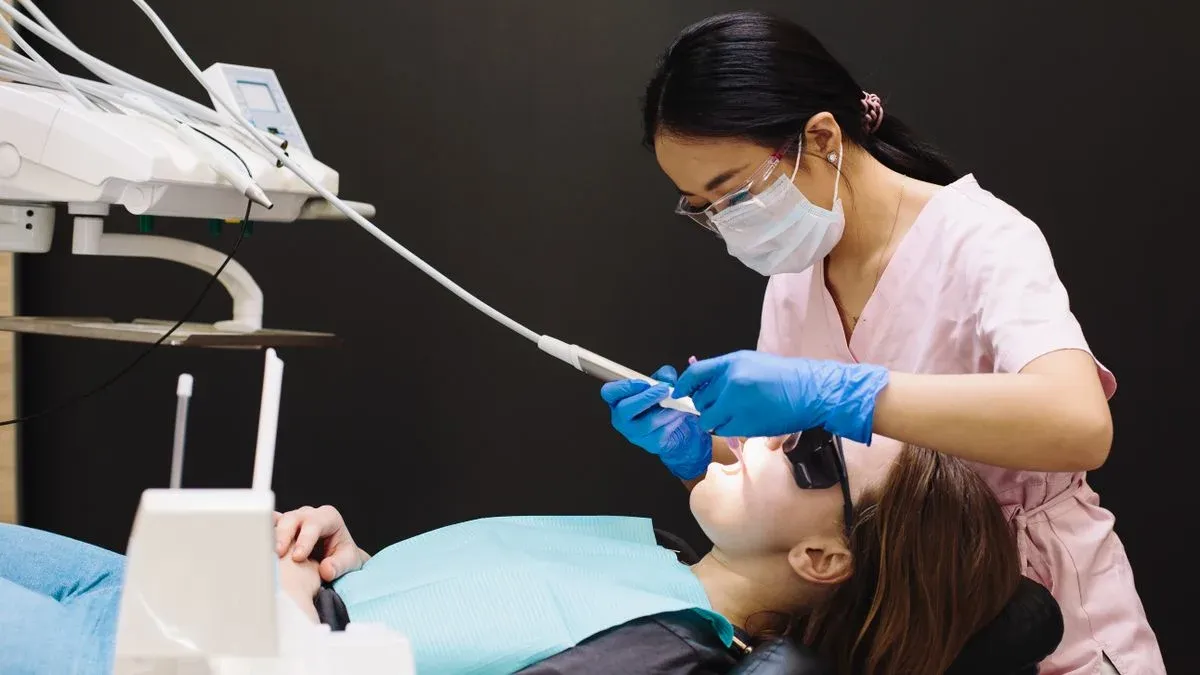
Does Delta Dental cover Invisalign? Yes, if your Delta plan includes orthodontic benefits. Delta's own member guides say Invisalign and other clear aligners are covered at the same rate as traditional braces on those plans. The catch is the word "if." Many Delta plans have no orthodontic ("ortho") benefit at all. Others cover children only. Plans that do cover adults usually pay 50%, up to a lifetime orthodontic maximum.
That lifetime cap, not the 50%, decides your bill. On a typical $5,600 case, a $1,500 cap leaves you paying $4,100. Below you'll find which Delta plans cover adults, how the payments actually arrive, and a worked example for PPO and DeltaCare USA.
Does Delta Dental Cover Invisalign? The Short Answer
If your plan covers orthodontia, Delta covers Invisalign. Delta Dental's 2025 guide to PPO and Premier benefits puts it plainly: "If your plan covers orthodontia, you have coverage for clear aligners." It adds that Invisalign is "covered at the same rate as traditional braces at no additional cost to you" (Delta Dental, 2025 (opens in a new tab)). Delta's DeltaCare USA guide says the same for its prepaid plans when an in-network orthodontist provides the aligners (Delta Dental, 2025 (opens in a new tab)).
So the real question isn't whether Delta treats aligners differently. It doesn't. The real questions are these three:
- Does your plan include ortho benefits at all?
- Does that benefit extend to adults, or stop at age 19?
- How large is the lifetime orthodontic maximum?
Answer those and you know what Delta will pay. For how aligners are handled by other carriers, see our carrier-by-carrier guide to Invisalign coverage. This page is Delta-specific.
Why "Delta Dental" Gives Different Answers
Delta Dental isn't one insurer. It's a national network of 39 independent Delta Dental companies, and each one writes its own plans. On top of that sit two networks, Delta Dental PPO and Delta Dental Premier, plus a prepaid product, DeltaCare USA. We've laid out that structure in our guide to how Delta Dental handles night guards, and it matters just as much here.
Here's how three Delta companies describe orthodontics in their own 2025 and 2026 materials:
- Delta Dental of Washington sells one individual plan with orthodontics, called Plus Ortho. It pays 50% for braces or clear aligners, up to a $1,500 lifetime maximum per person, after a 12-month wait (Delta Dental of Washington (opens in a new tab)). Its other individual plans list orthodontia as not covered.
- Delta Dental of Arizona says most of its employer plans have no orthodontic waiting period. Its individual Palo Verde plan covers adult orthodontics from the second year (Delta Dental of Arizona (opens in a new tab)).
- Delta Dental of California and its affiliates offer adult orthodontics on individual plans only through PPO Premium and DeltaCare USA. PPO Basic lists orthodontics as not covered (Delta Dental (opens in a new tab)).
Three companies, three sets of rules, all correctly called "Delta Dental." That's why a friend's Delta plan tells you nothing about yours.
How Invisalign Is Billed: Orthodontia, Not an Appliance
Invisalign isn't billed under its brand name. Your orthodontist files it with the same CDT codes (opens in a new tab) used for braces: D8080 for comprehensive orthodontic treatment of the adolescent dentition, or D8090 for the adult dentition. Shorter cases may use a limited-treatment code such as D8040 for adults. Delta's own 2026 DeltaCare USA plan documents list exactly these codes in the orthodontics section.
That billing choice is good news. Because aligners run through the ortho benefit, they inherit every rule of that benefit: the coinsurance, the lifetime maximum, the age limits and the waiting period. A plan that says "orthodontics: 50%" is, in practice, saying "Invisalign: 50%."
It also explains the most common denial. When a plan has no ortho benefit, Invisalign isn't denied as a cosmetic product. It's denied because the whole code family isn't covered. Still, Delta's older member FAQ notes that a plan may pay some related orthodontic costs even when an appliance isn't covered. Ask what the estimate includes rather than assuming zero.

What Is a Lifetime Orthodontic Maximum?
A lifetime orthodontic maximum is the total your plan will ever pay toward ortho treatment for one person. It doesn't reset every year. Once it's used, it's gone, even if you need treatment again later.
This is why the advertised 50% misleads so many people. With the caps common on Delta plans, most Invisalign cases cost more than twice the cap, so the cap binds first. With a $1,500 lifetime maximum, any case above $3,000 gets the same $1,500 from Delta.
Is it separate from your annual maximum? Often, but not always. Delta Dental of Arizona says its orthodontic lifetime maximum "is a one-time benefit and is separate from your annual maximum." Delta's PPO and Premier guide is more careful. Whether treatment counts against both limits "depends on your group contract." If you're also planning a crown or root canal that year, check this line in your booklet. Our guide to the annual maximum explains how that yearly cap works.
Does Delta Dental Cover Invisalign for Adults?
Only on plans that include adult orthodontics, and that's the minority. Delta's broker guidance says adult orthodontics is available on PPO and DeltaCare USA group plans. It's an add-on an employer chooses to buy (Delta Dental, 2022 (opens in a new tab)). Delta Dental of Arizona's shopping advice says it directly: "Some plans limit orthodontic benefits to dependent children."
If you buy your own plan, adult Invisalign coverage exists, but you have to pick the right product and wait. In the examples above, that means Washington's Plus Ortho with a 12-month wait or Arizona's Palo Verde from year two. Where Delta Dental of California and its affiliates sell individual plans, it means PPO Premium or DeltaCare USA. PPO Premium's ortho waiting period varies by state.
Children have their own rules. Delta Dental of Arizona's employer plans require treatment to begin at age 8 or older and braces to be placed before age 17. On DeltaCare USA's 2026 Texas family plan, orthodontics for enrollees under 19 is covered only when medically necessary. That takes a qualifying malocclusion score and prior authorization.

Delta PPO vs. Premier vs. DeltaCare USA on Aligners
The product on your card changes how you pay, not whether aligners count.
| Delta product | How Invisalign is paid | What to watch |
|---|---|---|
| Delta Dental PPO | A percentage (often 50%) of Delta's allowed fee, up to the lifetime orthodontic maximum | Two installments; lifetime cap; adult age limits |
| Delta Dental Premier | Same percentage and cap, on Premier's fee schedule | Useful when your orthodontist is in Premier but not PPO |
| DeltaCare USA | A fixed copay per phase from your plan's schedule, with no lifetime maximum | In-network orthodontist; the case copay covers a set treatment length (24 months on the Texas plan below) |
DeltaCare USA deserves a closer look, because "fixed copay" doesn't mean "cheap." Take Delta's 2026 Texas DeltaCare USA Basic Plan for Families. An adult pays $250 for records before treatment and $3,250 for comprehensive treatment (D8090). Retention adds $450, and records afterward add $70 (Delta Dental, 2026 (opens in a new tab)). That's $4,020 for a case finished within 24 months. Beyond 24 months, a monthly fee of up to $125 may apply.
One exception applies in 13 "Open Access" states, including North Carolina and Oklahoma. There, a DeltaCare USA member doesn't need an in-network orthodontist, because general dentists can provide orthodontic care.
What You'll Actually Pay: A $5,600 Invisalign Case
Invisalign's own cost page uses a $5,600 treatment fee as one of its worked examples (Invisalign (opens in a new tab)). Here's what that case costs under four Delta situations:
- Delta plan with no ortho benefit: you pay the full $5,600.
- Group PPO at 50% with a $1,000 lifetime maximum (an illustrative low cap): 50% would be $2,800, but Delta stops at $1,000. You pay $4,600.
- Delta Dental of Washington Plus Ortho, 50% up to $1,500: Delta pays $1,500 after the 12-month wait. You pay $4,100.
- DeltaCare USA Texas Basic (adult): the case fee doesn't apply. You pay the scheduled copays, $4,020, if treatment ends within 24 months.
Two details can shift these numbers. First, the PPO percentage applies to Delta's allowed fee, so an in-network orthodontist may charge less than $5,600 to begin with. Second, the gap between the best and worst insured result is only $580. The cap does most of the work, whatever the plan.
What a $5,600 Invisalign case costs you under four Delta Dental situations. Sources: Invisalign.com cost examples; Delta Dental of Washington Plus Ortho plan page; Delta Dental 2026 DeltaCare USA Texas Basic Plan for Families.
Chart description
With no orthodontic benefit you pay $5,600. A group PPO paying 50% up to a $1,000 lifetime maximum pays $1,000 and you pay $4,600. Delta Dental of Washington Plus Ortho pays $1,500 and you pay $4,100. DeltaCare USA Texas Basic charges fixed adult copays totaling $4,020.
When Delta Pays: Two Installments and the Job-Change Risk
Delta doesn't pay its share on day one. Under most PPO and Premier plans, treatment over $500 is paid in two installments. Delta's 2025 member guide says they come "once banding has occurred and 12 months later." Delta Dental of Arizona describes the second payment as arriving 8 to 12 months after treatment starts.
The timing matters because the second payment depends on eligibility. Delta's guide says benefits "are based on the plan that is effective on the date of service." A change in eligibility mid-treatment affects your payment. Arizona is blunter: if you lose or change coverage before the second payment, "you may be responsible for the remaining costs."
Planning a job change during a 12 to 18 month aligner case? Ask two questions before you start. Will the new plan offer orthodontic "work in progress" coverage? And does your current plan pay the second installment if you leave? Delta says work-in-progress coverage depends on the plan and may be lost if coverage lapses more than 30 or 60 days. Don't assume the cap is yours just because the first check cleared.
Invisalign vs. Braces: Does Delta Pay Differently?
No. On plans with ortho coverage, Delta's PPO, Premier and DeltaCare USA guides all say clear aligners are covered at the same rate as traditional braces. The same lifetime maximum applies to both, and it's per person, not per appliance.
What can differ is the orthodontist's fee. If one office quotes more for aligners than for braces, Delta's share doesn't grow with it, so the difference lands on you. For how the braces side of this benefit works, see does dental insurance cover braces and our full guide to dental insurance for braces.
How to Check Your Delta Plan Before You Start
You can get a firm answer in one phone call. Find your Delta company and product on your ID card, then ask:
- Does my plan include ortho benefits, and do they cover adults or only dependents under a set age?
- What's the coinsurance, and what's the lifetime orthodontic maximum per person?
- Is there an ortho waiting period or a separate orthodontic deductible?
- Does ortho treatment also count against my annual maximum?
- How are payments scheduled, and what happens to the second installment if my coverage ends?
Then ask the orthodontist to submit a pre-treatment estimate for code D8090 (or D8080 for a teen). Delta recommends it for anyone considering Invisalign. Keep in mind that an estimate "is not a guarantee of Delta Dental's final payment," which is calculated on your eligibility when the work is done. An in-network orthodontist usually keeps your share lowest.
If Your Delta Plan Has No Orthodontic Benefit
You still have honest options, and none of them require pretending Invisalign is covered.
- HSA or FSA money. IRS Publication 502 lists braces among dental treatments that count as medical expenses (IRS (opens in a new tab)). Benefits administrators such as FSA Store (opens in a new tab) treat Invisalign as the same kind of treatment, so paying with pre-tax dollars cuts the effective price.
- An orthodontist payment plan. Most offices split the case fee into a down payment and monthly installments.
- A plan with orthodontics, if you can wait. Individual Delta plans with adult ortho typically make you wait about 12 months. Worth it only if your case can wait. See how dental waiting periods work.
- A dental discount plan. Discount plans aren't insurance and don't pay claims. You pay a reduced fee at participating providers, with no waiting period and no annual cap. Services like 1Dental list orthodontics among discounted services, but savings vary. Confirm the orthodontist participates and get the exact price before joining. Our comparison of discount plans vs. insurance covers the trade-offs.
If your treatment corrects a functional bite problem, ask the orthodontist to document it. It won't create coverage your plan doesn't have, but it matters for any appeal and for the cosmetic vs. necessary line some plans draw.
Frequently Asked Questions
Does Delta Dental cover Invisalign for adults?
Only when the plan includes adult ortho benefits. Some Delta plans limit orthodontics to dependent children, so the adult rule matters more than the percentage. Individual buyers can find adult coverage on specific products. Examples include Delta Dental of Washington's Plus Ortho (50% up to $1,500, after 12 months) and Delta Dental of California's PPO Premium and DeltaCare USA plans. Check your plan's orthodontic age limit before you book a consultation.
How much does Delta Dental pay for Invisalign?
Usually a percentage, often 50%, up to a lifetime orthodontic maximum. Invisalign's own cost examples run $5,490 to $7,000, so the cap usually decides the payment. With a $1,500 lifetime maximum, Delta pays $1,500 on any case over $3,000. DeltaCare USA works differently, with fixed copays instead of a percentage. A pre-treatment estimate shows your exact share before you commit.
Does Delta Dental PPO cover Invisalign?
Yes, if your PPO plan covers orthodontia. Delta's 2025 PPO and Premier guide says clear aligners from a licensed dentist or orthodontist are covered at the same rate as traditional braces. Payment comes in two installments for treatment over $500: one when treatment starts and one 12 months later, as long as you're still eligible. The lifetime orthodontic maximum still applies.
Does DeltaCare USA cover Invisalign?
Yes, on DeltaCare USA plans with ortho benefits, when an in-network orthodontist provides the aligners. You pay fixed copays from your plan's schedule, with no lifetime maximum. On the 2026 Texas Basic family plan, an adult pays $4,020 in total for records, treatment and retention. That covers 24 months, with up to $125 a month after that.
Is there a waiting period for Invisalign with Delta Dental?
It depends on the plan. Delta Dental of Arizona says most of its employer plans have no ortho waiting period. Individual plans often have one. Delta Dental of Washington's Plus Ortho waits 12 months. It waives the wait with 12 months of prior ortho coverage and no gap over 63 days. Arizona's Palo Verde covers adult orthodontics from the second year.
What happens if I lose Delta coverage during Invisalign treatment?
You may lose the rest of Delta's payment. Delta pays in two installments, and the second one depends on your eligibility at that point. Delta Dental of Arizona warns that if coverage ends before the second payment, you may owe the remaining costs. Ask your new plan whether it offers orthodontic work-in-progress coverage before you switch jobs.
The Bottom Line
Delta Dental covers Invisalign exactly like braces, but only on plans with an ortho benefit, and only for adults if the plan says so. The number that decides your bill is the lifetime orthodontic maximum, not the 50% coinsurance. On a $5,600 case, a Delta plan with a $1,500 cap leaves you about $4,100 to pay. DeltaCare USA's fixed adult copays can land in the same range.
Before you start, confirm the adult age rule, the lifetime cap, any waiting period and the installment schedule, then get a pre-treatment estimate for D8090. If your plan excludes orthodontics, pre-tax HSA or FSA money is the most reliable way to close the gap.
Related guides: does dental insurance cover Invisalign, does Delta Dental cover implants, why some dentists are dropping Delta Dental, Aetna vs. Delta Dental, Cigna vs. Delta Dental. More answers in our dental insurance FAQ hub.
This article is for informational purposes only and does not constitute dental or financial advice. Delta Dental benefits vary by member company, product and plan. Always confirm your ortho coverage with Delta before starting treatment.