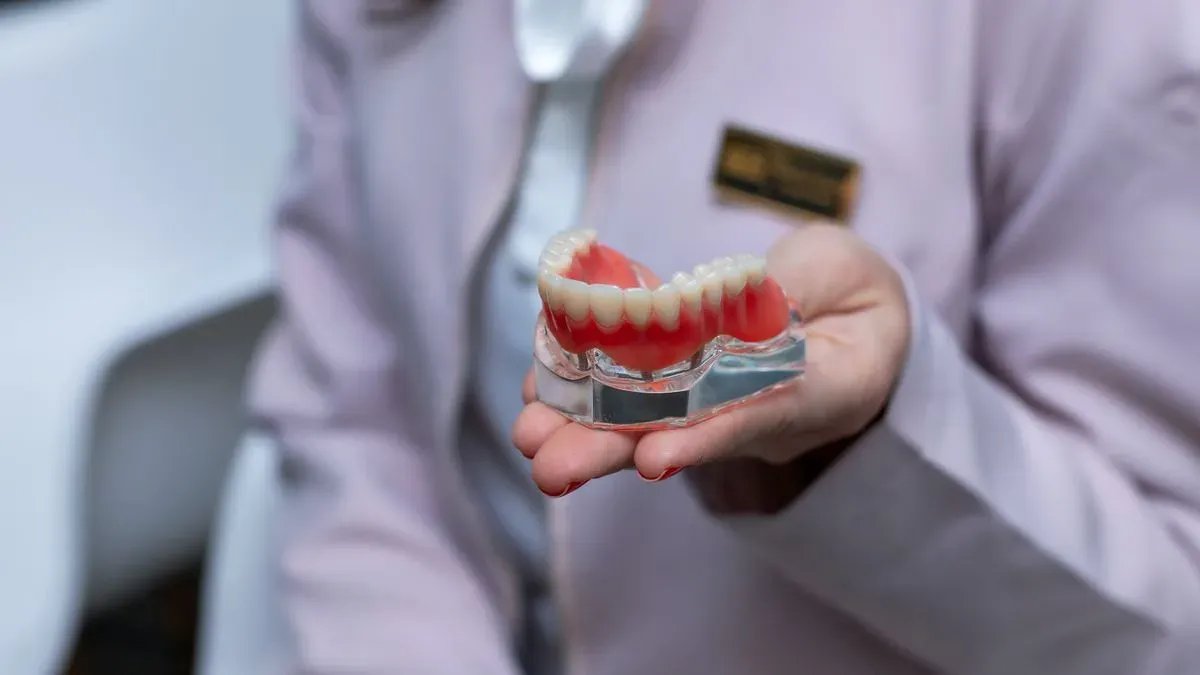
Dental grants for seniors mostly don't exist in the way the ads suggest. In fact, the federal government doesn't give dental grants to individuals, and Medicare doesn't pay for most dental care. Still, free and low-cost care is real. It comes through Dental Lifeline Network's volunteer dentists, health centers, dental schools, Medicaid, PACE and free clinic events. Below, we explain what each one offers, who qualifies, and what the "dental grant" websites in your search results actually give you.
Key Takeaways
Are There Dental Grants for Seniors?
Not from the federal government. USA.gov puts it plainly: "The government does not offer 'free money' for individuals. Federal grants are typically only for states and organizations." So a "government dental grant" for one person isn't a real program.
The National Institute of Dental and Craniofacial Research (NIDCR), part of NIH, goes further. It says it does not "provide financial assistance for dental treatment," and that "ads, emails, or text messages claiming otherwise are likely fraudulent." Instead, NIDCR points people to dental schools, health centers, Medicaid and local health departments.
Real grants do exist, but they go to organizations. For example, a foundation may fund a clinic, and the clinic then treats patients for free. Therefore, what you're really looking for is a program that pays for your care, not a check made out to you.
What "Dental Grant" Websites Actually Offer
Several of the top results for dental grants for seniors are state-branded sites, such as New York Dental Grants and California Dental Grants. In fact, both list a contact address at cosmeticdentistrygrants.org. Fortunately, the Cosmetic Dentistry Grants (CDG) program publishes its own rules, so here's what they say:
| What CDG's rules say | What it means for you |
|---|---|
| "Partial Grants" are awarded on a "per capita, percentile basis" | The grant covers part of a treatment plan, not all of it. |
| "Basic dentistry such as cleanings, extractions, root canals and fillings are not eligible and must be paid for by the applicant" | You pay for basic dental work yourself, usually before the cosmetic work starts. |
| You "may need to demonstrate that you have the financial capability in addition to valid insurance coverage" | It isn't built for people with no money. |
| "Is the CDG Program only meant for people that cannot afford a dentist? Of course not." | Your income doesn't affect eligibility. |
| Funded by selling "marketing and quality control programs" used by dentists | The money comes from programs sold to dental practices. |
| The dentist must be in the program, within 60 miles | You can't take the grant to your own dentist unless they join. |
Source: Cosmetic Dentistry Grants home page, FAQ and Rules and Regulations, read November 12, 2026. In addition, the rules say the program is governed by the laws of Ontario, Canada.
Of course, the program is open about these terms. However, it's a partial discount on elective work at a chosen dentist, not free care. If you need dental work you can't afford, a donated-care program is a better fit.
How to Spot a Fake or Misleading Grant Offer
Before you apply for any dental grant, check these five points:
- It claims to be a government grant for you personally. Federal grants go to states and organizations, as USA.gov explains.
- It asks for a fee to apply or to "release" the grant. Even CDG says applying is free, so treat any fee as a warning sign.
- It only covers cosmetic or implant work. Then you still pay for the fillings and extractions you need first.
- You must use its dentist. In that case, ask that dentist for the full price before and after the grant.
- It never asks about your income. Donated-care programs such as Dental Lifeline Network ask for your income and expenses.
Free and Low-Cost Dental Care for Seniors: Your Options
In short, here are the real routes, side by side. In practice, most seniors qualify for at least one.
| Option | Who qualifies | What you pay | The catch |
|---|---|---|---|
| Dental Lifeline Network (Donated Dental Services) | 65 or older, permanently disabled, or medically fragile, with no way to pay | Nothing | One time only, long waitlist, implants may not be included |
| Health centers | Patients with or without insurance | A fee based on your income | Not every center offers dental or every procedure |
| Dental schools | Patients the school accepts | Reduced fees | Longer visits, and not every case is accepted |
| Medicaid | Low income, rules set by your state | Little or nothing | Adult dental benefits vary by state |
| PACE | 55 or older, needing nursing home-level care | No premium with Medicaid | Only in some areas |
| Medicare Advantage dental | People with Medicare | Often included in the plan | Low yearly limits |
| Free clinic events | Anyone, no insurance needed | Nothing | Only on set dates and places |
Sources: Dental Lifeline Network, NIDCR, Medicare.gov, KFF and Remote Area Medical. Next, the sections below cover each option in detail.
Dental Lifeline Network: Free Care for Seniors
Dental Lifeline Network (DLN) is the closest thing to a real dental grant for seniors. Specifically, its Donated Dental Services program connects people with volunteer dentists and labs. It says that care "is provided at no cost," although it doesn't include cosmetic work.
First, to qualify, you must meet one of three conditions: you're 65 or older, you're permanently disabled, or you need medically necessary dental care. In addition, you "must not have the financial means to afford dental care." Here are the other rules on DLN's application page:
- Once in a lifetime. You can receive care through the program only once.
- Insurance first. You must use up any dental insurance and benefits first, including Medicaid.
- The dentist decides. Sedation, implants and complex care "may not be provided."
- A long wait. Depending on where you live, the waitlist "can be several months to a year or more."
The program is large, though. In total, DLN says 11,300 volunteer dentists and 3,000 dental labs take part. Moreover, since 1985, it has donated more than $585 million in care to about 173,000 people. So if you're 65 or older and have no way to pay, apply now, because your place in line starts when you submit.
Health Centers and Dental Schools
At federally funded health centers, NIDCR says, you "pay what you can afford, based on your income." Use HRSA's Find a Health Center tool, then call to ask whether that location offers adult dental care.
Similarly, dental schools are another low-cost route. Students treat patients while licensed dentists "closely supervise" them, NIDCR says, and the care costs less. Dental hygiene schools may also offer low-cost care. In addition, you can find accredited programs near you with the Commission on Dental Accreditation's search tool.
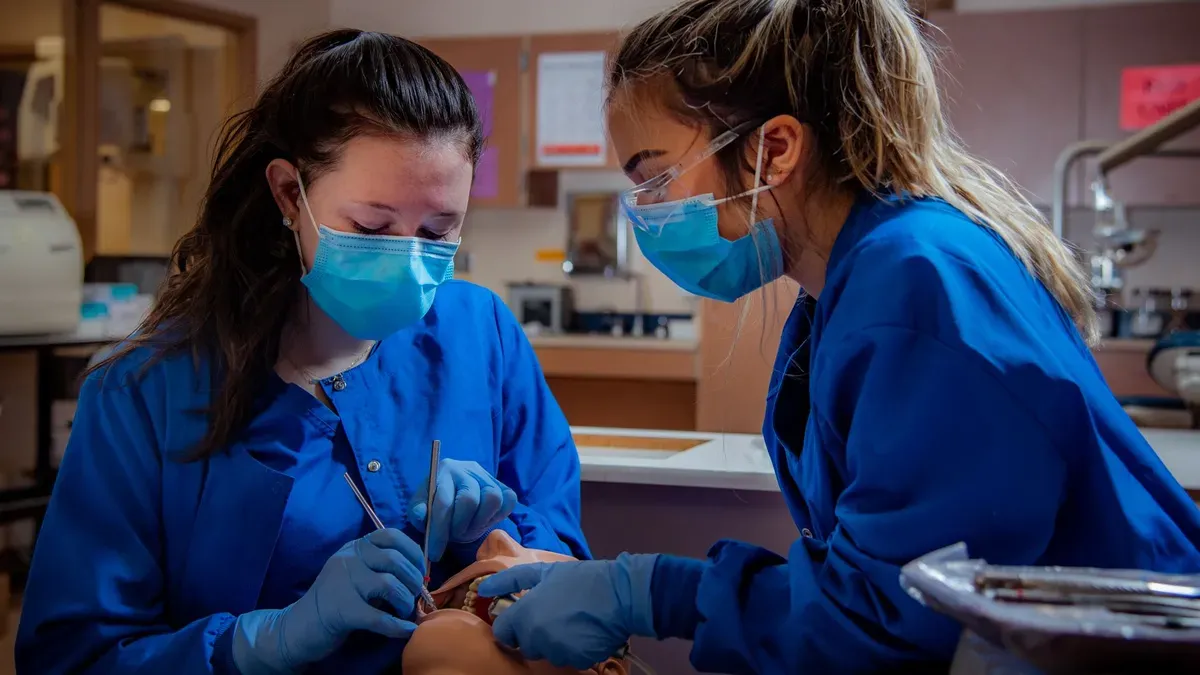
Dental school clinics charge less because supervised students do the work, but appointments can take longer.
Of course, neither option is free. Still, both can lower what you pay. If you need a step-by-step plan for a large estimate, our guide on how to fix your teeth with no money shows how to stage treatment and compare quotes.
Medicaid, PACE and Medicare Advantage
Medicare is the first place most seniors look. However, Medicare.gov is clear: "In most cases, Medicare doesn't cover dental services like routine cleanings, fillings, tooth extractions (removals), or items like dentures and implants." Our guide to what Medicare covers for dental lists the narrow exceptions. As a result, these three programs matter more:
- Medicaid. If your income is low, check it first. Adult dental benefits depend on your state. The ADA Health Policy Institute found 38 states and DC at the highest, "enhanced" level as of December 2025. Our state-by-state Medicaid dental guide shows where you stand.
- PACE. The Program of All-Inclusive Care for the Elderly lists dentistry among its services. You must be 55 or older, live in a PACE area and need nursing home-level care. With Medicaid, you pay no monthly premium.
- Medicare Advantage. KFF found that 98% of individual Medicare Advantage plans offered dental benefits in 2026. However, limits are low. In 2021, plans with more extensive dental benefits averaged a yearly cap of about $1,300.
Finally, to compare the last option with a separate plan, see standalone dental insurance vs. Medicare Advantage. For dentures specifically, read does Medicare cover dentures.
Free Dental Implants and Dentures for Seniors
Free implants are the hardest thing to find. For one thing, DLN's volunteer dentists may not provide implants, and CDG's grant covers only part of the cost. Meanwhile, Medicare doesn't pay for implants in most cases. Also, our guide to Medicare and dental implants covers what 2027 Advantage plans pay.
Dentures, on the other hand, are more realistic. DLN works with volunteer dental labs as well as dentists, and dental school clinics charge reduced fees. Some state Medicaid programs cover them too, although dentures are often missing even in states with broad benefits. So if a dentist recommends implants and you can't pay, ask whether a denture or a partial would work.
Veterans and Free Clinic Events
In addition, veterans have extra routes. The VA offers "any needed dental care" to some groups, such as veterans with a 100% service-connected disability rating and former prisoners of war. Also, our guide to dental insurance for veterans explains each VA class and the VADIP plans.
Free clinic events are another option. For instance, Remote Area Medical runs pop-up clinics that provide "free dental, vision, and medical care." It says patients "do not need insurance, and care is provided at no cost." Clinics run on set dates in different places, so check RAM's schedule for one near you.
How to Find Free Dental Care Near You
Local programs change often, so a phone call works better than a web search. Start with these:
- Call the Eldercare Locator at 1-800-677-1116. This public service of the Administration for Community Living connects you to services for older adults, including your local Area Agency on Aging.
- Dial 2-1-1. NIDCR recommends it for finding free or reduced-cost dental services.
- Call your state or local health department and dental association. Some fund local programs. For example, the Florida Dental Association Foundation supports Florida Donated Dental Services, which DLN runs.
- Apply to Dental Lifeline Network. Do this early, because of the waitlist.

One call to the Eldercare Locator or 2-1-1 can turn up local programs that never show up in search results.
However, what if you need work before help comes through? In that case, a discount plan is one stopgap. It isn't insurance and it isn't free. Rather, you pay a yearly fee for lower prices at participating dentists, with no waiting period. Our discount plan vs. insurance guide explains the trade-offs.
Frequently Asked Questions
Are there government grants for dental implants for seniors?
No. USA.gov says the federal government doesn't offer free money to individuals, and NIDCR says ads claiming it pays for dental treatment are likely fraudulent. Instead, check Medicaid, Medicare Advantage dental benefits and dental schools.
Are cosmetic dentistry grants real?
The program exists, but it isn't free care. Cosmetic Dentistry Grants awards partial grants toward cosmetic or implant work at participating dentists. In fact, its own rules say you pay for cleanings, fillings, extractions and root canals yourself.
How do I get free dentures as a senior?
Apply to Dental Lifeline Network if you're 65 or older and can't afford care. Also check your state's Medicaid dental benefits, PACE if you qualify, and dental schools for reduced fees.
How long is the Dental Lifeline Network waiting list?
DLN says the waitlist "can be several months to a year or more," depending on where you live. Its coordinators can't give estimates, so apply as early as you can.
Does Medicare pay for dental care for seniors?
In most cases, no. Medicare doesn't cover routine cleanings, fillings, extractions, dentures or implants. Many Medicare Advantage plans add dental benefits, but with yearly limits.
The Bottom Line
Dental grants for seniors are mostly a myth, and the "grant" sites in your search results offer partial discounts on cosmetic work. Instead, real help comes from donated care, income-based health centers, dental schools, Medicaid and PACE. So start today: apply to Dental Lifeline Network, call the Eldercare Locator, and check your state's Medicaid dental benefits. For a ranked list of plans, see the best dental insurance for seniors.
This guide is for general information, not medical, legal or insurance advice. Programs, eligibility and waitlists change, so confirm details with each program before you apply.
Sources
How we gathered the data: on November 12, 2026, we read the federal, nonprofit and program pages below. That includes the Cosmetic Dentistry Grants home page, FAQ and Rules, and the New York and California dental grant sites that list its contact address.
- Government grants and loans (USA.gov)
- Finding Dental Care (National Institute of Dental and Craniofacial Research)
- Apply for Help, Donated Dental Services (Dental Lifeline Network)
- About Us (Dental Lifeline Network)
- Cosmetic Dentistry Grants program and FAQ
- Cosmetic Dentistry Grants Rules and Regulations
- Dental services (Medicare.gov)
- PACE (Medicare.gov)
- Medicare Advantage 2026 Spotlight (KFF, December 2025)
- Medicare and Dental Coverage: A Closer Look (KFF, 2021)
- Dental Care in Medicaid Programs (ADA Health Policy Institute, December 2025)
- Find a Health Center (HRSA)
- Find a Program (Commission on Dental Accreditation)
- VA dental care (U.S. Department of Veterans Affairs)
- Free Mobile Healthcare Clinics (Remote Area Medical)
- Eldercare Locator (Administration for Community Living)
- FDA Foundation programs, Florida Donated Dental Services (Florida Dental Association)