Yes, you can use an FSA or HSA for a night guard. A guard that treats teeth grinding counts as a medical expense, and the FSA Store and HSA Store list night guards as eligible with an FSA, HSA, HRA or limited-purpose FSA. So any FSA night guard purchase works the same way, whether the guard comes from a dentist, an online lab or a drugstore. The catch is timing: unspent FSA money can disappear after December 31, so the plan rules matter more than the guard.
Key Takeaways
Is a Night Guard FSA and HSA Eligible?
The rule comes from the IRS, not from your benefits company. IRS Publication 502 defines medical care as the cost of "diagnosis, cure, mitigation, treatment, or prevention of disease." For dental work, it includes amounts you pay "for the prevention and alleviation of dental disease." A night guard prevents tooth wear and fractures from grinding, so it fits that definition.
Both the FSA Store and the HSA Store apply the rule the same way. Night mouth guards "are eligible for reimbursement" with these accounts:
- a health flexible spending account (FSA);
- a health savings account (HSA);
- a health reimbursement arrangement (HRA);
- a limited-purpose FSA (LPFSA), the dental and vision version.
However, they're "not eligible with a dependent care flexible spending account (DCFSA)," which only pays for child or adult care. In addition, the guard has to serve a medical purpose. A night guard for grinding or clenching qualifies, while teeth whitening trays don't, because Publication 502 excludes whitening outright.
Sports mouth guards are a gray area. The FSA Store says athletic guards "are eligible if used to prevent injuries and not for performance enhancement." Still, your plan administrator makes the final call, so check its eligible-expense list before you buy one with plan money.
Which Night Guards Qualify, and What They Cost
The type of guard doesn't change eligibility, but it does change how much of your balance you use. Prices come from our night guard cost breakdown:
| Guard | Typical price | FSA or HSA? | Paperwork to keep |
|---|---|---|---|
| Drugstore boil-and-bite | $15 to $50 | Yes, for grinding | Itemized store receipt |
| Online custom lab | $110 to $235 | Yes, for grinding | Order confirmation that names the guard |
| Dentist-made guard | $300 to $800+ | Yes | Itemized bill with CDT code D9944, D9945 or D9946 |
| Sports mouth guard | Varies | Only for injury prevention, plan decides | Receipt, plus a note if the plan asks |
| Whitening trays | Varies | No | Not applicable |
Sources: IRS Publication 502, FSA Store and HSA Store eligibility pages, and DCG prices updated in October 2026. For example, the FSA Store itself sells The Doctor's NightGuard, a drugstore guard, as an eligible item at $24.99. For a deeper look at the trade-off between cheap and custom, see custom vs. boil-and-bite night guards.
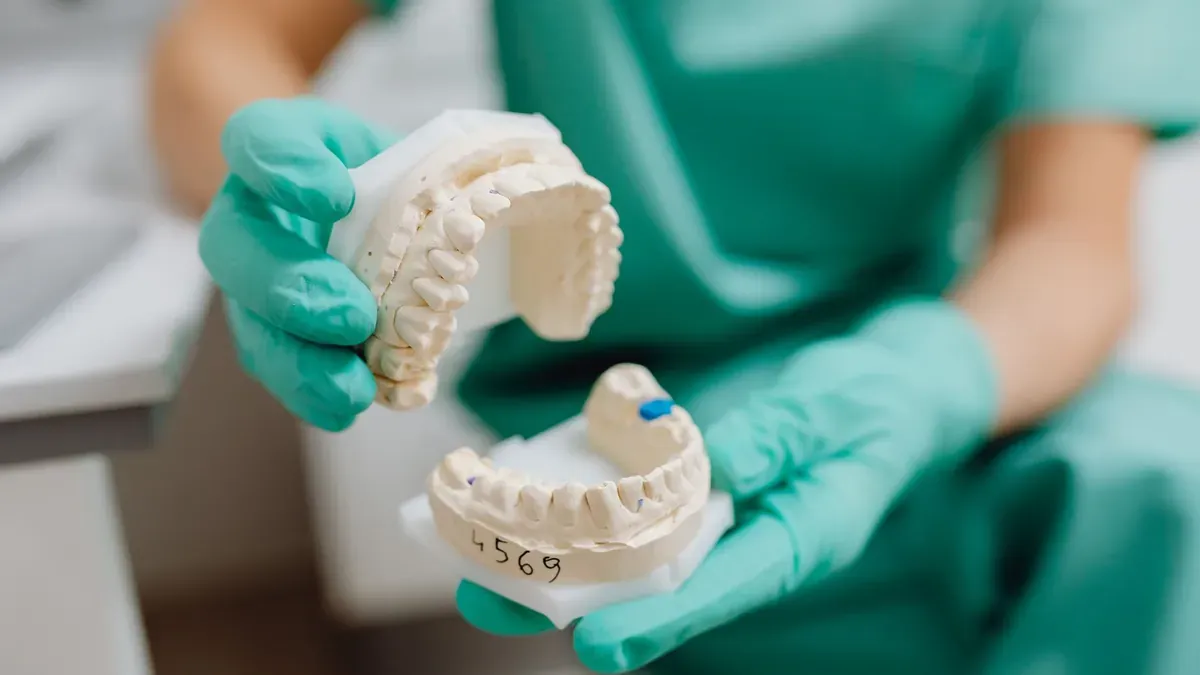
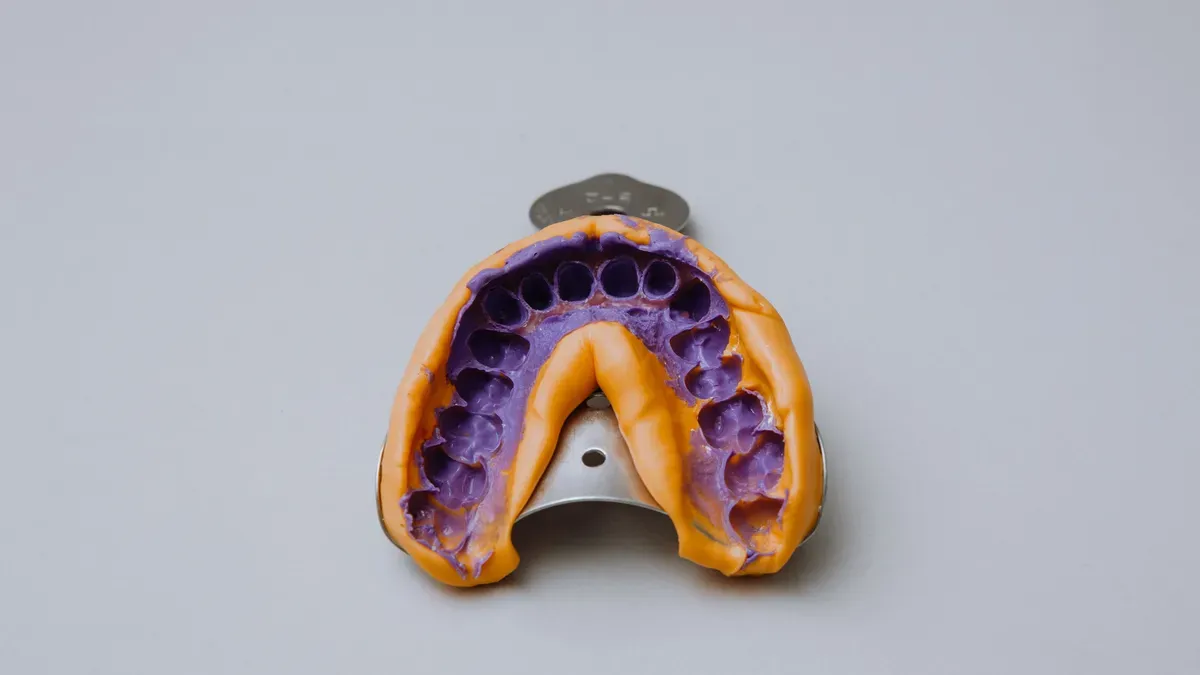
A dentist-made guard starts with an impression or scan, and the itemized bill is what your FSA will ask for.
How to Pay: Benefits Card or Reimbursement
There are two ways to use the money, and both work with an FSA or an HSA.
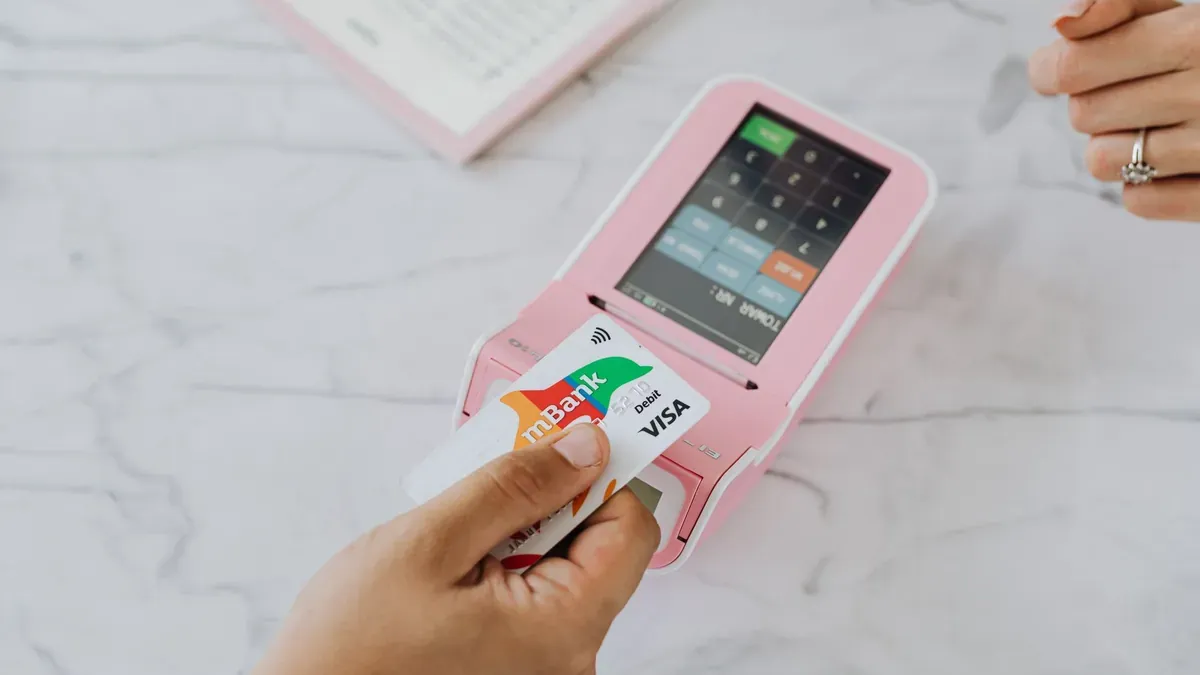
Pay with the benefits card. First, swipe your FSA or HSA debit card at the dentist or at checkout online. However, an FSA card isn't always the end of it. IRS Publication 969 says an FSA needs "a written statement from an independent third party" showing the expense and its amount. So your administrator may still email you asking for the receipt, unless the card transaction meets one of the IRS substantiation methods.
Pay first, then claim. If the card is declined, or the seller doesn't take it, pay with your own card. Then upload the itemized receipt to your FSA or HSA portal and ask for reimbursement. For an FSA, you'll also confirm that the expense "hasn't been paid or reimbursed under any other health plan coverage."
An HSA works differently. You don't send receipts to anyone; instead, Publication 969 says you "must keep records sufficient to show" that the money paid for qualified medical expenses. You also "don't have to make withdrawals from your HSA each year." As a result, you can pay for a guard out of pocket today and reimburse yourself from the HSA later, provided you bought it after the HSA was established.
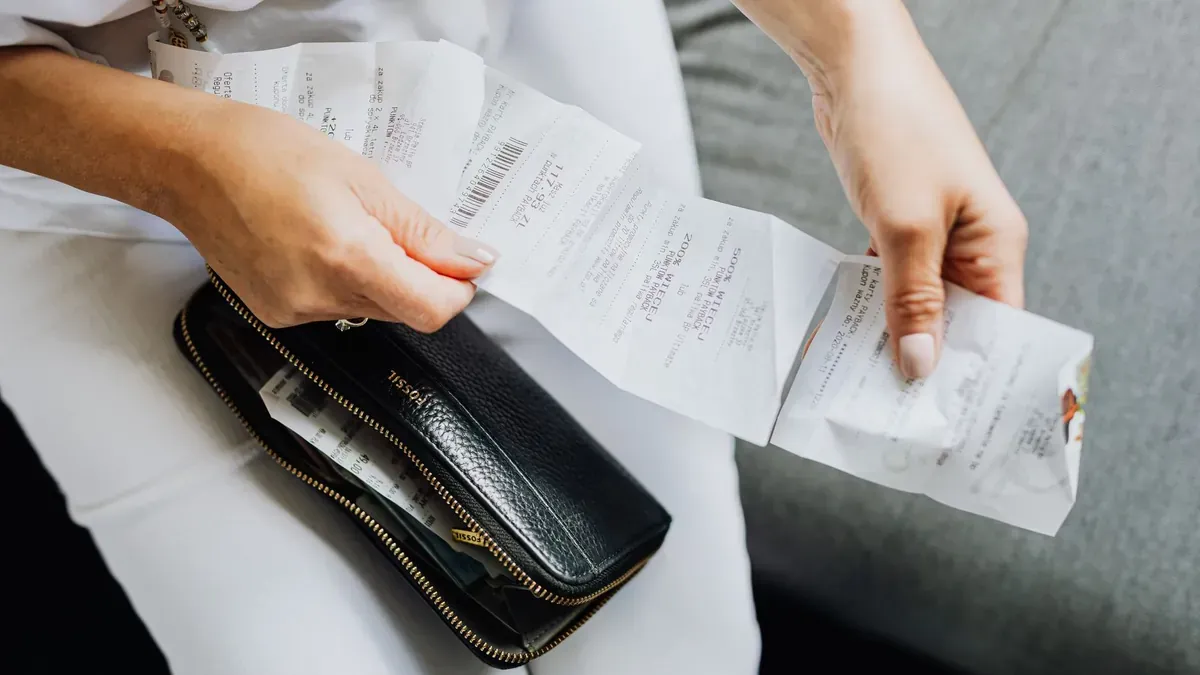
Keep the itemized receipt. An FSA may ask for it after a card swipe, and an HSA requires you to keep it for the IRS.
Using Your FSA Before It Expires
FSAs are generally "use-it-or-lose-it" plans, Publication 969 says. Yet your employer can add one of two safety valves, never both:
| Your plan has | What happens to money left on December 31, 2026 |
|---|---|
| Neither option | It's forfeited, so spend it by the end of the plan year. |
| Grace period | You can use it for care received in the next 2½ months, so up to March 15, 2027 on a calendar-year plan. |
| Carryover | Up to $680 rolls into the 2027 plan year, and anything above that is lost. Your plan may set a lower amount. |
Timing matters too, because an FSA expense counts when you receive the care, not when you pay. Benefits lawyer Brian Gilmore of Newfront explains the proposed IRS regulations. Under them, an expense is "not incurred when the employee is billed, charged, or pays for the care." So a dentist guard fitted in January belongs to the 2027 plan year, even if you paid a deposit in December. If you want to use 2026 money, book the dentist early enough for the guard to be delivered before the deadline. Similarly, order an online guard with enough time for it to ship.
Before you spend down a balance, though, see a dentist first if you have tooth pain, a cracked tooth, jaw locking or diagnosed TMJ. In that case, a dentist-made guard is worth the larger bill.
2026 and 2027 FSA and HSA Limits
If you're choosing next year's FSA amount during open enrollment, include the cost of a night guard. The IRS has already published the 2027 numbers:
| Limit | 2026 | 2027 |
|---|---|---|
| Health FSA contribution | $3,400 | $3,500 |
| FSA carryover (if the plan allows it) | $680 | $700 |
| HSA, self-only coverage | $4,400 | $4,500 |
| HSA, family coverage | $8,750 | $9,000 |
| HSA catch-up, age 55 and older | $1,000 | $1,000 |
| Minimum HDHP deductible (self / family) | $1,700 / $3,400 | $1,750 / $3,500 |
Sources: Revenue Procedures 2025-19, 2025-32, 2026-24 and 2026-35. One helpful FSA rule also applies here. You can use your full yearly election "at any time during the coverage period," Publication 969 says, "regardless of the amount you have actually contributed." Therefore, a January dentist guard can use money you haven't had taken out of your paycheck yet.
Insurance First, Then Your FSA or HSA
If your dental plan covers guards, file the claim first and pay only your share with plan money. Both accounts pay only for costs that insurance didn't cover. Here's an illustrative example, not a quote from any carrier:
- A dentist charges $500 for a guard billed under D9944.
- Your plan covers guards at 50% after a $50 deductible, so it pays $225.
- You owe $275, and that's the amount you pay from your FSA or HSA.
Many plans, however, exclude guards or cap them at one every few years, so check whether dental insurance covers night guards before you assume a payment. If a claim gets denied, our playbook on getting insurance to pay for a night guard covers appeals. Our guide to night guard cost with insurance shows more examples of what's left after the plan pays.
One limit catches people out: HSA money can't pay your dental insurance premiums. Publication 969 allows premiums only for long-term care, COBRA, coverage while you're on unemployment, and Medicare if you're 65 or older, but not Medigap.
How Much You Save With Pre-Tax Money
The saving equals the taxes you would have paid on the money. FSA salary reductions and HSA contributions through payroll skip federal income tax, and IRS Publication 15-B says they're also exempt from Social Security and Medicare tax. For employees, the IRS lists those rates as 6.2% for Social Security and 1.45% for Medicare, or 7.65% together.
For example, take Sentinel's $215 Hard Guard and a 22% federal bracket. Buying it with FSA money saves about 29.65%, or roughly $64, so the guard effectively costs about $151. In most states, state income tax adds to the saving. If you put money into an HSA on your own instead of through payroll, you deduct it on your tax return, which saves the income tax but not the 7.65%.
If You Have an HSA, Use a Limited-Purpose FSA
Normally, you can't contribute to an HSA while you're covered by a regular health FSA. Publication 969, however, makes an exception for a limited-purpose FSA, which pays for dental and vision care and preventive care. Night guards are eligible under an LPFSA too, according to the FSA Store.
That combination works well for planned dental costs. So, if your employer offers it, you can put a guard and other dental bills on the LPFSA and let the HSA grow untouched for later.
Frequently Asked Questions
Can I use my FSA for a night guard?
Yes. A night guard for grinding or clenching is a medical expense, and it's eligible with a health FSA, HSA, HRA or limited-purpose FSA. A dependent care FSA can't pay for it.
Do I need a prescription or a letter from my dentist?
The FSA Store and HSA Store list night guards as eligible without mentioning a prescription, but the guard must be for a medical purpose such as grinding. Still, your administrator can ask for proof, so keep an itemized receipt and ask your dentist for a short note if you have one.
Can I use an HSA to pay for dental insurance?
No. HSA money can't pay dental insurance premiums. Publication 969 allows premiums only for long-term care, COBRA, coverage while you're on unemployment, and Medicare at 65 or older.
Is a sports mouth guard FSA eligible?
Sometimes. The FSA Store says athletic guards are eligible if used to prevent injuries rather than to boost performance. Your plan makes the final decision, so check its list first.
What if my FSA card is declined for a night guard?
Pay with your own card, then submit the itemized receipt through your FSA portal for reimbursement. Make sure it shows the date, the seller, the item and the amount.
The Bottom Line
A night guard is one of the simplest FSA and HSA purchases, because it's eligible from a dentist, an online lab or a drugstore. So the real decisions are timing and order. Use insurance first, pay your share with pre-tax money, keep the itemized receipt, and check whether your FSA has a grace period or a carryover before December 31.
This guide is general information, not tax, medical or insurance advice. Confirm eligibility and deadlines with your plan administrator, and see a dentist about tooth pain or jaw problems.
Sources
How we gathered the data: on November 11, 2026, we read IRS Publications 502, 969 and 15-B, Tax Topic 751, Revenue Procedures 2025-19, 2025-32, 2026-24 and 2026-35, the FSA Store and HSA Store eligibility pages for night mouth guards, and Newfront's explainer on when FSA expenses are incurred. Night guard prices come from our night guard cost guide, updated in October 2026, and Sentinel's prices from our Sentinel review.
- IRS Publication 502: Medical and Dental Expenses
- IRS Publication 969: Health Savings Accounts and Other Tax-Favored Health Plans
- IRS Publication 15-B: Employer's Tax Guide to Fringe Benefits (2026)
- IRS Revenue Procedure 2025-19 (2026 HSA limits)
- IRS Revenue Procedure 2025-32 (2026 health FSA limits)
- IRS Revenue Procedure 2026-24 (2027 HSA limits)
- IRS Revenue Procedure 2026-35 (2027 health FSA limits)
- FSA Store: Night Mouth Guards, FSA Eligibility
- HSA Store: Night Mouth Guards, HSA Eligibility
- IRS Topic 751: Social Security and Medicare Withholding Rates
- Newfront: When FSA Expenses Are Incurred