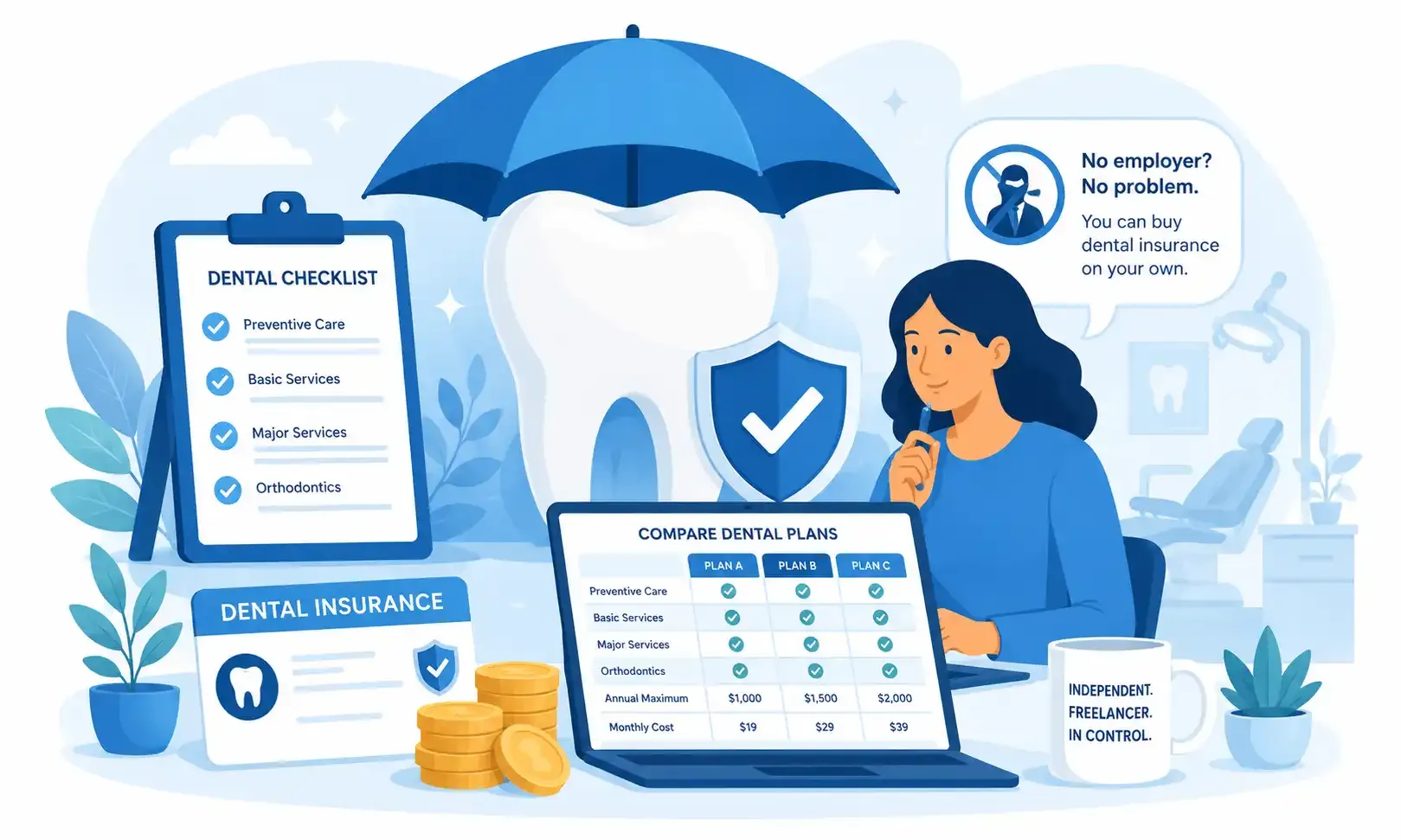
If you do not have dental benefits through a job, you may wonder: can you buy dental insurance without an employer?
Yes, you can. Many people in the United States buy dental coverage on their own, including self-employed workers, freelancers, independent contractors, part-time workers, early retirees, and people whose employers do not offer dental benefits.
The important part is knowing where to shop, what type of plan you are buying, and what the plan actually helps pay for. Dental insurance without an employer can be useful, but the right choice depends on your budget, dentist network, expected dental care, waiting periods, annual maximums, and out-of-pocket costs.
Quick Answer: Can You Buy Dental Insurance Without an Employer?
Yes. You can buy dental insurance without an employer by purchasing an individual dental plan directly from an insurance company, through a private marketplace, through some health insurance marketplaces, or as a stand-alone dental plan when available.
You may also compare dental discount plans, but those are not insurance. A dental discount plan usually gives you access to reduced fees from participating dentists, while dental insurance may pay part of covered services according to the plan’s rules.
Before enrolling, check the premium, provider network, deductible, copays, coinsurance, waiting periods, annual maximum, exclusions, and whether your current dentist accepts the plan.
Key Takeaways
- You can buy dental insurance without employer-sponsored benefits — about 74 million Americans lack employer dental coverage (ADA Health Policy Institute, 2024).
- Common options include private individual dental plans, stand-alone dental plans, and dental coverage offered with some health plans.
- Dental discount plans are not insurance, but they may reduce fees at participating dentists.
- Buying coverage independently means you usually pay the full premium yourself.
- Plan details can vary by insurer, state, ZIP code, network, and policy terms.
- Waiting periods, annual maximums, and exclusions can affect how useful a plan is.
- The best plan is not always the cheapest one. It is the one you can afford and actually use.
How Dental Insurance Works Without Employer Coverage
When you do not get dental insurance through an employer, you usually buy an individual or private dental plan.
That plan may work similarly to employer-sponsored dental coverage, but with one major difference: you usually pay the full premium yourself. There is no employer contribution helping reduce your monthly cost.
Cost varies by plan type. The National Association of Dental Plans (NADP (opens in a new tab)) puts the national average for individual DPPO plans at $41.76/month and for DHMO plans at $15.14/month, citing its 2024 Dental Benefits Report. Your actual premium depends on ZIP code, age, and the plan you choose.
Individual dental insurance may include benefits for:
- preventive care, such as cleanings, exams, and routine X-rays;
- basic care, such as fillings or simple extractions;
- major care, such as crowns, bridges, dentures, or some root canals;
- specialist care, depending on the plan;
- orthodontics, in some plans.
Coverage varies by plan. Some plans mainly help with preventive care. Others may include basic and major services, but with waiting periods, deductibles, coinsurance, annual maximums, or exclusions.
If you are new to the basics, read our guide on how dental insurance works.
Where Can You Buy Dental Insurance Without an Employer?
There are several ways to buy dental coverage without employer benefits.
| Option | How it works | What to check |
|---|---|---|
| Directly from an insurance company | You buy an individual dental plan from an insurer. | Premium, dentist network, waiting periods, annual maximum, exclusions. |
| Private insurance marketplace | You compare plans from multiple insurers in one place. | Plan type, provider network, benefits, and whether prices are current. |
| Health insurance Marketplace | Some Marketplace health plans include dental, and in some cases separate dental plans are offered. | Whether dental is included, separate, adult vs child benefits, enrollment rules. |
| Dental discount plan | You pay a membership fee for reduced rates from participating dentists. | Not insurance; check provider participation and fee schedule. |
| Paying cash directly | You skip insurance and pay the dental office directly. | Cash prices, payment plans, preventive visit costs, risk of major bills. |
HealthCare.gov explains that dental coverage in the Marketplace may be available in two ways: as part of some health plans or as separate dental plans in some cases. A stand-alone dental plan is a dental plan offered through the Marketplace that is not included as part of a health plan.
How Much Does Dental Insurance Cost Without an Employer?
Without an employer, you pay the whole premium yourself. For one adult, a stand-alone dental plan usually lists at about $16 to $30 a month in 2026. In the 30 HealthCare.gov states the median is $21.08 at age 40, $42.16 for a couple and about $102 for a family of four (our analysis of the CMS 2026 Marketplace files). Plans at the Marketplace's "high" coverage level run a median $33.02 a month, versus $17.80 at the "low" level.
The premium is only part of your yearly cost. Add the deductible, your coinsurance on the work you actually have done, and anything above the annual maximum. A cheap plan that your dentist doesn't take, or whose waiting period blocks the crown you need this year, can cost more than a pricier one.

Bought on your own, the two mainstream plan types sit far apart on price. NADP’s national averages (from its 2024 Dental Benefits Report) put the average individual DHMO at $15.14 a month and the average individual DPPO at $41.76 a month — a difference of about $320 over a year, which buys you a wider network and out-of-network reimbursement.
Over a year that is roughly $182 for a DHMO against $501 for a DPPO, before any deductible or coinsurance.
Types of Dental Plans You May See
PPO Dental Plans
A PPO dental plan usually gives you more flexibility in choosing dentists. You may save the most by using in-network dentists, but some PPO plans may also provide out-of-network benefits at a higher cost.
PPO plans may include premiums, deductibles, coinsurance, annual maximums, and waiting periods. They can be useful if you want more provider choice or already have a dentist you want to keep.
HMO or DHMO Dental Plans
A dental HMO or DHMO often has lower monthly premiums, but it usually requires you to use participating network dentists. Some plans may require you to choose a primary dentist.
This can be a good fit if the network works well in your area. It can be frustrating if your preferred dentist is not included or if nearby providers are not accepting new patients.
For a deeper comparison, read our guide to Dental PPO vs HMO.
Indemnity Dental Plans
Indemnity dental plans may allow more provider freedom, but they can also involve higher premiums, deductibles, reimbursement rules, and paperwork. Availability varies.
Dental Discount Plans
A dental discount plan is not insurance. You usually pay a membership fee and receive discounted prices from participating dentists.
FTC warns that medical discount plans, including some dental-related discount programs, are not insurance. Some may provide legitimate discounts, while others may be marketed in misleading ways. Always verify how the plan works before paying.
For a full side-by-side guide, read dental insurance vs dental discount plans.
Dental Insurance vs Dental Discount Plan vs Paying Cash
If you do not have employer dental benefits, you may compare three practical options: insurance, a discount plan, or paying cash.
| Option | Best for | Main limitation |
|---|---|---|
| Individual dental insurance | People who want coverage for preventive care and possible help with larger treatment costs | Premiums, waiting periods, annual maximums, and exclusions may apply |
| Dental discount plan | People who want reduced fees and have participating dentists nearby | Not insurance; you pay the discounted fee yourself |
| Paying cash | People with low dental needs or dentists offering clear cash prices | No insurance-style help if major treatment is needed |
The right choice depends on your expected dental care. If you mainly need cleanings, paying cash or using a discount plan may be enough. 1Dental (opens in a new tab) is one discount plan to compare, on the Careington and Aetna Dental Access networks with no waiting period. If you expect fillings, crowns, root canals, gum treatment, dentures, or implants, insurance may be worth comparing carefully.
What Dental Insurance May Cover Without an Employer
Individual dental insurance may cover similar categories as employer-sponsored dental plans, but every plan is different.
Preventive Care
Preventive care often includes cleanings, exams, and routine X-rays. Many plans cover preventive care at a high level, especially in network, but frequency limits may apply.
Basic Dental Care
Basic care may include fillings, simple extractions, and some gum treatment. These services may involve a deductible, copay, coinsurance, or waiting period.
Major Dental Care
Major care may include crowns, bridges, dentures, oral surgery, or some root canals. These services may have longer waiting periods, lower coverage percentages, or annual maximum limits.
To understand coverage categories better, see our guide on what dental insurance covers.
Important Terms to Understand Before Buying
Premium
The premium is the amount you pay to keep the plan active, usually monthly.
Deductible
A deductible is the amount you may need to pay before the plan starts sharing costs for certain services.
Copay
A copay is a fixed amount you pay for a covered service.
Coinsurance
Coinsurance is the percentage of a covered cost that you pay after the plan applies its rules.
Annual Maximum
The annual maximum is the most your dental plan will pay for covered services during a plan year. After that, you usually pay the rest yourself.
If this term is confusing, read our guide to annual maximum in dental insurance.
Waiting Period
A waiting period is the time you must wait after enrollment before certain benefits become available. Some plans may cover preventive care quickly but delay basic or major services.
For more detail, read our guide to dental insurance waiting periods.
In-Network Dentist
An in-network dentist has a contract with your plan. Using in-network dentists usually helps keep costs more predictable.
Out-of-Network Dentist
An out-of-network dentist does not have a contract with your plan. Your costs may be higher, or the plan may not pay as much.
See our guide to in-network vs out-of-network dentist care.
Pros of Buying Dental Insurance Without an Employer
- You can choose a plan based on your own dental needs.
- You are not limited to an employer’s plan options.
- You may be able to compare multiple insurers and plan types.
- You may find coverage that fits your dentist, family, or budget.
- You can keep coverage even if you change jobs or work independently.
This flexibility can be especially helpful for self-employed workers and freelancers.
Cons of Buying Dental Insurance Without an Employer
- You usually pay the full premium yourself.
- There may be no employer contribution.
- Plans may have waiting periods for basic or major services.
- Annual maximums may limit how much the plan pays.
- Your preferred dentist may not be in network.
- Some treatments may be excluded.
These limits do not mean individual dental insurance is a bad choice. They simply mean you should compare plans carefully before enrolling.
Is Dental Insurance Without an Employer Worth It?
Dental insurance without an employer may be worth it if the plan matches your expected care and your dentist access.
It may be worth considering if:
- you visit the dentist regularly;
- you want predictable preventive care costs;
- you expect fillings, crowns, root canals, dentures, or other treatment;
- your preferred dentist is in network;
- waiting periods do not block care you need soon;
- the annual maximum is useful for your expected needs.
It may be less useful if:
- the premium is high compared with your expected care;
- your dentist is out of network;
- the plan excludes the treatment you need;
- you only need occasional cleanings and can pay cash comfortably;
- a dental discount plan gives better value for your situation.
For cost planning, read our guide on how to calculate dental plan costs.
How to Choose Dental Insurance Without Employer Benefits
Use this checklist before buying:
- Get quotes using your ZIP code.
- Compare PPO, HMO/DHMO, and discount plan options.
- Check whether your dentist is in network.
- Look at the monthly premium and annual premium.
- Check the deductible, copays, and coinsurance.
- Review the annual maximum.
- Check waiting periods for basic and major services.
- Look for exclusions, especially for implants, orthodontics, dentures, or cosmetic services.
- Ask the dental office for estimated fees for care you expect to need.
- Compare the plan’s total yearly value, not just the monthly price.
If you are self-employed, our guide to best dental insurance for self-employed may help you compare options more directly.
Final Thoughts: Can You Buy Dental Insurance Without an Employer?
So, can you buy dental insurance without an employer? Yes. You can buy individual dental insurance, compare private dental plans, look at stand-alone dental plans where available, or consider a dental discount plan if insurance does not fit your situation.
The best choice depends on more than whether a plan is available. It depends on your dentist network, premium, deductible, waiting periods, annual maximum, expected care, and how much financial risk you are comfortable keeping yourself.
Before enrolling, compare the plan documents carefully and confirm your dentist accepts the plan. A dental plan should be affordable, understandable, and useful when you actually need care.
This article is for informational purposes only and does not replace advice from a licensed dentist, insurance provider, benefits administrator, or qualified professional. Dental coverage, costs, eligibility, and benefits can vary by plan, provider, location, and policy terms.
Frequently Asked Questions About Buying Dental Insurance Without an Employer
Can you buy dental insurance without an employer?
Yes. You can buy dental insurance without an employer through private insurers, private marketplaces, and sometimes through Marketplace options or stand-alone dental plans where available.
Can freelancers buy dental insurance?
Yes. Freelancers, independent contractors, and self-employed workers can buy individual dental insurance without needing employer-sponsored benefits.
Do you need health insurance to buy dental insurance?
It depends on where you buy the plan. Some dental plans are sold separately, while Marketplace stand-alone dental plans may have specific shopping and enrollment rules. Check the plan source before enrolling.
Can you buy dental insurance anytime?
Some private dental plans may be available outside a traditional open enrollment period, but rules vary by insurer, marketplace, state, and plan type. Marketplace and employer-related options may have enrollment windows.
Are dental discount plans the same as insurance?
No. Dental discount plans are not insurance. They usually provide reduced fees from participating dentists, but they do not pay claims or reimburse a percentage of your bill.
Is private dental insurance worth it?
Private dental insurance may be worth it if the plan matches your dentist, expected care, budget, and coverage needs. It may be less useful if the network is weak or the plan excludes care you need.
What should I check before buying dental insurance without an employer?
Check the premium, dentist network, deductible, copays, coinsurance, waiting periods, annual maximum, exclusions, and whether your expected services are covered.
Is employer dental insurance usually cheaper?
Employer dental insurance may cost less to the employee if the employer pays part of the premium. Without employer benefits, you usually pay the full premium yourself.
Sources and References
- HealthCare.gov – Dental Coverage in the Marketplace (opens in a new tab)
- HealthCare.gov – Stand-Alone Dental Plan (opens in a new tab)
- HealthCare.gov – Dental Plan Information (opens in a new tab)
- Federal Trade Commission – Medical Discount Plans and Insurance Scams
- National Association of Dental Plans – Understanding Dental Benefits (opens in a new tab)
If you’re deciding between buying dental coverage through the ACA Marketplace or directly from a carrier, the choice affects enrollment timing, plan variety, and cost. Compare ACA Marketplace vs. stand-alone dental insurance to see which path makes more sense for your situation.
Related guides: How to buy individual dental insurance — ACA marketplace vs standalone dental plans — PPO vs HMO: which plan fits individual buyers? — Average cost of individual dental insurance.
Part of the Dental Insurance FAQs. Also read: is dental insurance worth it? — what is a dental deductible? — average dental insurance cost.
Have more questions about buying coverage on your own? See our dental insurance FAQ hub.