

Written and reviewed by Alex Carter, Editor & Content Reviewer at Dental Coverage Guide. See our editorial policy.
Key Takeaways
- Most dental plans cover root canals, paying 50% to 80% of the cost after your deductible. On a $1,500 molar, that’s roughly $750 to $1,200 in plan benefits, assuming no waiting period applies and your annual maximum has room left (Delta Dental, 2025).
- Plans classify root canals as basic or major care, and that classification drives your coinsurance rate and whether a waiting period applies. Check your plan’s summary of benefits; don’t assume.
- The crown that usually follows a root canal is billed separately, with its own coverage rules and its own bite out of your annual maximum.
Root canal treatment saves a damaged or infected tooth, and the honest answer to whether insurance covers it is yes, most plans do. The number that actually matters is how much you’ll owe once your specific plan’s deductible, coinsurance, waiting period, and annual maximum are applied to the bill. Here’s what a root canal really costs, what five real plans pay toward one, and where the coverage gaps tend to show up.
Does Dental Insurance Cover Root Canals?
Yes, in most cases. Dental plans typically classify root canals as restorative treatment needed to save a tooth from infection, deep decay, or damage. They cover them under basic or major services, depending on the policy. Coverage commonly pays 50% to 80% of the cost after your deductible (Delta Dental, 2025). The crown that often follows treatment is a separate service with its own rules, covered in more detail below.
Two things determine your real cost more than the coverage percentage does. One is whether a waiting period applies. The other is how much room is left on your annual maximum. A plan with a 12-month wait on major work pays nothing toward a root canal you need this year, no matter what percentage it advertises. If you’re still learning the basics, see the guide on how dental insurance works.
What a Root Canal Costs, by Tooth

Cost depends mostly on which tooth is involved, since back teeth have more canals to clean and fill. Delta Dental’s out-of-network estimates put a front-tooth root canal around $1,200, a premolar around $1,300, and a molar around $1,500 (Delta Dental, 2025). Those figures cover the root canal treatment and X-rays, not the crown or filling that restores the tooth afterward.
Ask your dental office for a written estimate before treatment, and ask whether they can submit a pre-treatment estimate to your insurer. For broader planning, see how to calculate dental plan costs.
What Real Plans Pay Toward a Molar Root Canal
Ranges like “50% to 80%” are true but not useful when you’re deciding what to buy. Here’s what five individual plans actually leave you paying on a $1,500 molar root canal, treated as major work:
| Plan | Monthly | Major-Work Coverage | Wait | You Pay in Year 1 | Once the Wait Clears |
|---|---|---|---|---|---|
| Delta Dental for Everyone No Wait | $81.80 | 50% after $100 deductible | None | $850 | $850 |
| Spirit Dental Core 1200 | $23.93 | 25% year 1, rising to 50-60% | None | $1,225 | $700 by year 3 |
| NCD Complete by MetLife | $94.00 | 10% year 1, 50% year 2, 60% year 3+ | None | $1,450 | $700 by year 3 |
| Guardian Advantage Premier 2.0 | $67.89 | 60% after $50 deductible | 12 months | $1,500 | $650 |
| MetLife TakeAlong PPO High | $58.44 | 50% after $25 deductible | 12 months | $1,500 | $775 |
Two of the five plans pay nothing in year one because of a 12-month wait, which matters because a root canal is rarely something you can postpone that long. Among the plans that pay immediately, the cheapest premium isn’t the cheapest outcome. Spirit Dental Core 1200 costs a third of Delta’s premium. But it leaves you paying $375 more, because its first-year reimbursement is only 25%. Premiums are sample rates and vary by state, ZIP code, and age. A root canal classified as basic rather than major would be covered at a higher rate on most of these plans.
Basic or Major Care? Why the Classification Matters
Plans don’t agree on how to classify a root canal, and the classification changes your coinsurance rate and whether a waiting period applies.
| Service category | Common examples | Why it matters |
|---|---|---|
| Preventive care | Cleanings, exams, routine X-rays | Usually covered at 100%, no wait |
| Basic care | Fillings, simple extractions, some root canals | Moderate coinsurance, shorter or no waiting period |
| Major care | Crowns, bridges, dentures, some root canals | Lower coinsurance, longer waiting periods common |
Don’t assume your plan classifies root canals the same way another plan does; check the benefit summary or call your insurer before scheduling.
The Crown After a Root Canal Is a Separate Bill
A root canal treats the inside of the tooth. The crown that often follows protects the outside. Insurers bill it as a distinct service, with its own coverage rules, its own possible waiting period, and its own draw on your annual maximum. This is one of the biggest surprises for patients who assume “root canal covered” means the whole job is covered. Before treatment, ask your dental office and insurer four things. Is the root canal covered? Is the crown covered? Are they under the same service category, and how much annual maximum will remain after both? See the guide to whether dental insurance covers crowns for the full breakdown.
Waiting Periods, Annual Maximums, and Network Rules
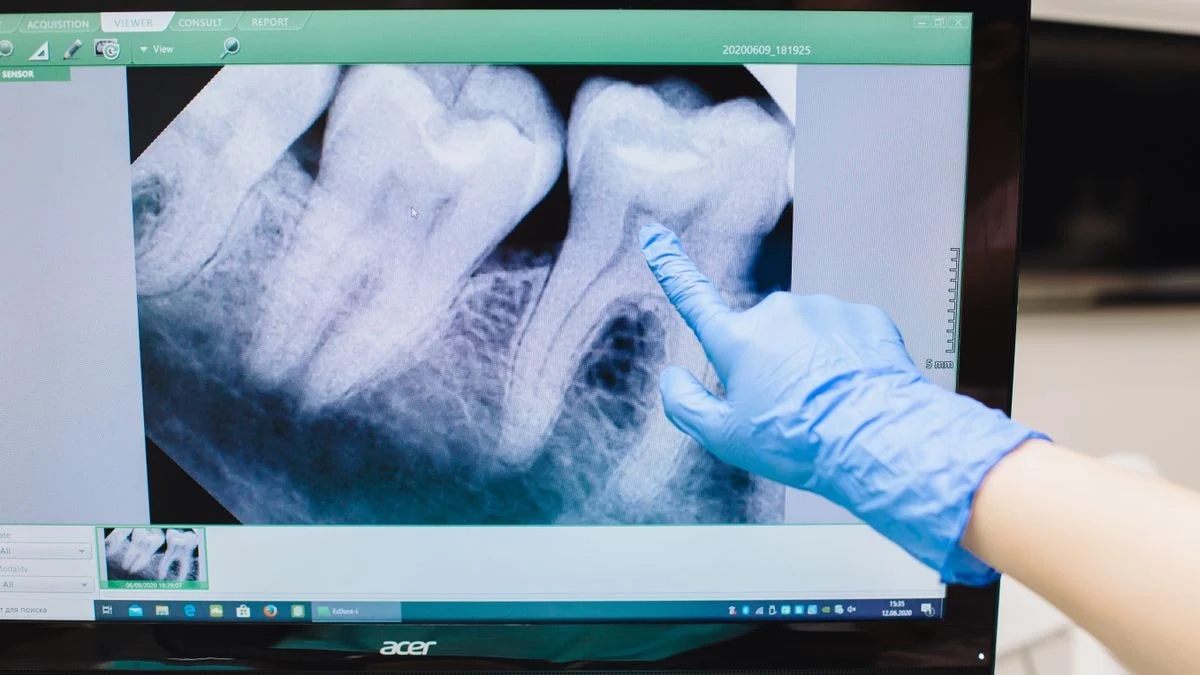
Three plan features do more to determine your real cost than the headline coverage percentage. A waiting period is how long you must be enrolled before major services pay out. On a plan with a 12-month wait, a root canal you need in month three gets zero benefit, full stop. The annual maximum is the most your plan pays for all covered dental care in a plan year. A root canal rarely arrives alone. A crown, X-rays, or a specialist referral can eat into that same pool before you’ve paid for either. Network status matters most if you’re referred to an endodontist. Out-of-network specialists haven’t agreed to your plan’s contracted rates, so your share of the bill goes up. Check your waiting period and annual maximum before assuming a percentage on a brochure tells you what you’ll pay. Confirm both your dentist and any specialist are in-network before scheduling.
Retreatment and Emergency Root Canals
If a previous root canal needs to be reopened, coverage for retreatment depends on your plan. Insurers typically look at why retreatment is needed, how long ago the original treatment happened, and whether frequency limits apply. Get a pre-treatment estimate before retreatment work begins, the same as you would for a first root canal.
An emergency root canal still runs through your plan’s normal rules. Deductible, coinsurance, waiting period, and network status all still apply, even when the need is urgent. Some plans handle an emergency exam or pain relief differently from the root canal itself. If you’re in pain, see a dentist first and sort out coverage with your insurer after. A pre-treatment estimate based on the X-ray will tell you what the plan pays before work starts.
How to Lower the Cost of Root Canal Treatment
A few concrete steps reduce the odds of a surprise bill. Use an in-network dentist or endodontist, and confirm any referral is in-network too before you go. Ask for a written pre-treatment estimate so you know what the plan will pay before treatment starts, not after. Check how much of your annual maximum remains if a crown is coming next. A root canal and its crown together can use up the whole year’s benefit. If your plan has a long wait or thin coverage, compare it against a dental discount plan instead. It isn’t insurance, but it can offer a negotiated rate with no waiting period. If a root canal isn’t viable and extraction becomes the only option, the next question is usually about replacement; see the best dental insurance for implants guide.
Frequently Asked Questions
Does dental insurance cover root canals?
Most plans do, typically paying 50% to 80% of the cost as a basic or major service, depending on the policy. Your out-of-pocket cost depends on your deductible, coinsurance, waiting period, and annual maximum.
How much does insurance actually pay for a root canal?
It depends on the plan, not just the advertised percentage. On a $1,500 molar, five real individual plans leave patients paying anywhere from $850 to $1,500 in year one, once deductibles and waiting periods are factored in.
Is a root canal basic or major dental work?
It depends on the insurer. Some plans classify root canals as basic services with moderate coinsurance; others classify them as major services with lower coinsurance and longer waiting periods. Check your plan’s summary of benefits.
Does dental insurance cover the crown after a root canal?
Often, but the crown is billed as a separate service from the root canal, with its own coverage rules and its own draw on your annual maximum. Confirm both are covered before scheduling.
Is an emergency root canal covered by dental insurance?
Yes, but the plan’s normal rules still apply: deductible, coinsurance, waiting period, and network status. Urgency doesn’t waive a waiting period.
Bottom Line
Most dental insurance covers root canals, but the coverage percentage on the brochure isn’t the number that decides your bill. The waiting period and annual maximum usually matter more, and the crown that follows is a separate cost with its own rules. Get a pre-treatment estimate before scheduling, and compare what a plan actually pays in year one, not just its advertised coinsurance. For the full lineup of major-work coverage, see the best dental insurance plans hub or the dental insurance FAQ hub for more coverage questions.
This article is for informational purposes only and does not replace advice from a licensed dentist, insurance provider, or benefits administrator. Coverage, costs, and eligibility vary by plan, provider, location, and policy terms.