
Dental insurance with no annual maximum does exist, but you'll find it in two places: dental HMOs and some Medicare Advantage plans. Both come with a trade-off.
For 2027, we counted 386 Medicare Advantage plans with no cap on comprehensive dental care. However, 58% of them don't include fillings or crowns in their dental benefit. Here's where to find a plan without a maximum, what you give up, and when a high-maximum plan works better.
Key Takeaways
Is There Dental Insurance With No Annual Maximum?
Yes, though it's the exception. Most dental plans cap what they pay each year. According to the National Association of Dental Plans, cited by the American Dental Association (ADA), 32.8% of in-network annual maximums fall between $1,000 and $1,500. Another 48.2% fall between $1,500 and $2,500.
Only 17.2% sit above $2,500, and that group includes the plans with no maximum at all. So if you want a plan without a yearly cap, you'll usually look at one of three options:
- A dental HMO (DHMO), sold to individuals and through some employers.
- A Medicare Advantage plan with dental benefits, if you're on Medicare.
- A dental discount plan. It has no maximum, but it isn't insurance.
If you're not sure how a maximum works, start with our guide to what an annual maximum is in dental insurance.
Dental HMOs: No Maximum, but You Use Their Dentists
A dental HMO swaps the yearly cap for a fixed price list. You pay a set copay for each covered service, and the dentist accepts that copay as your share. In exchange, you pick one dentist from the plan's network and get your care there.
Two examples you can buy on your own:
- DeltaCare USA. Delta Dental describes it as having "lower costs and no deductibles or annual maximums." Its 2027 Preferred plan for families in Florida costs a median $25.27 a month for a 40-year-old on HealthCare.gov.
- Aetna Dental Direct DMO. Aetna lists its annual benefit maximum as "No maximum," with a copay that varies by service, starting at $17 a month.
Here's what the Florida DeltaCare USA plan charges an adult for common work in 2027. There's no deductible and no waiting period.
| Service | Your copay |
|---|---|
| Crown, porcelain fused to metal | $350 |
| Root canal, molar | $240 |
| Full upper denture | $350 |
| Deep cleaning, per quadrant | $50 |
| Tooth-colored filling, back tooth, 1 surface | $65 |
Because there's no cap, three crowns cost you $1,050 in copays, and the plan still pays its part. On a plan with a $1,000 maximum, you'd likely run out of benefits partway through. For more on how HMOs compare with PPOs, see PPO vs HMO dental insurance.
Medicare Advantage Plans With No Dental Maximum

Check the list of covered services, not just the cap, before you pick a Medicare Advantage plan.
Medicare Advantage plans publish their benefits in a federal data file, so we can count them. We looked at every general Medicare Advantage plan for 2027, leaving out special needs and employer plans. Of the 3,002 plans that build in comprehensive dental care, 386 have no maximum on it. That's 12.9%.
These plans are sold in 42 states and Washington, D.C. Most are HMOs (207) or local PPOs (104). The insurers with the most of them are Humana (83 plans), Kaiser Permanente (51) and Wellcare (49).
For the plans that do have a cap, the median is $1,500 a year. Original Medicare doesn't cover routine dental care at all, as our guide to what Medicare covers for dental explains.
What You Give Up Without a Maximum
Here's the catch. Many plans with no dental cap don't cover the expensive work that a cap would limit. In the 2027 Medicare Advantage files, the plans without a maximum cover far fewer major services:
Source: CMS Plan Benefit Package files, plan year 2027. Our analysis of 3,002 general Medicare Advantage plans with comprehensive dental.
Chart description
Plans with no cap: fillings and crowns 42%, root canals 29%, bridges 24%, implants 3%. Plans with a cap: fillings and crowns over 99%, root canals 95%, bridges 88%, implants 27%.
In numbers: 223 of the 386 no-cap plans don't cover fillings or crowns. Only 111 cover root canals, and just 12 cover implants. Instead, many of them cover gum care (303 plans) and oral surgery (216).
So "no maximum" can mean "nothing big to cap." Before you choose a plan for the missing cap alone, check the list of covered services. Our guide to common exclusions in senior dental insurance shows what to look for.
High-Maximum Plans: The Other Way Around a Low Cap
If you want a PPO and your own choice of dentist, look for a high maximum instead. These plans still have a cap, but a much higher one. Here are three individual plans we priced for a 40-year-old in November 2026:
| Plan | Yearly maximum | Monthly price (examples) | Pays toward a crown |
|---|---|---|---|
| NCD Complete by MetLife | $10,000 | $94.00 (Los Angeles) to $98.00 (Miami) | 10% in year 1, 50% in year 2, 60% from year 3 |
| Guardian Advantage Premier 2.0 | $3,000 | $64.21 (Miami) to $84.86 (Los Angeles) | 60% after 12 months |
| MetLife TakeAlong Dental High | $2,000 | $51.76 (Miami) to $58.44 (Los Angeles) | 50% after 12 months |
A higher cap costs more each month, and it only pays off if you use it. For example, NCD Complete costs about $430 to $550 a year more than TakeAlong High in the same cities. That's worth it mainly if you expect several crowns or an implant in the same year. Our guide to the best dental insurance for major dental work compares these plans in more detail.
How Many People Actually Hit Their Maximum?
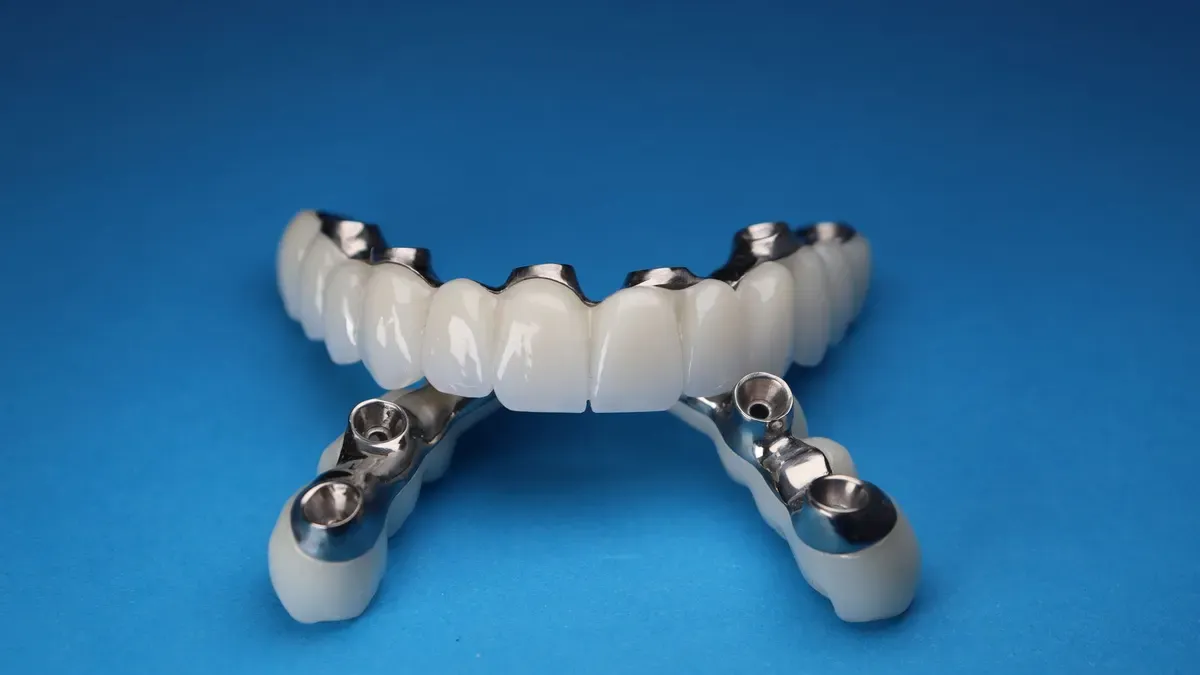
Big treatment plans, such as several crowns or an implant, are what push people past a yearly cap.
Plan data says fewer than 5% of people reach their maximum, but a 2025 survey found more. In a 2025 survey by the CareQuest Institute, 12% of adults with dental insurance said they reached or passed their maximum the year before. That's about 32 million people.
The rate rises with age, to 14% at 65 and older. However, only 6% of adults with Medicare Advantage dental said they reached it. And 46% of those who hit their maximum said it kept them from getting more care.
Claims data gives a lower number. A 2024 analysis by the ADA's Health Policy Institute found that 3.4% of dental patients reach a typical maximum, and another 3.3% come within $100 of it. Either way, the people who hit the cap tend to be the ones who need major work.
Why Are Dental Maximums So Low?
Mostly because they haven't kept up. The ADA says many plans still promote the "$1,000 level that was established some 40 years ago." In 2024, the ADA adopted a policy saying it doesn't support annual or lifetime maximums in any dental benefit program.
Meanwhile, insurers and employers point at each other, according to the ADA. Insurers say employers don't ask for higher caps, while employers worry about premiums and believe few workers reach the limit. Meanwhile, the $1,000 to $1,500 range remains common, while a single crown can cost $1,399 before insurance.
Which Option Fits You?
- You need a lot of work and can switch dentists: a dental HMO gives you set copays and no cap. Check that a nearby dentist in the network is taking new patients.
- You're on Medicare: compare Medicare Advantage plans by what they cover, not only by the cap. A no-cap plan that skips crowns won't help with crowns.
- You want to keep your dentist: look at a high-maximum PPO, and plan big work across two plan years if you can.
- You need care right away: a dental discount plan has no maximum and no waiting period, but it only lowers prices. See our comparison of dental discount plans vs insurance.
- You need work before any plan pays: compare plans with no waiting period, since a cap means little if the plan won't pay yet.
Frequently Asked Questions
Is there dental insurance with no annual maximum?
Yes. Dental HMOs, such as DeltaCare USA and Aetna Dental Direct DMO, usually have no annual maximum. You pay set copays and use the plan's dentists. In 2027, 386 Medicare Advantage plans with comprehensive dental also have no cap, but most of them don't cover fillings or crowns.
What is a good annual maximum for dental insurance?
One that covers the work you expect. Most in-network maximums fall between $1,000 and $2,500, and the median Medicare Advantage cap is $1,500 in 2027. If you expect a crown, which can cost $1,399, at 50% coverage the plan pays about $700 of it, so $1,500 covers about two.
What happens when you reach your dental insurance maximum?
You pay 100% of the rest of your dental costs until the plan year ends, usually on December 31. Then the maximum resets. So if you need a lot of work, ask your dentist whether part of it can wait until the new plan year.
Do Medicare Advantage plans have dental maximums?
Most do. Of 3,002 general Medicare Advantage plans with comprehensive dental in 2027, 2,616 have a yearly cap, with a median of $1,500. The other 386 have none, but many of those cover fewer services.
Is a dental discount plan better than insurance with no maximum?
It depends on timing. A discount plan has no maximum and no waiting period, but you pay the discounted price yourself. A dental HMO also has no maximum and pays more of the cost, but you must use its network.
The Bottom Line
Dental insurance with no annual maximum is real, but it usually comes as a dental HMO with a set network, or as a Medicare Advantage plan that covers fewer services. Before you choose a plan for the missing cap, check what it covers and which dentists you can see. If you need to keep your dentist, a high-maximum PPO is often the better fit.
Sources
- Medicare Advantage plans: Centers for Medicare & Medicaid Services, Plan Benefit Package (PBP) data, plan year 2027 (opens in a new tab). Our analysis of 3,553 general Medicare Advantage plans (dental section B16).
- Maximum ranges and ADA policy: ADA News, Dear ADA: annual maximums (opens in a new tab) (December 2025), citing the National Association of Dental Plans and the ADA Health Policy Institute.
- Who reaches the maximum: CareQuest Institute for Oral Health, Maxed Out (opens in a new tab) (February 12, 2026).
- DeltaCare USA: Delta Dental, Individual and family dental plans (opens in a new tab), and the DeltaCare USA Preferred Plan for Families, Florida, 2027 plan summary (opens in a new tab).
- Aetna: Aetna dental plans for individuals and families (opens in a new tab) (checked November 23, 2026).
- Plan prices: Centers for Medicare & Medicaid Services, Health Insurance Exchange Public Use Files, plan year 2027 (opens in a new tab).
- High-maximum plans: DentalInsurance.com, NCD by MetLife (opens in a new tab), Guardian Advantage Premier (opens in a new tab) and MetLife TakeAlong Dental High (opens in a new tab) (quotes for a 40-year-old, November 12, 2026).