

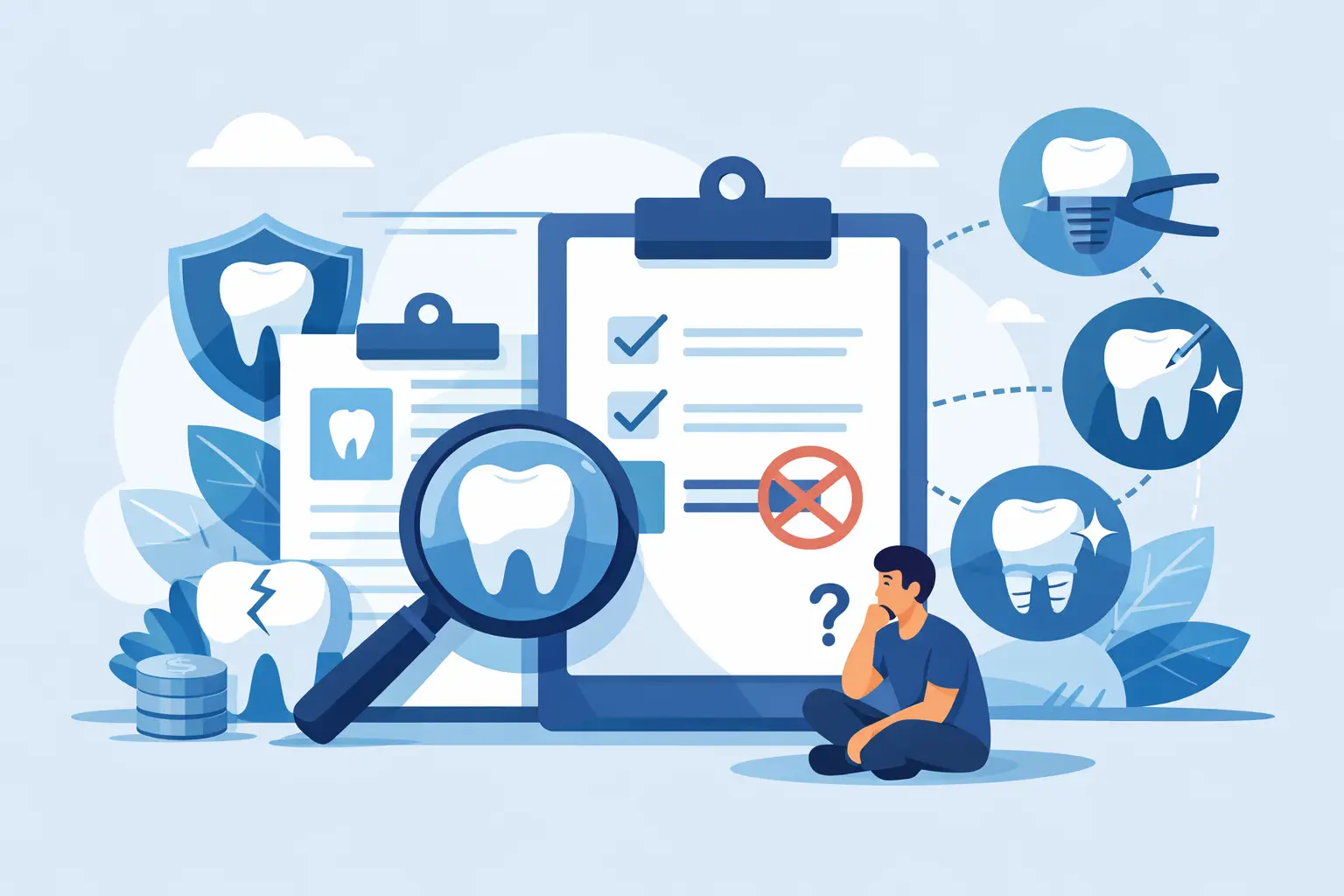
A dental plan can look good on paper until you need a service the plan does not cover. That is where dental insurance exclusions matter. These are the treatments, situations, or conditions a plan specifically leaves out. They can make the difference between a plan that helps with your dental bill and one that leaves you paying the full cost yourself.
If you are buying dental coverage on your own, exclusions deserve as much attention as premiums, deductibles, and annual maximums. Many people compare the monthly price first, then skim the list of covered services. But the biggest surprises often appear in the fine print. A plan may cover cleanings and exams well, yet exclude implants, cosmetic procedures, replacement appliances, or treatment that started before your policy became active.
If you are still learning the basics, it may help to first understand how dental insurance works before comparing exclusions in detail.
What Are Dental Insurance Exclusions?
A dental insurance exclusion is a service, treatment, or situation that your plan does not cover. If something is excluded, the plan usually will not pay for it, even if your dentist recommends the treatment.
This is different from a deductible, copay, coinsurance, or annual maximum. Those are cost-sharing rules. They determine how much you and the plan each pay for a covered service. An exclusion is different because it means the service may not be eligible for payment at all.
That distinction matters. A crown that is covered at 50% is very different from a crown that is excluded because it was placed too recently, started before the policy began, or falls outside the plan’s replacement rules.
Why Dental Insurance Exclusions Matter
Dental coverage is not usually designed to pay for every dental need. Most plans are built around categories: preventive care, basic services, and major services. Even inside those categories, the plan may include exclusions, limitations, waiting periods, or network rules.
This can be frustrating because people often assume that “covered dental insurance” means the plan will help with any necessary dental treatment. In reality, a service can be medically useful and still be excluded by the plan.
For example, your dentist may recommend an implant as the best long-term solution for a missing tooth. But if your plan excludes implants, the insurer may not pay anything toward that part of the treatment. Another plan may cover the crown placed on the implant but exclude the implant post itself. A third plan may cover implants only after a waiting period or up to a limited annual maximum.
For a broader view of what plans usually include, see our guide on what dental insurance covers.
Common Dental Insurance Exclusions to Watch For
Every plan is different, but some exclusions appear often enough that you should check for them before enrolling.
Cosmetic Dental Procedures
Cosmetic procedures are among the most common dental insurance exclusions. Teeth whitening, veneers done only for appearance, and other elective cosmetic treatments are often not covered.
The tricky part is that some procedures can improve both appearance and function. For example, a crown may restore chewing function, while a veneer may be mainly cosmetic. The difference depends on the plan language, the dentist’s documentation, and how the claim is submitted.
What to check: Look for wording such as “cosmetic services,” “elective procedures,” or “services not medically necessary.”
Dental Implants
Implants are one of the most important exclusions to review because they can be expensive. Some plans exclude implants completely. Others cover only part of the process. For example, the plan might cover the crown placed on the implant but not the implant post or surgical placement.
If implants may be part of your future treatment, do not rely on general wording like “major services covered.” Search the plan document for the exact implant terms. You can also read our guide to dental insurance cost for implants to understand how implant coverage and out-of-pocket costs can vary.
What to check: Search the plan document for “implant,” “prosthetic,” “abutment,” “surgical placement,” and “implant crown.” Do not assume implants are covered just because the plan says it covers major services.
Adult Orthodontics
Orthodontic coverage varies widely. Some plans exclude orthodontics entirely. Others cover orthodontics only for children, only up to a lifetime maximum, or only when certain medical criteria are met.
If you are considering braces or clear aligners as an adult, this is one of the first sections you should review. A plan may look strong for cleanings, fillings, and crowns while offering no meaningful orthodontic coverage.
What to check: Look for “orthodontic services,” “adult orthodontics,” “dependent children,” “lifetime maximum,” and “medically necessary orthodontics.”
Treatment Started Before Coverage Began
Some plans may exclude treatment that was started, recommended, or in progress before your policy became active. This can surprise people who buy dental insurance after a dentist has already recommended a crown, root canal, bridge, or denture.
For example, if your dentist started a root canal before your coverage date, your new plan may not cover the later steps. Even if the final appointment happens after your policy begins, the insurer may treat the service as treatment in progress.
What to check: Search for “treatment in progress,” “work in progress,” “prior treatment,” or “services started before the effective date.”
Replacement Rules for Crowns, Bridges, and Dentures
Many dental plans limit how often they will pay to replace crowns, bridges, dentures, or other appliances. A plan might say it covers crowns, but only if the existing crown is more than five, seven, or ten years old.
That means a replacement can be denied if the plan decides the old restoration has not been in place long enough. This can feel unfair when something breaks early, but it is a common type of limitation or exclusion.
What to check: Look for “replacement,” “frequency limitation,” “once every,” “crowns,” “bridges,” “dentures,” and “prosthodontic services.”
Missing Tooth Clauses
A missing tooth clause can exclude replacement of a tooth that was already missing before your dental coverage started. This can affect bridges, dentures, and implants.
This is especially important if you are buying coverage because you already know you need a tooth replacement. A plan may cover some major services while still excluding replacement for a tooth that was missing before the policy began.
What to check: Search the plan document for “missing tooth,” “teeth missing before coverage,” “prosthetic replacement,” or “pre-existing condition.”
Out-of-Network Care
Out-of-network rules can also function like exclusions, especially with HMO or DHMO-style dental plans. A PPO may still provide some out-of-network benefits, although usually at a lower level. A DHMO may provide little or no coverage if you go outside the assigned network, except in limited emergency situations.
This is why plan type matters. If you are comparing PPO and HMO options, read our guide to PPO vs HMO dental insurance before choosing a plan.
What to check: Review how the plan handles out-of-network care, specialist referrals, and emergency treatment.
Dental Insurance Exclusions vs. Waiting Periods vs. Limitations
These terms are easy to confuse, but they do not mean the same thing.
An exclusion means the service or situation is not covered under the plan. Waiting longer usually will not change that.
A waiting period means the service may be covered later, but not right away. Many plans cover preventive care immediately, while basic or major services may require several months before benefits begin. To understand this better, see our full article on dental insurance waiting periods.
A limitation means the plan covers the service only under certain rules. For example, a plan may cover two cleanings per year, one set of X-rays per year, or one crown replacement every several years.
| Term | What it means | Example |
|---|---|---|
| Exclusion | The plan does not cover it | Implants are not covered |
| Waiting period | The plan may cover it later | Major services covered after 12 months |
| Limitation | The plan covers it only under certain rules | Two cleanings per year |
How to Find Exclusions Before You Enroll
The marketing page is not enough. It may show the monthly premium, preventive coverage, and a short benefit summary, but the most important details usually appear in the policy brochure, evidence of coverage, certificate of insurance, or plan terms.
Look for sections labeled:
- Exclusions
- Limitations
- What is not covered
- Plan exceptions
- Waiting periods
- Covered services
If you expect a specific procedure, search the document for that exact word. Do not just read the benefit chart. Search for terms like:
- implant
- crown
- bridge
- denture
- orthodontics
- periodontal
- oral surgery
- missing tooth
- replacement
- cosmetic
This step is especially important if you are buying coverage because you already know you may need treatment.
If you are comparing several options, use a consistent process. Our guide on how to compare dental insurance plans can help you check costs, networks, waiting periods, coverage limits, and exclusions side by side.
Questions to Ask Before Choosing a Plan
Before you enroll, ask the insurer or plan representative these questions:
- Are dental implants excluded, limited, or covered after a waiting period?
- Does the plan cover adult orthodontics?
- Does the plan have a missing tooth clause?
- Is treatment already recommended by my dentist considered treatment in progress?
- How often does the plan cover replacement crowns, bridges, or dentures?
- Does the plan cover out-of-network care?
- Are major services covered in the first year?
- What is the annual maximum?
These questions are more useful than simply asking, “Does this plan cover major dental work?” Major dental work can include many different services, and each one may be treated differently.
If you are not sure how the annual maximum affects real costs, read our explanation of what an annual maximum in dental insurance means.
What to Do if a Plan Excludes a Service You Need
If a plan excludes something important to you, you have a few options.
First, compare other dental insurance plans. A service excluded by one plan may be covered by another, although it may come with a higher premium, waiting period, or annual maximum.
Second, ask your dentist whether there are alternative treatment options that may be covered. Sometimes there are different ways to restore a tooth, and the plan may treat those options differently.
Third, compare dental insurance against discount dental plans if your main goal is reduced pricing rather than traditional insurance reimbursement. A discount plan is not insurance, but it may offer lower negotiated rates for participating dentists. Our guide to dental insurance vs. dental discount plans explains the difference in more detail.
Finally, ask about phased treatment or payment options. That does not change the exclusion, but it may make the cost easier to manage.
Final Thoughts on Dental Insurance Exclusions
Dental insurance exclusions are not just fine print. They are one of the main reasons two plans with similar premiums can feel completely different when you actually need care.
The best dental plan is not the one with the longest list of benefits. It is the one whose limits, gaps, and exclusions you understand before you pay for it. If you check the exclusions before enrolling, you are much less likely to be surprised later by a denied claim or a larger bill than expected.
Before you choose a plan, slow down and read the exclusions section. That one step can save you more frustration than almost anything else in the buying process.
Frequently Asked Questions About Dental Insurance Exclusions
What are dental insurance exclusions?
Dental insurance exclusions are services, treatments, or situations that a dental plan does not cover. If something is excluded, the plan usually will not pay for it, even if your dentist recommends the treatment.
What dental services are commonly excluded?
Common exclusions may include cosmetic procedures, teeth whitening, veneers, adult orthodontics, some implant services, treatment started before coverage began, and replacement of crowns, bridges, or dentures before a required time period has passed.
Are dental implants excluded from insurance?
Sometimes. Some dental plans exclude implants completely, while others cover only part of the implant process or apply waiting periods, annual maximums, or other limitations. Always check the exact implant language in the plan document before enrolling.
What is the difference between an exclusion and a waiting period?
An exclusion means the service is not covered under the plan. A waiting period means the service may be covered later, after you have been enrolled for a certain amount of time. If a service is excluded, waiting longer usually will not make it covered.
Can a dental plan deny coverage for treatment already started?
Yes, some plans may deny coverage for treatment that was started, recommended, or in progress before the policy became active. This is why it is important to ask about treatment-in-progress rules before buying a plan.
How can I find exclusions before buying dental insurance?
Read the policy brochure, certificate of insurance, or evidence of coverage. Look for sections labeled exclusions, limitations, what is not covered, waiting periods, or plan exceptions. Search for the exact procedures you may need, such as crowns, implants, dentures, orthodontics, or periodontal treatment.
Should I avoid a plan with exclusions?
Not always. Every dental plan has some exclusions or limitations. The important question is whether the exclusions affect services you are likely to need. A plan with cosmetic exclusions may still be fine if you mainly want preventive care, but it may be a poor fit if you need implants or adult orthodontics.