A single dental implant can cost enough to make a cheap monthly premium feel almost meaningless. That is why finding the best dental insurance for implants is not just about choosing the plan with the lowest price. It is about understanding how implant coverage actually works before you enroll.
Many shoppers assume a dental plan either covers implants or it does not. In reality, implant coverage is often more complicated. Some plans exclude implants entirely. Some cover only part of the treatment. Others cover implants after a waiting period, but the annual maximum may still leave you paying a large share of the bill yourself.
If you are buying dental coverage on your own, these details matter more than the marketing headline. The right plan is usually the one that matches your treatment timeline, your dentist or specialist, your annual maximum, and the parts of implant care that are actually covered.
Quick Answer: What Is the Best Dental Insurance for Implants?
The best dental insurance for implants is usually a plan that clearly lists implants as a covered service, has a manageable waiting period, offers a higher annual maximum, and includes a provider network that works for your dentist, oral surgeon, or implant specialist.
For many shoppers, a PPO dental plan is often the first place to compare because it may offer more provider flexibility. However, PPO plans can also have higher premiums, deductibles, coinsurance, waiting periods, and annual maximums. A dental discount plan may be useful if you need treatment sooner and want reduced fees, but it is not insurance and does not pay part of your claim.
If you are still learning how implant coverage works, start with our guide on does dental insurance cover implants.
Why Dental Implant Coverage Is So Tricky
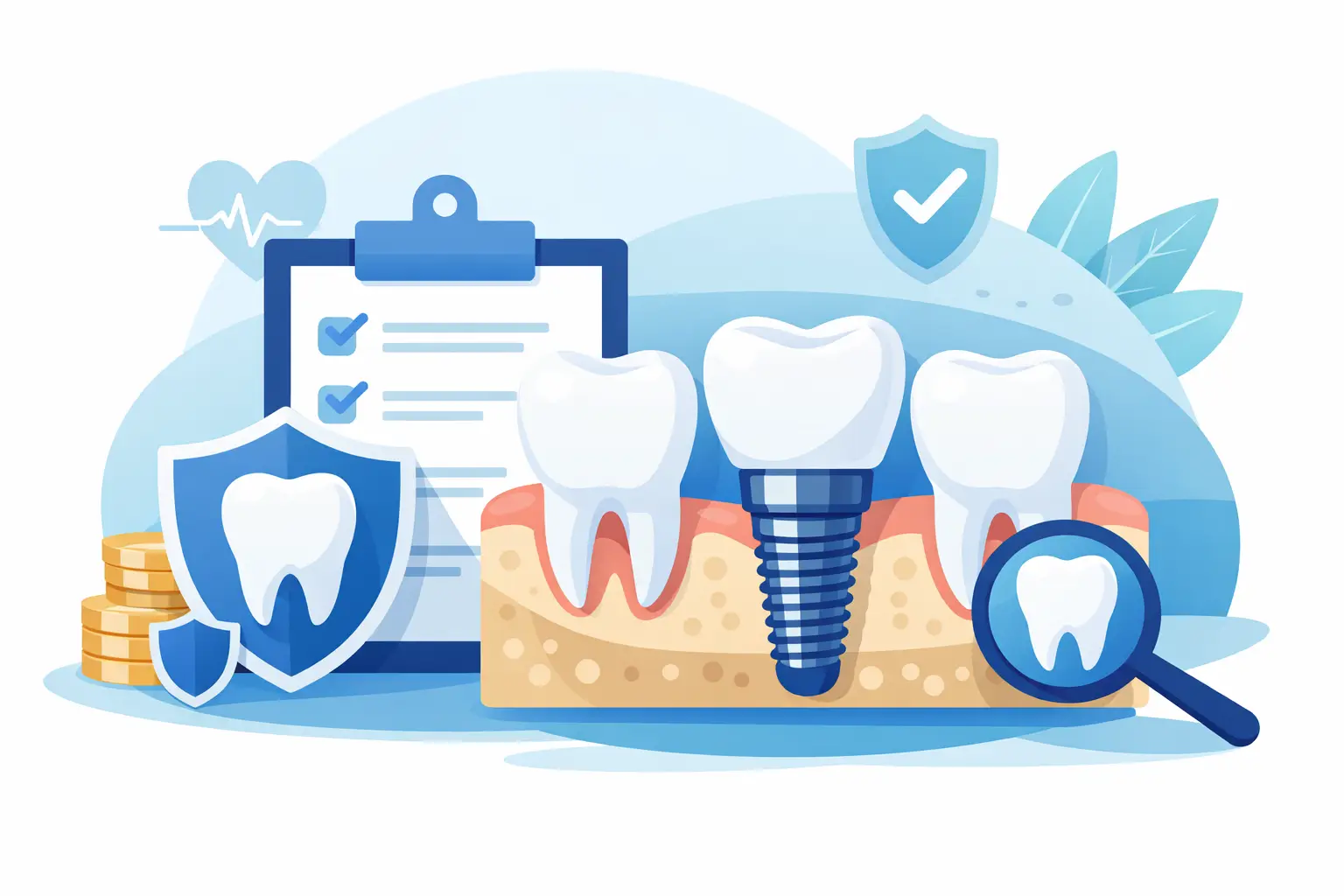
Dental implants are expensive because treatment usually involves more than one step. A single implant may include the implant post, abutment, crown, imaging, extraction, bone grafting, specialist care, and lab work. Not every plan treats each part the same way.
One plan may cover the crown placed on the implant but not the implant post. Another may cover surgical placement but limit related services. Another may classify implants as major services and apply a waiting period before any benefit begins.
This is why a simple “yes, implants are covered” is not enough. The better question is:
- Which parts of implant treatment are covered?
- When does coverage begin?
- What percentage does the plan pay?
- What is the annual maximum?
- Does a missing tooth clause apply?
- Is the dentist or specialist in network?
The answer to those questions usually matters more than the monthly premium.
What the Best Dental Insurance for Implants Usually Includes
The strongest plans for implant shoppers tend to share a few traits. They may not make implants cheap, but they can reduce the financial hit and make treatment easier to plan.
Clear Implant Coverage
A good plan should clearly explain whether implants are covered. Do not rely only on broad wording such as “major services covered.” Implants may be treated differently from bridges, dentures, crowns, or other major services.
Search the plan documents for terms like:
- implant
- implant post
- abutment
- implant crown
- bone graft
- prosthodontics
- oral surgery
- missing tooth clause
If implants are not mentioned clearly, ask the insurer for plan-specific clarification before enrolling.
A Higher Annual Maximum
The annual maximum is one of the most important details for implant coverage. It is the most the dental plan will pay for covered services during a benefit year.
A plan may say it covers major services at 50%, but if the annual maximum is only $1,000 or $1,500, the plan may stop paying long before the implant treatment is finished.
For implant shoppers, a higher annual maximum can be more valuable than a slightly lower monthly premium. If this term is new to you, read our guide to what an annual maximum in dental insurance means.
A Waiting Period That Fits Your Timeline
Many dental plans have waiting periods for major services. If implants are treated as major services, you may need to wait several months before benefits apply.
This is not always a problem if your treatment is planned for the future. But if your dentist already recommends an implant soon, a 6- or 12-month waiting period can make the plan much less useful.
Before buying, check whether the waiting period applies to implant placement, crowns, oral surgery, bone grafting, or other related services. For a deeper explanation, see our guide to dental insurance waiting periods.
A Network That Includes the Right Providers
Implant treatment may involve a general dentist, oral surgeon, periodontist, prosthodontist, or dental lab. That makes the provider network more important than it might be for routine cleanings.
If your current dentist has already recommended an implant provider, check whether that provider is in network. If you have not chosen a provider yet, look for enough in-network implant dentists or specialists near you.
A plan with strong benefits may still be frustrating if the dentist you trust does not accept it.
How Much Do Dental Implants Cost?
Dental implant costs vary by location, provider, complexity, and whether you need additional procedures. A single implant can involve the implant post, abutment, crown, imaging, extraction, and sometimes bone grafting.
Delta Dental notes that the cost of an individual dental implant without dental benefits can range from about $2,800 to $5,600, depending on individual circumstances. The final cost can change based on the type of implant needed, how many implants are required, whether dental benefits cover implants, and whether the dentist is in network.
Because implant costs can be high, insurance should be viewed as a way to reduce part of the cost, not necessarily remove the cost entirely.
If your main concern is pricing, see our guide to dental insurance cost for implants.
What Costs Matter More Than the Premium?
When comparing dental insurance for implants, the monthly premium matters, but it is not the most important number.
Annual Maximum
The annual maximum can decide how much help the plan actually provides. If the implant treatment costs several thousand dollars and your plan maximum is low, your reimbursement may be limited even when the procedure is covered.
Coinsurance
Coinsurance is the percentage you pay after the plan applies its rules. A plan that covers major services at 50% may still leave you responsible for half the allowed cost, plus anything above the annual maximum.
Deductible
A deductible of $50 or $100 matters, but it is usually small compared with implant treatment costs. Do not let a small deductible distract you from bigger issues like exclusions, annual maximums, and waiting periods.
Network Pricing
In-network providers may have negotiated rates. That can matter even if the plan does not pay a large amount. If you go out of network, your costs may be higher, depending on the plan.
For a broader way to compare plan costs, read our article on how to compare dental insurance plans.
Does Dental Insurance Fully Cover Implants?
Most dental insurance plans do not fully cover implants. Some plans may pay a percentage of covered implant-related services, but the benefit is often limited by deductibles, coinsurance, waiting periods, annual maximums, exclusions, and provider network rules.
For example, a plan may cover 50% of major services after a waiting period. But if the annual maximum is $1,500 and the implant treatment costs much more, the plan may still leave you with a large out-of-pocket balance.
This does not mean dental insurance is useless for implants. It means you need to understand what the plan will actually pay before you count on it.
What to Check Before You Buy Dental Insurance for Implants
Before enrolling, check the plan documents carefully. The most important details are usually found in the benefits summary, certificate of coverage, exclusions section, and limitations section.
Are Implants Covered as a Separate Service?
Do not assume implants are covered just because major services are covered. Some plans may cover bridges or dentures but exclude implants.
Does the Plan Cover the Implant Post, Abutment, and Crown?
Implant treatment often has multiple billable parts. A plan may cover one part but not another. Ask whether the implant post, abutment, crown, extraction, bone graft, and imaging are covered.
Is There a Missing Tooth Clause?
A missing tooth clause can exclude replacement of a tooth that was already missing before your coverage started. This can be a major issue if you are buying coverage specifically because you already need a tooth replaced.
To understand related fine print, read our guide to dental insurance exclusions.
Is a Pre-Treatment Estimate Required?
For expensive dental work, many insurers or dental offices may recommend a pre-treatment estimate. This can help you understand what the plan is likely to pay before treatment begins.
A pre-treatment estimate is not always a guarantee, but it is useful when the bill could be large.
PPO, HMO, or Dental Discount Plan for Implants?
If implants are your priority, the type of plan matters.
PPO Dental Plans
PPO plans are often the first option to compare for implants because they usually offer more provider flexibility. This can matter if you want to use a specific dentist, oral surgeon, or implant specialist.
The trade-off is that PPO plans often have higher premiums, deductibles, coinsurance, and annual maximums.
If you are deciding between plan types, read our guide to PPO vs HMO dental insurance.
HMO or DHMO Dental Plans
HMO or DHMO dental plans may have lower monthly premiums, but they often require tighter network use. Implant benefits may be limited, structured through fixed copays, or dependent on specific providers.
In some markets, a DHMO may still be worth comparing. But if specialist access is limited, the low premium may not help much.
Dental Discount Plans
Dental discount plans are not insurance. They do not pay claims or cover a percentage of your implant bill. Instead, they may give you access to reduced fees from participating dentists.
If you need implant treatment quickly and do not want to wait through an insurance waiting period, a discount plan may help lower costs sooner. The trade-off is that you still pay the discounted amount yourself.
Before choosing one, compare dental insurance vs. dental discount plans.
Red Flags That Can Make a Plan a Poor Fit for Implants
A dental plan may be a poor fit for implants if it looks affordable but fails on the details that matter most.
Watch out for:
- implant exclusions;
- unclear wording around major services;
- long waiting periods for major care;
- low annual maximums;
- missing tooth clauses;
- limited specialist access;
- no clear answer about implant post, abutment, and crown coverage;
- out-of-network rules that make your chosen provider expensive.
A low premium can be appealing, but it does not help much if the plan excludes the treatment you need.
A Practical Way to Compare Plans
Instead of asking which company has the best dental insurance for implants in general, compare each plan using the same checklist.
- Are implants covered?
- Which parts of implant treatment are covered?
- What is the waiting period?
- What is the annual maximum?
- What coinsurance applies to major services?
- Does a missing tooth clause apply?
- Is my dentist or oral surgeon in network?
- Can treatment be planned across benefit years?
- Can I get a pre-treatment estimate?
Then estimate your real first-year and second-year costs. This matters because implant treatment may happen in stages. If treatment can safely be spread across two benefit years, you may be able to use more than one annual maximum, depending on the plan and timing.
Ask your dental office and insurer before assuming this is possible.
What If You Need an Implant Soon?
If treatment is urgent, be careful about buying a plan that only becomes useful after a long waiting period.
In that situation, you may want to compare:
- dental insurance plans with no or shorter waiting periods;
- dental discount plans accepted by implant providers;
- cash pricing from the dental office;
- phased treatment options;
- payment plans or financing options.
Insurance may still help, but it may not be the fastest way to reduce the immediate cost if the plan delays major-service benefits.
Final Thoughts on the Best Dental Insurance for Implants
Even the best dental insurance for implants usually will not make implants cheap. A better goal is to reduce part of the cost, gain access to negotiated rates, and avoid being surprised by exclusions after you enroll.
If implant treatment is likely, focus on explicit implant coverage, manageable waiting periods, higher annual maximums, and a provider network that works for your dentist or specialist.
The smartest buyers are not the ones who find the lowest premium. They are the ones who know exactly what the plan will and will not do before treatment begins.
Frequently Asked Questions About Dental Insurance for Implants
Does dental insurance cover implants?
Some dental insurance plans cover implants, but not all do. Coverage may apply to only certain parts of treatment, such as the crown, abutment, implant post, extraction, or related services. Some plans exclude implants entirely.
What this means for you: Do not assume implants are covered just because a plan covers major services. Search the plan document for implant-specific language.
What is the best dental insurance for implants?
The best dental insurance for implants is usually a plan with clear implant coverage, a manageable waiting period, a higher annual maximum, and a provider network that includes the dentist or specialist you want to use.
What this means for you: The best plan depends on your treatment timeline, dentist, location, and expected out-of-pocket cost.
How much does dental insurance pay for implants?
Coverage varies by plan. Some plans may pay a percentage of covered implant-related services after the deductible and waiting period, but payment is often limited by the annual maximum.
What this means for you: A plan may cover implants and still leave you with a large bill if the annual maximum is low.
Are implants considered major dental work?
Dental implants are often treated as major dental work, but the exact classification depends on the plan. Major services usually have lower reimbursement percentages and may involve waiting periods.
What this means for you: Check how the plan classifies implants before enrolling.
Do dental insurance plans have waiting periods for implants?
Many plans have waiting periods for major services, which may include implants. Waiting periods can vary by plan and may last several months or longer.
What this means for you: If you need an implant soon, a plan with a long waiting period may not help on your timeline.
Can a dental discount plan help with implants?
A dental discount plan may help lower implant costs if the implant provider participates and the reduced fee is meaningful. However, it is not insurance and does not pay part of your bill.
What this means for you: Discount plans may help with timing, but they do not provide insurance-style reimbursement.
What should I ask before buying dental insurance for implants?
Ask whether implants are covered, which parts of treatment are included, whether a waiting period applies, what the annual maximum is, whether a missing tooth clause applies, and whether your dentist or specialist is in network.
What this means for you: Get plan-specific answers before enrolling, especially if you already know you need implant treatment.
Sources and References
- Delta Dental – Dental Implants Cost and Insurance
- Guardian – Choosing Dental Insurance That Covers Implants
- Humana – Dental Insurance Waiting Period
- Cigna – What Are Dental Implants?

Alex Carter
Alex Carter is an editor at Dental Coverage Guide, where he reviews dental insurance and dental coverage content for clarity, readability, and practical value. He focuses on helping U.S. readers better understand dental plan costs, coverage limits, provider networks, waiting periods, and plan options.