Dental Insurance for Freelancers & 1099 Contractors

Freelancers and 1099 contractors do not receive employer-sponsored dental benefits, which means finding the right coverage requires independent research and planning. Without group benefits, understanding how dental insurance works is essential to avoiding unexpected costs.

This guide explains dental insurance options available to freelancers, how coverage differs from employer plans, and what to consider before enrolling.

Do Freelancers Qualify for Dental Insurance?

Yes. Freelancers and independent contractors can purchase individual dental insurance plans directly from insurers. These plans function similarly to employer-sponsored plans but are paid entirely out of pocket.

Unlike traditional health insurance, dental plans are usually available year-round without open enrollment restrictions.

What Types of Dental Plans Are Available?

Freelancers can typically choose from:

PPO Dental Plans

Offer greater flexibility in choosing providers, including out-of-network dentists, but may have higher monthly premiums.

HMO Dental Plans

Often have lower monthly costs but require care within a specific network.

Dental Discount Plans

Membership-based programs that provide discounted service rates rather than insurance coverage.
control your finances
like never before

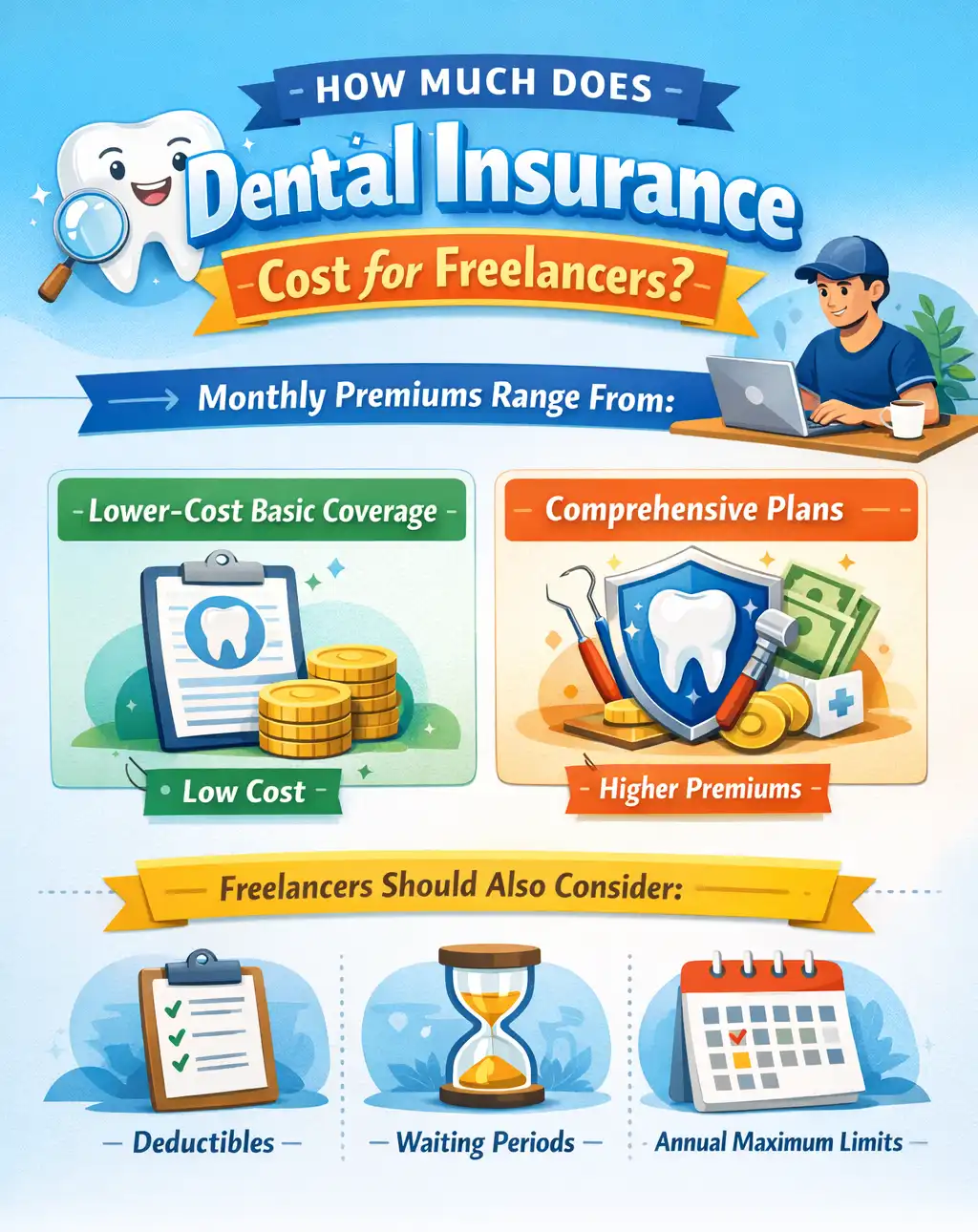
Monthly premiums vary depending on coverage level and plan type. Most individual plans range from:

  • Lower-cost basic coverage
  • Comprehensive plans with higher premiums

Freelancers should also consider deductibles, waiting periods, and annual maximum limits.

Freelancer analyzing dental insurance costs on a laptop, comparing basic and comprehensive plans with charts showing premiums, deductibles, and annual limits
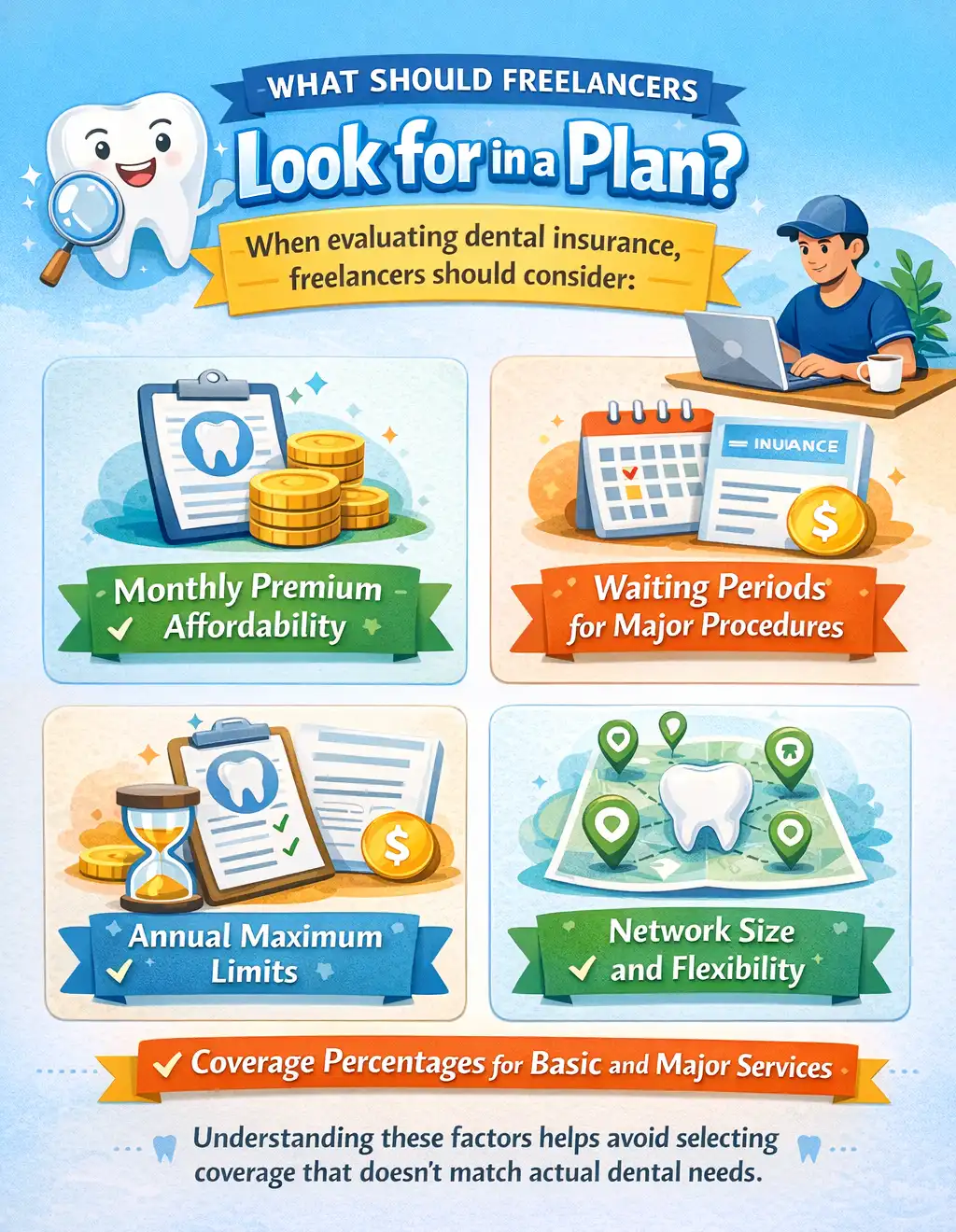
Infographic showing what freelancers should look for in a dental insurance plan including monthly premiums, waiting periods, annual maximum limits, network size, and coverage percentages.

What Should Freelancers Look for in a Plan?

When evaluating dental insurance, freelancers should consider:

  • Monthly premium affordability
  • Waiting periods for major procedures

  • Annual maximum limits
  • Network size and flexibility
  • Coverage percentages for basic and major services

Understanding these factors helps avoid selecting coverage that doesn’t match actual dental needs.
Is Dental Insurance Worth It for 1099 Contractors?

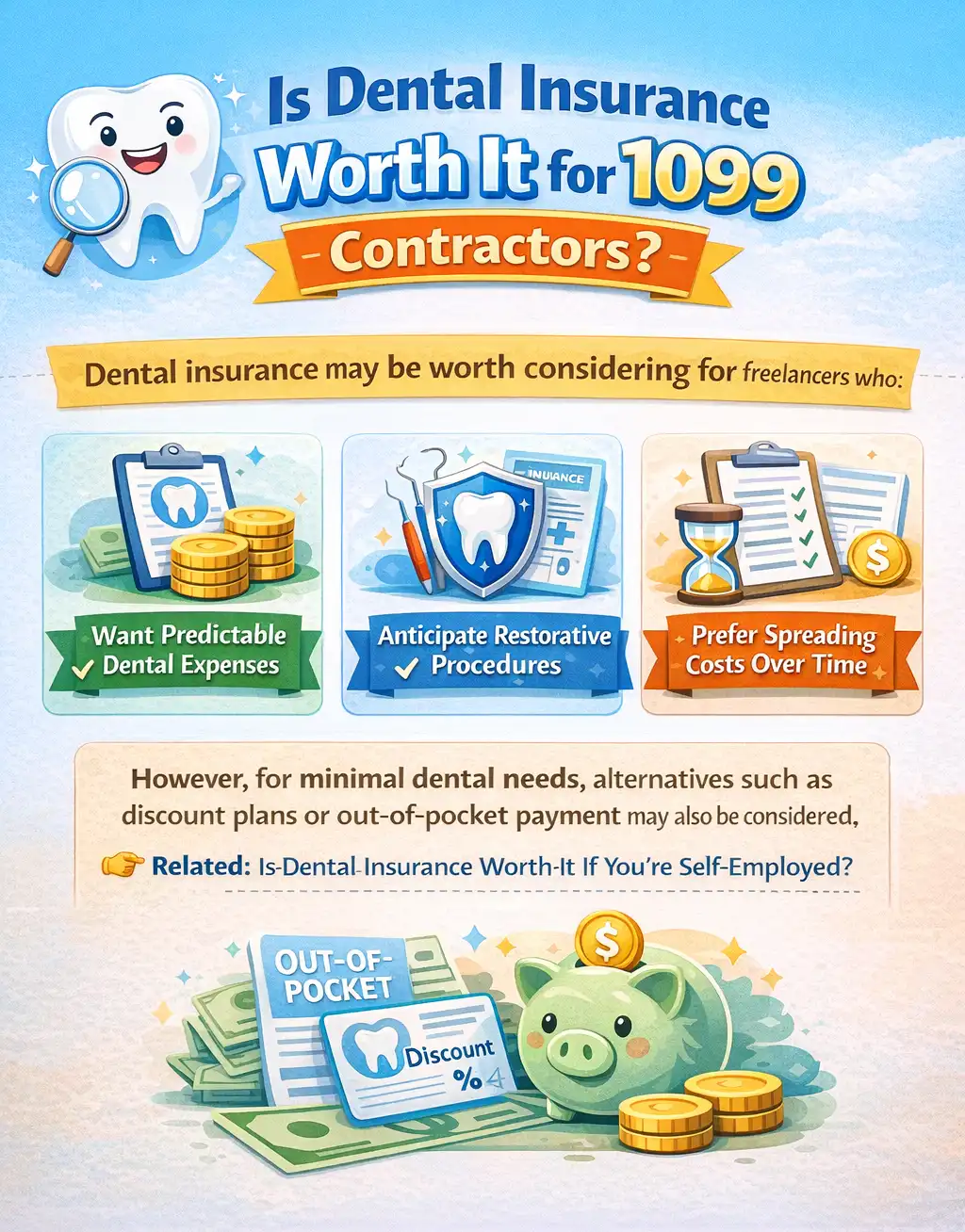
Dental insurance may be worth considering for freelancers who:

  • Want predictable dental expenses
  • Anticipate restorative procedures
  • Prefer spreading costs over time

However, for minimal dental needs, alternatives such as discount plans or out-of-pocket payment may also be considered.

Infographic explaining whether dental insurance is worth it for 1099 contractors, highlighting predictable expenses, restorative procedures, spreading costs over time, and alternatives like discount plans or out-of-pocket payment.

How This Page Fits Into Your Coverage Strategy

Freelancers often benefit from comparing plan types and understanding cost structures before enrolling.

FAQ

Most individual dental plans are available year-round.

In some cases, premiums may qualify for a self-employed health insurance deduction. Consult a tax professional for personalized advice.

Coverage structures are similar, but premiums are paid entirely by the individual.

Disclaimer

This page is for informational purposes only and does not constitute professional insurance, financial, or tax advice. Coverage and eligibility vary by provider and location.

Not sure where to start?

Explore our best dental insurance guides and compare options designed for self-employed professionals.