
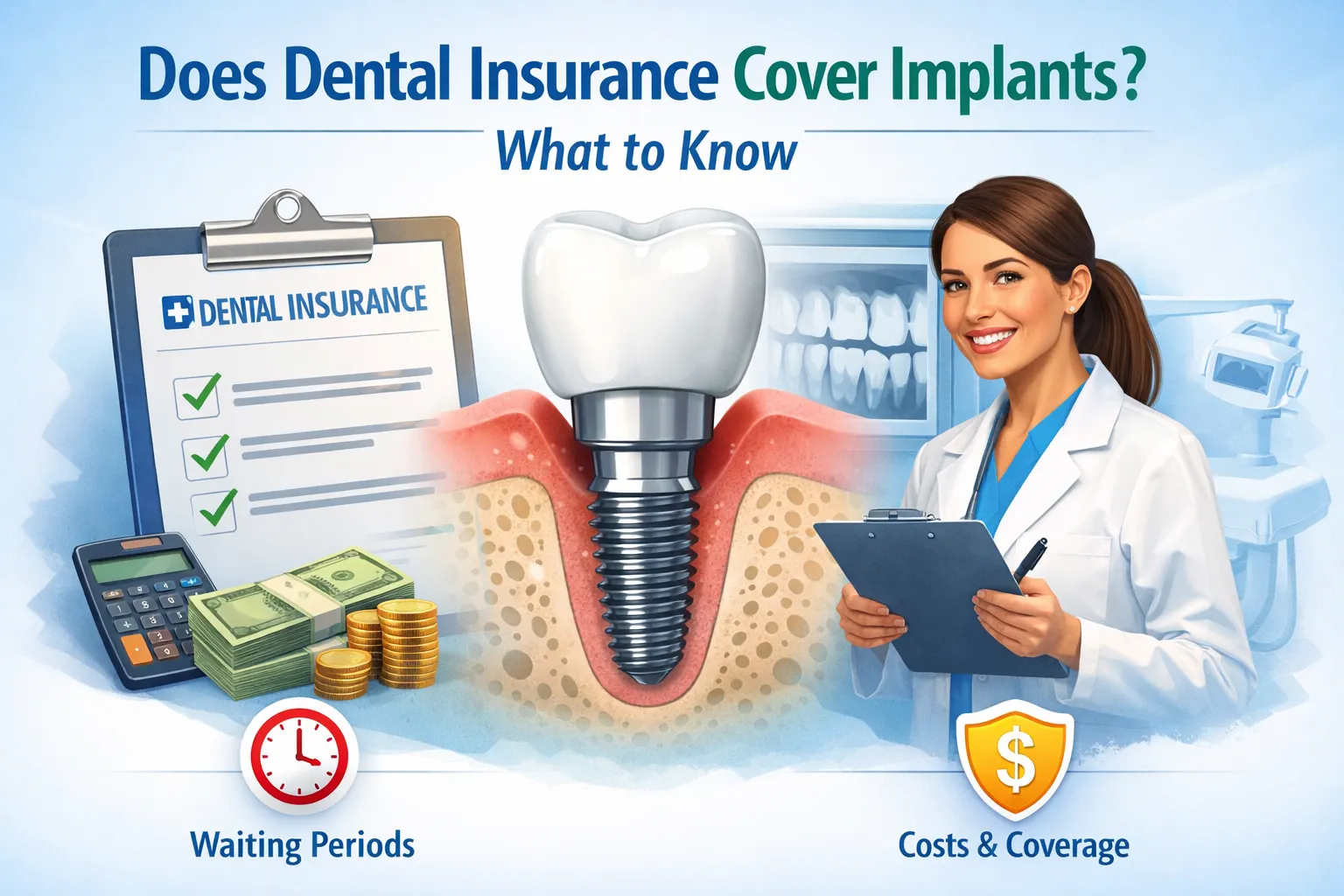
Dental implants are one of the most effective—and expensive—solutions for replacing missing teeth. Because of the high cost, many people ask the same question: does dental insurance cover implants?
For self‑employed individuals buying dental insurance on their own, implant coverage can be especially confusing. In this guide, you’ll learn when dental insurance may help cover implants, which parts are typically excluded, what waiting periods apply, and what alternatives may reduce out‑of‑pocket costs.
Does Dental Insurance Cover Implants?
Short answer: sometimes, but usually only partially.
Most dental insurance plans do not fully cover dental implants. Many classify implants as major procedures, impose waiting periods, or exclude implant components altogether. Coverage depends entirely on the insurance provider, plan type, and policy details.
In most cases, insurance may help with related services, but rarely covers the full implant process.
Why Dental Implants Are Often Limited or Excluded
Dental implants involve multiple stages, making them costly and complex compared to other dental treatments. Because of this, insurers often restrict coverage.
Common reasons implants are limited
Understanding these limitations helps avoid unexpected expenses when planning implant treatment.
What Parts of Dental Implants May Be Covered
Even if the implant itself isn’t covered, certain components may be eligible for partial coverage.
Implant crown
Many plans cover the implant crown as a major service, typically at 40–60% after deductibles.
Diagnostic services
Exams, consultations, and X‑rays are often covered under preventive or basic care.
Tooth extraction
If an extraction is required before implant placement, it may be partially covered depending on the plan.
Coverage varies widely, so reviewing your policy’s procedure codes is essential.
Dental Insurance Plan Types and Implant Coverage
Different dental plan types handle implant coverage differently.
PPO Dental Plans
PPO plans may offer limited implant-related coverage, especially for crowns and diagnostics. Waiting periods and annual maximums usually apply.
HMO Dental Plans
HMO plans generally have lower premiums but rarely cover implants and may restrict provider choice.
Dental Discount Plans
Dental discount plans are not insurance, but they can reduce implant costs through negotiated rates with participating dentists.
Waiting Periods for Implant Coverage
Most dental insurance plans impose waiting periods for major procedures like implants.
Typical waiting periods
Self‑employed individuals planning implant treatment should enroll early to satisfy waiting periods before starting care.
How Much Do Dental Implants Cost Without Insurance?
Without insurance, dental implants can cost several thousand dollars per tooth.
Costs typically include
Because of these costs, many people compare insurance, discount plans, and direct payment options.
Is Dental Insurance Worth It for Implants?
Dental insurance rarely covers implants in full, but it may still provide value if:
For many self‑employed individuals, combining insurance, savings, and discount plans offers the best overall value.
FAQs About Dental Implants and Insurance
Final Thoughts
Dental insurance can help reduce some implant‑related costs, but coverage is often limited. Carefully reviewing waiting periods, annual maximums, and covered services is essential before relying on insurance for implant treatment.
👉 Compare dental insurance plans designed for self‑employed individuals
Disclaimer
This article is for informational purposes only and does not constitute professional dental, medical, or insurance advice. Coverage and costs vary by provider, plan, and location.