
Best Dental Insurance for Self-Employed: 2026 Guide
Paying for your own dental coverage changes how you shop. When there is no employer chipping in, the best dental insurance for self-employed adults is usually the plan that matches your actual dental needs, your cash flow, and the dentists you can realistically use. If you are still learning the basics, it helps to first understand how dental insurance works before comparing specific plan options.
That means the best option is not one universal plan type. A freelance designer who mainly wants cleanings and exams may do well with a lower-cost HMO or DHMO. A self-employed contractor who wants broad dentist choice may prefer a PPO. Someone expecting major work soon may need to look closely at waiting periods, annual maximums, and whether a dental discount plan makes more sense than insurance at all.
Quick Answer: What Is the Best Dental Insurance for Self-Employed Adults?
The best dental insurance for self-employed adults is usually the plan that fits your expected dental care, monthly budget, and preferred dentist network. A PPO may be better if you want flexibility. An HMO or DHMO may work if you want lower monthly premiums. A dental discount plan may be useful if you want reduced rates quickly and do not want insurance-style waiting periods.
For most self-employed shoppers, the right choice depends less on the brand name and more on the details: waiting periods, annual maximums, deductibles, coinsurance, provider access, and whether local dentists actually accept the plan. If you want a step-by-step method, compare options using the same process you would use to compare dental insurance plans.
Key Takeaways
-
- The best plan is not always the cheapest plan. It is the plan that fits your likely dental care over the next 12 to 24 months.
-
- PPO plans usually offer more provider flexibility, while HMO or DHMO plans often focus on lower monthly costs and tighter networks.
-
- Dental discount plans are not insurance, but they may help some self-employed buyers get reduced rates without waiting periods.
-
- Waiting periods and annual maximums can matter more than the monthly premium if you expect crowns, root canals, dentures, implants, or other major work.
-
- Dental insurance premiums may be deductible for some self-employed workers who qualify, but eligibility depends on your tax situation.
What Makes a Dental Plan Good for Self-Employed Buyers?
If you are buying on your own, you are taking on the full premium, not just an employee share. That changes the math. A plan can look affordable month to month and still be a poor fit if it has a low annual maximum, a narrow network, or a long waiting period for basic and major services.
For most self-employed shoppers, the right plan balances four things: monthly premium, out-of-pocket costs when you use care, provider access, and timing. Timing matters more than many people expect. If you need a crown in the next few months, a plan with a 12-month waiting period may not help much, even if the premium looks attractive.
Income variability also matters. Many freelancers and independent workers have uneven monthly revenue. Predictable preventive coverage can be useful, but a plan with high coinsurance for fillings, root canals, or dentures can still leave you exposed during a slow month. That is why the monthly dental insurance premiums should be judged together with the benefits you are likely to use.
Start With Your Dental Needs, Not the Marketing
Before comparing plans, think about how you actually use dental care. If you have a healthy mouth, see the dentist regularly, and mainly want help with cleanings, exams, and X-rays, a lower-cost plan may be enough. If you have a history of gum treatment, recurring fillings, or older dental work that may need replacement, you should evaluate plans more carefully.
A simple way to frame the decision is to ask what you are likely to need in the next 12 to 24 months. Preventive care only is one category. Some basic work, such as fillings or simple extractions, is another. Major care, including crowns, bridges, dentures, implants, or root canals, is where plan details start to matter a lot. For a broader explanation of service categories, see what dental insurance covers in most plans.
This is also where many shoppers get tripped up. They assume a higher premium automatically means better protection. Sometimes it does. Sometimes it just means you are paying more for a network you will not use or for benefits capped by a modest annual maximum.
PPO vs HMO vs Dental Discount Plan
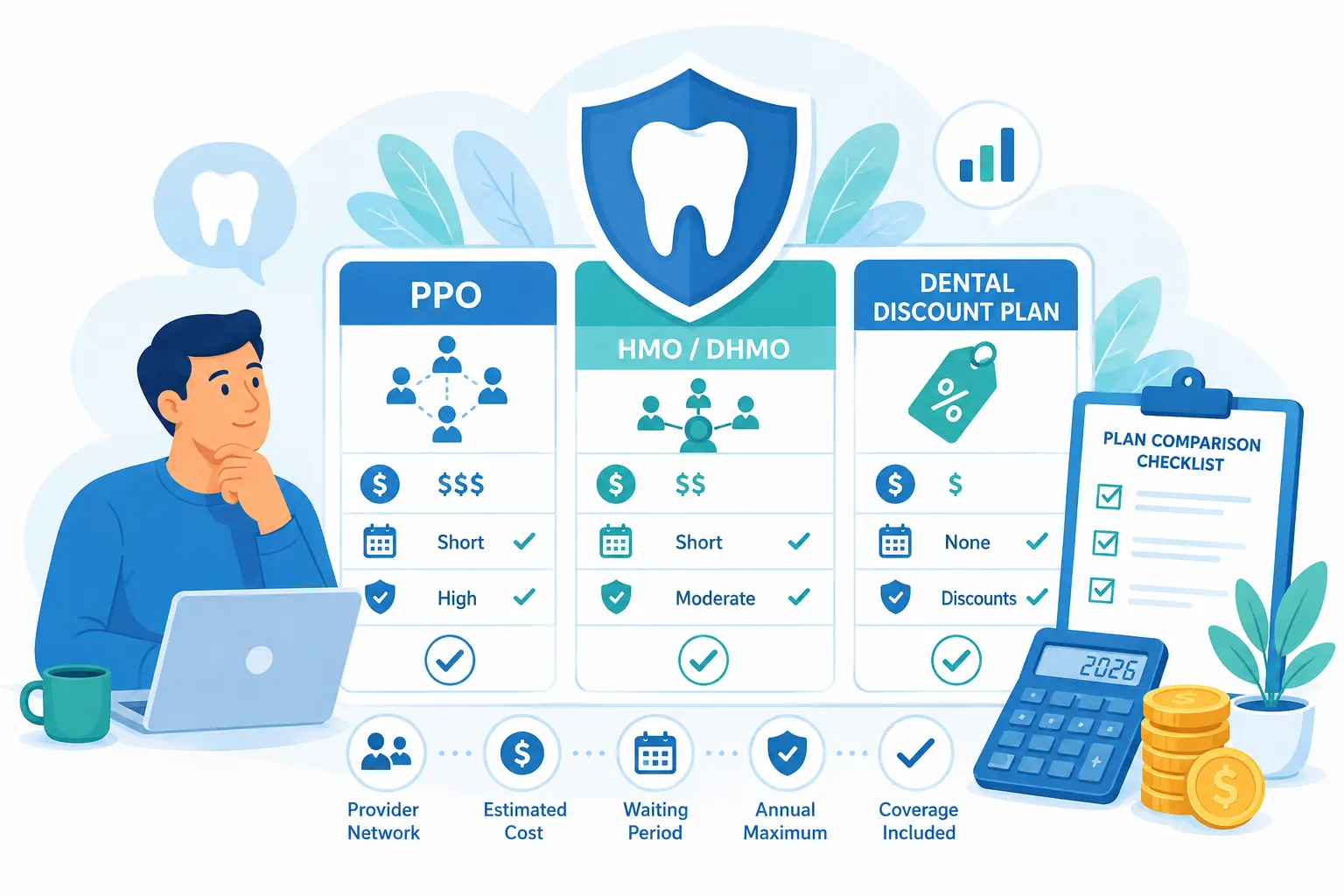
Self-employed buyers should compare PPO, HMO/DHMO, and dental discount plans by provider network, estimated cost, waiting period, annual maximum, and included coverage.
For self-employed adults, most choices fall into three broad buckets: PPO dental plans, HMO or DHMO dental plans, and dental discount plans. Each option can be useful, but each solves a different problem. For a deeper plan-type comparison, read the guide to PPO vs HMO dental insurance.
PPO Dental Plans
PPO dental plans are often the most flexible option. They usually let you visit a broader group of dentists and may still offer some coverage out of network, though staying in network generally costs less. If keeping your current dentist matters, a PPO is often the first place to look.
The trade-off is cost. PPOs generally have higher premiums than HMOs, and you may still face deductibles, coinsurance, and annual maximum limits. They can be a good fit if you want provider choice and expect to use more than preventive care.
HMO or DHMO Dental Plans
HMO or DHMO dental plans usually have lower premiums and can be attractive if your main goal is budget control. These plans often require you to use in-network providers and choose from a more limited dentist panel. Out-of-network care may not be covered at all except in rare situations.
That narrower network is the main trade-off. If there are several participating dentists near you and you are comfortable staying in network, an HMO or DHMO may deliver good value. If provider choice is important or you live in an area with fewer network dentists, the lower premium may not be worth the restriction.
Dental Discount Plans
A dental discount plan is not insurance, but it can still be worth considering. You pay a membership fee and get reduced rates from participating dentists. There are typically no deductibles, no annual maximums, and no waiting periods. If you are unsure how this differs from insurance, compare dental insurance vs. dental discount plans before choosing.
This can work well if you need treatment soon and do not want to wait for insurance benefits to start. The downside is that you are still paying the negotiated rate yourself. For larger procedures, that may still be a significant bill.
Quick Comparison
| Option | Best for | Main trade-off |
| PPO dental plan | Self-employed buyers who want more dentist flexibility | Usually higher premiums and more cost-sharing |
| HMO or DHMO dental plan | Budget-focused buyers comfortable with a smaller network | Less flexibility and limited out-of-network coverage |
| Dental discount plan | People who want reduced rates without insurance waiting periods | Not insurance; you still pay the discounted fee yourself |
How Much Does Dental Insurance Cost for Self-Employed People?
Dental insurance costs vary by location, age, carrier, plan type, coverage level, and whether you are buying individual or family coverage. Many individual dental plans fall into a modest monthly premium range, but the real cost depends on more than the premium. For more context, compare this article with the guide to average dental insurance cost.
Instead of relying only on a national average, compare the total yearly cost. Multiply the monthly premium by 12, then add the deductible and your likely share of treatment costs. This is more useful than comparing premium alone.
| Plan type | Possible monthly cost range | What to check | Best fit |
| Preventive-focused plan | $20-$35 | Cleanings, exams, X-rays, network | Healthy adults mainly needing routine care |
| Balanced individual plan | $30-$50 | Basic care coverage, deductible, annual maximum | Buyers expecting cleanings plus some fillings |
| Richer PPO-style plan | $40-$70+ | Major-service coverage, network, waiting periods | Buyers wanting more flexibility or expecting larger work |
| Dental discount plan | Membership fee varies | Participating dentists and fee schedule | Buyers wanting reduced rates without insurance claims |
The Plan Details That Matter Most
Waiting Periods
If you need dental work soon, waiting periods should be near the top of your checklist. Many plans cover preventive services right away but make you wait several months for basic services and up to a year for major work. If you already know you need a crown, this detail may decide the whole purchase. If timing is your main concern, compare this with the guide to the best dental insurance with no waiting period.
Annual Maximums
Most dental insurance plans have an annual maximum, which is the most the plan will pay in a benefit year. A plan with a low monthly premium but a $1,000 or $1,500 maximum may be fine for routine care. It may be much less helpful if you need multiple procedures.
Deductibles and Coinsurance
Some plans ask you to meet a deductible before they pay for non-preventive care. After that, you may still share costs through coinsurance. For example, the plan may pay 80 percent for basic care and 50 percent for major services. That sounds simple, but the remaining share can add up quickly.
Network Size
A broad network matters if you travel, split time between locations, or want more provider choice. A smaller network can be fine if a trusted dentist nearby already participates. Either way, network access should be checked early, not after you enroll.
Are Dental Insurance Premiums Tax Deductible for Self-Employed Workers?
Dental insurance premiums may be deductible for self-employed workers who qualify for the self-employed health insurance deduction. IRS guidance explains that this deduction can include medical, dental, and vision insurance for yourself, your spouse, and your dependents.
However, eligibility depends on your tax situation. For example, you generally need self-employment income, and you may not qualify for months when you were eligible for certain employer-subsidized coverage. Because tax rules can change, it is smart to confirm the details with a tax professional or current IRS guidance before relying on the deduction.
How Self-Employed Buyers Should Compare Value
The best dental insurance for self-employed shoppers is often the plan that performs well in real use, not the one with the lowest sticker price. A good comparison looks at total expected cost over a year.
Say one plan costs less each month but has a long waiting period and a low annual maximum. Another costs more but includes better coverage for fillings and crowns with a larger network. If you only need cleanings, the cheaper plan may win. If you need a filling, periodontal maintenance, and one crown, the more expensive plan may actually leave you spending less overall.
It also helps to think about whether you want coverage mainly for prevention or protection against bigger bills. Dental insurance is not always built like major medical insurance. Many plans are strongest on preventive care and only moderately helpful for expensive work, especially in the first year. If you are still deciding whether coverage makes financial sense, read is dental insurance worth it.
Common Mistakes to Avoid
Buying Based Only on Premium
A low premium can be useful, but it does not tell you whether the plan has a narrow network, a low annual maximum, or long waiting periods.
Assuming Your Dentist Takes the Plan
Always check the provider directory and confirm with the office before you enroll. A plan is less valuable if your preferred dentist is out of network.
Expecting Immediate Help With Major Work
If you enroll after a dentist recommends a crown or root canal, the plan may not help right away. Waiting periods can delay benefits for basic or major services.
Overbuying Coverage You Will Not Use
If your dental history is light and you mainly need cleanings, a richer plan may not return enough value to justify the extra premium.
Underbuying When You Have Real Dental Risk
If you have a history of restorative work, gum issues, or older dental work that may fail, a very low-limit plan can leave you exposed.
A Practical Way to Choose
If you are narrowing down options, keep the process simple. First, decide whether dentist flexibility or lower premium matters more. Second, estimate whether your next year is likely to involve only preventive care, some basic care, or major treatment. Third, compare waiting periods, annual maximums, and network access before looking at extra features.
From there, ask one final question: if you had an unexpected filling, crown, or gum treatment during a slow income month, would this plan help enough to justify what you pay for it? That question tends to cut through a lot of insurance language.
DentalCoverageGuide.com is built around that kind of comparison because independent buyers need clarity more than sales talk. If you are buying for more than one person, also review the guide to dental insurance for families, because family deductibles, pediatric needs, and multiple provider preferences can change the math.
The right plan is rarely the flashiest one. It is the one you can afford to keep, understand well enough to use, and rely on when your teeth decide your schedule for you. As plan designs and buyer behavior change, it can also help to watch broader dental insurance trends 2026 before updating older content or choosing new coverage.
Frequently Asked Questions About Dental Insurance for Self-Employed People
Can I get dental insurance if I am self-employed?
Yes. Self-employed people can buy individual or family dental insurance directly from an insurance carrier, marketplace, broker, or comparison platform. You do not need an employer to purchase dental coverage.
What type of dental insurance is best for freelancers?
The best type depends on your needs. A PPO may be best if you want provider flexibility. An HMO or DHMO may be better if you want lower monthly costs. A dental discount plan may work if you want reduced rates and do not need traditional insurance claims.
How much does dental insurance cost for self-employed adults?
Costs vary by state, age, carrier, and plan design. Many individual plans fall somewhere around $20 to $60 or more per month, but the real cost depends on premiums, deductibles, coinsurance, annual maximums, and the care you expect to use.
Is dental insurance worth it if you are self-employed?
Dental insurance can be worth it if it helps cover the care you are likely to use and gives you access to dentists you can realistically visit. It may be less valuable if the premium is high, the network is weak, or the plan delays the services you need most.
Do self-employed dental plans cover crowns or implants?
Some plans cover crowns and other major services, but coverage is often partial and may be subject to waiting periods and annual maximums. Implant coverage varies widely. Always check the plan documents before assuming implants are covered.
Can self-employed workers deduct dental insurance premiums?
Self-employed workers may be able to deduct qualifying dental insurance premiums if they meet IRS rules for the self-employed health insurance deduction. Eligibility depends on income, plan availability, and other tax factors.