

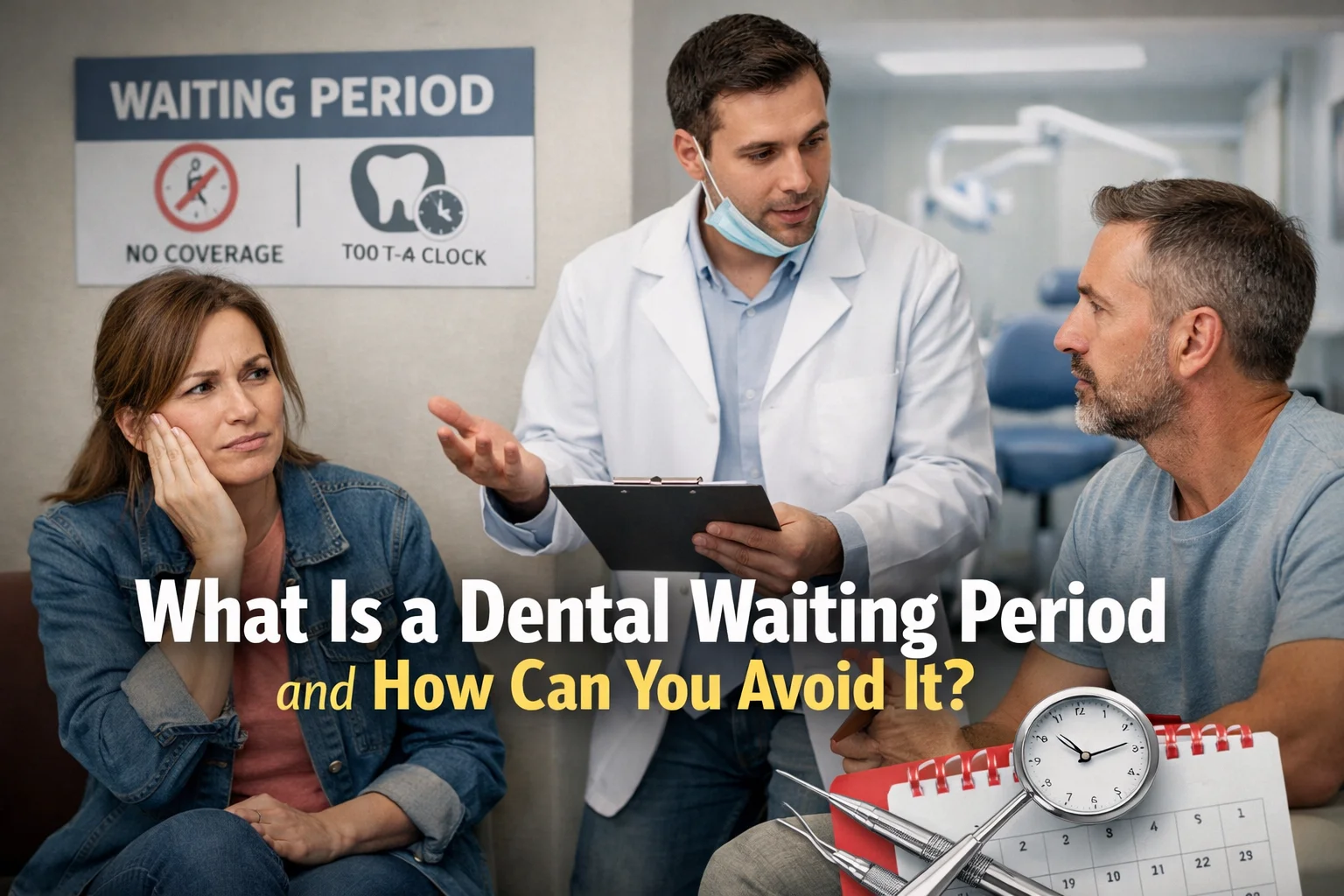
If you’re shopping for dental insurance as a self-employed individual, you’ve likely come across the term dental waiting period. For many people, this is one of the most frustrating aspects of dental insurance — especially when immediate treatment is needed.
Dental waiting periods can delay coverage for certain procedures, but they don’t apply to all services or all plans. In this guide, we explain what a dental waiting period is, why it exists, and what options may help reduce or avoid it.
What Is a Dental Waiting Period?
Insurance providers use waiting periods to prevent individuals from enrolling only when they need expensive treatment and then canceling coverage.
Waiting periods help insurers:
While waiting periods can be inconvenient, they are common in many individual dental plans
Which Dental Services Usually Have Waiting Periods?
Waiting periods do not apply to all services. Coverage typically works like this:
Preventive Care
Cleanings, exams, and X-rays are often covered immediately.
Basic Services
Fillings and simple extractions may have short waiting periods or none at all.
Major Services
Crowns, root canals, bridges, and implants usually have waiting periods of 6 to 12 months.
Coverage details depend on the plan and provider.
How Long Are Dental Waiting Periods?
Typical waiting periods include:
Some plans may vary, so reviewing policy details is essential before enrolling.
Can You Avoid Dental Waiting Periods?
While waiting periods are common, there are a few situations where they may be reduced or avoided:
Are Dental Waiting Periods Worth It?
For self-employed individuals planning long-term dental care, waiting periods may be acceptable. Insurance can still provide value for preventive care and future procedures once waiting periods end.
However, if immediate treatment is needed, alternatives such as discount plans or out-of-pocket payment may be more practical.
Dental Waiting Periods vs Immediate Coverage Options
Comparing options can help you decide:
Choosing the right approach depends on urgency, budget, and dental needs.
👉 Compare dental insurance options for self-employed professionals
How to Choose Between HMO and PPO
FAQs About Dental Waiting Periods
Final Thoughts
Dental waiting periods are a common part of dental insurance, especially for major procedures. Understanding how they work helps self-employed individuals plan ahead and choose coverage that aligns with their dental needs and timeline.
👉 Explore dental insurance plans designed for self-employed professionals
This article is for informational purposes only and does not constitute professional insurance or financial advice. Coverage and costs vary by provider and location.