
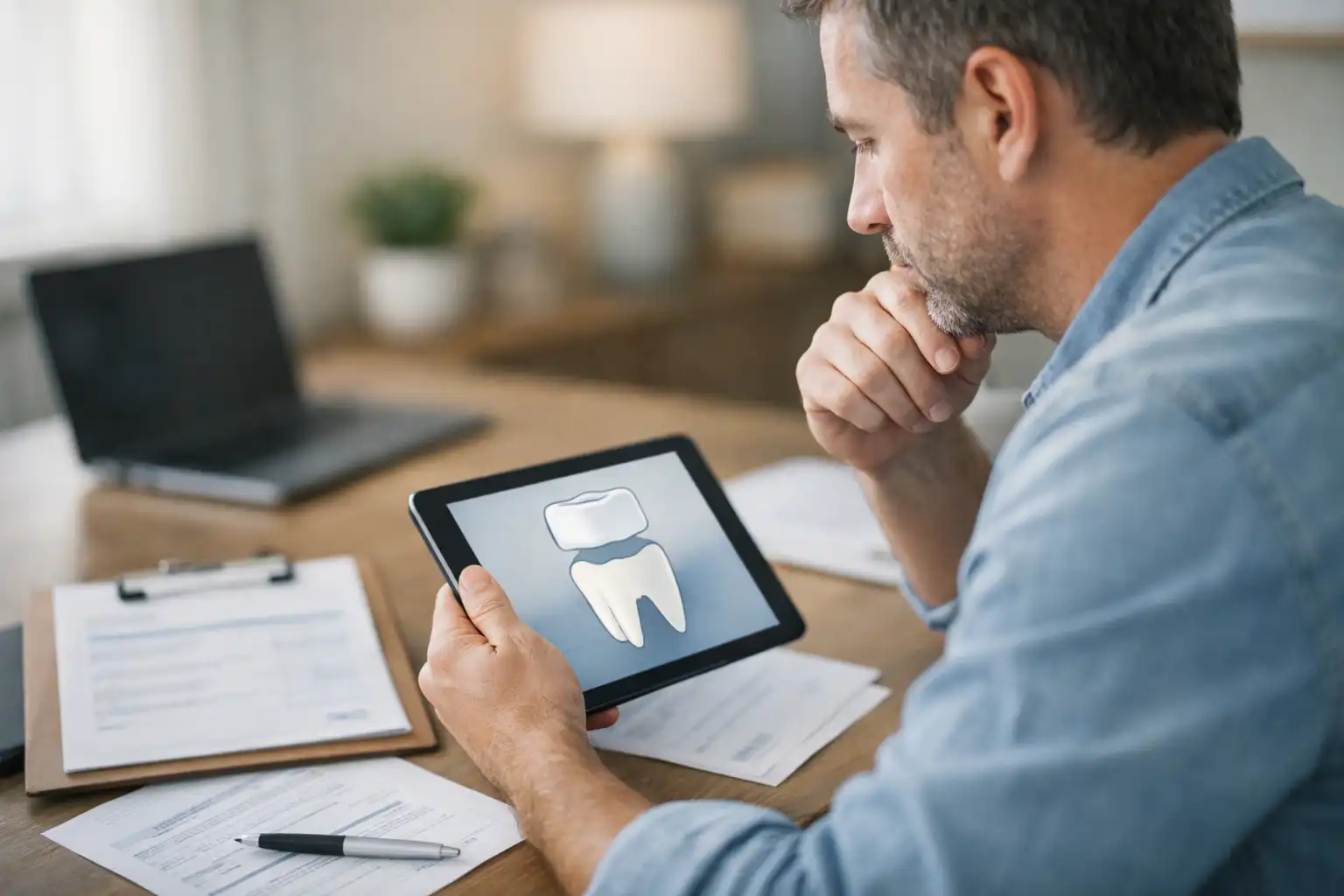
Dental crowns are one of the most common restorative procedures used to repair damaged or weakened teeth. Because crowns can be expensive, many people wonder whether dental insurance helps cover the cost.
Coverage for dental crowns varies depending on the type of dental plan, waiting periods, and annual benefit limits. In this guide, we explain how dental insurance typically covers crowns and what self-employed individuals should consider before choosing a plan.
Does Dental Insurance Cover Crowns?
Dental insurance typically covers crowns as a major procedure, but coverage is usually partial. Most plans pay around 40%–60% of the cost after deductibles and waiting periods, up to the annual maximum benefit.
When Are Dental Crowns Covered by Insurance?
Dental crowns are generally covered when they are considered medically necessary. Common situations include:
After a root canal procedure
How Much Does Insurance Pay for a Crown?
Coverage depends on your plan, but typical structures include:
Most plans also require:
Are There Waiting Periods for Crowns?
Yes, many dental insurance plans apply waiting periods before covering major procedures like crowns.
Waiting periods typically range from:
Self-employed individuals purchasing individual plans should carefully review waiting period terms.
Related:
Do All Plan Types Cover Crowns?
Coverage varies by plan type:
PPO Plans
More likely to cover crowns with partial reimbursement and broader provider flexibility.
HMO Plans
May offer limited or fixed copayment structures for crowns.
How Much Does a Crown Cost Without Insurance?
Without insurance, dental crowns may cost several hundred to over a thousand dollars per tooth, depending on material and location.
Insurance can reduce out-of-pocket costs, but coverage is rarely full.
Is Dental Insurance Worth It for Crowns?
Dental insurance may be worth considering if:
However, waiting periods and annual maximum limits may affect how much you actually save.
FAQs About Crowns and Insurance
Final Thoughts
Dental insurance usually provides partial coverage for crowns, but deductibles, waiting periods, and annual maximums can limit how much is paid. Reviewing plan details is essential before enrolling.
For self-employed individuals, comparing plan types and understanding cost structures can help manage dental expenses more effectively.
👉 Compare dental insurance plans designed for self-employed professionals
This article is for informational purposes only and does not constitute professional dental, insurance, or financial advice. Coverage and costs vary by provider and location.