

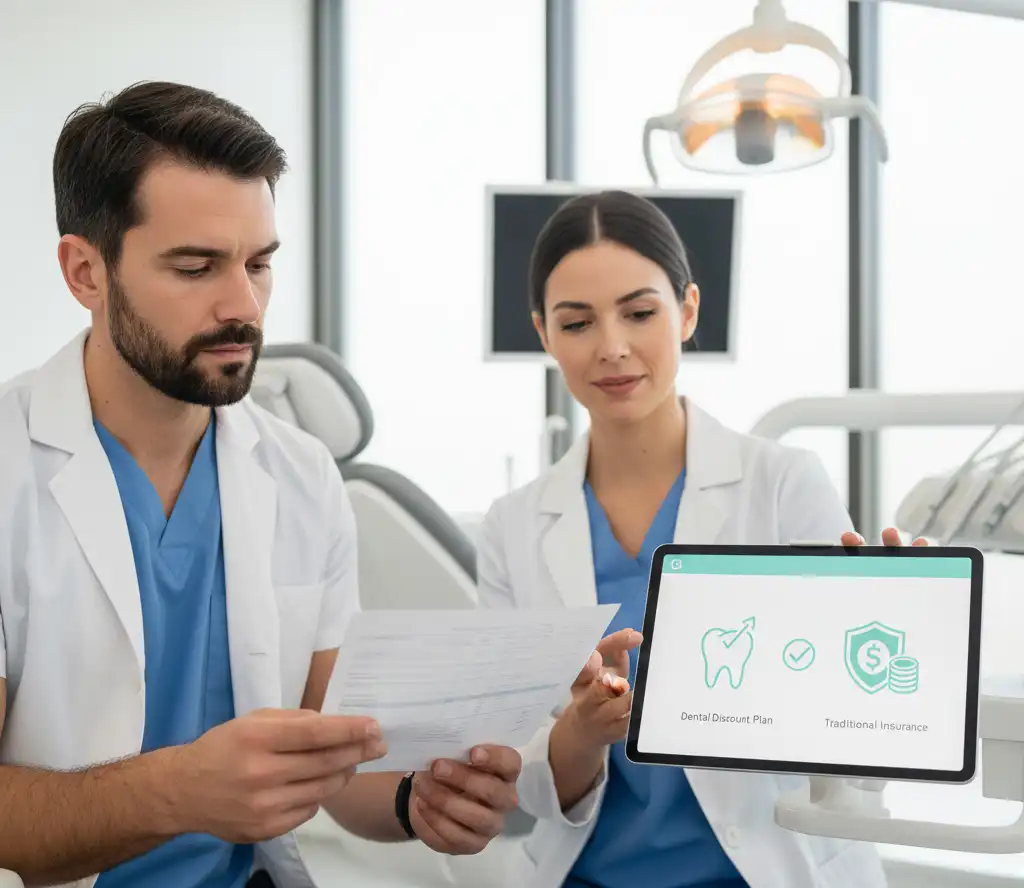
Dental care can be expensive, especially for self-employed individuals who pay out of pocket for coverage. When comparing options, many people wonder whether dental discount plans or traditional dental insurance offers better savings.
Both options aim to reduce dental costs, but they work very differently. Understanding how each option functions — and when one may save more than the other — can help you make a smarter decision based on your dental needs and budget.
Dental Discount Plans vs Insurance: Which Saves More?
Dental discount plans may save more for individuals with minimal dental needs or those seeking immediate discounts, while dental insurance may offer greater long-term value for people who want predictable costs and partial coverage for major procedures.
What Is a Dental Discount Plan?
A dental discount plan is a membership program that provides reduced prices for dental services at participating providers. It is not insurance and does not pay claims.
Key features of dental discount plans:
Savings depend on provider participation and negotiated rates.
What Is Traditional Dental Insurance?
Dental insurance provides coverage for dental services based on policy terms. Members pay monthly premiums and receive partial reimbursement or coverage for eligible procedures.
Key features of dental insurance:
Insurance helps manage costs over time rather than providing immediate discounts.
Insurance helps manage costs over time rather than providing immediate discounts.
Dental Discount Plans
Dental Insurance
Which Option Saves More for Routine Dental Care?
For routine services like cleanings and exams:
Savings depend on plan terms and how often services are used.
Which Option Saves More for Major Dental Work?
For major procedures such as crowns or root canals:
Insurance may save more over time for individuals planning major dental treatment.
Pros and Cons of Dental Discount Plans
Pros
Cons
Pros and Cons of Dental Insurance
Pros
Cons
Which Is Better for Self-Employed Individuals?
The better option depends on your situation:
Some self-employed individuals combine insurance with savings to manage costs effectively.
👉 Explore dental insurance options for self-employed professionals
FAQs About Dental Waiting Periods
Final Thoughts
Dental discount plans and dental insurance serve different purposes. Discount plans may offer quick savings, while insurance provides longer-term financial protection. Choosing the right option depends on dental needs, budget, and treatment plans.
👉 Compare dental insurance plans designed for self-employed individuals
This article is for informational purposes only and does not constitute professional insurance or financial advice. Coverage, pricing, and availability vary by provider and location.