
If you’ve ever looked at a dental plan and thought, “Why is this so much harder than just booking a cleaning?” you’re not alone. For people buying coverage on their own, understanding how does dental insurance work is often the first hurdle – and it matters because the wrong plan can leave you paying more than expected when you actually need care.
Dental insurance is not designed like most medical insurance. In many cases, it works less like protection from catastrophic bills and more like a cost-sharing benefit for routine care, plus partial help for bigger procedures. That difference catches a lot of people off guard. A plan may cover preventive visits well, help somewhat with fillings, and still leave you with a significant bill for crowns, root canals, or orthodontics.
How does dental insurance work in practice?
At the simplest level, you pay a monthly premium to keep the plan active. In return, the plan helps pay for certain dental services, usually based on the type of procedure, whether the dentist is in-network, and whether you’ve met any deductible or waiting period.
Most plans group services into categories. Preventive care usually includes exams, cleanings, and X-rays. Basic services often include fillings and simple extractions. Major services may include crowns, bridges, dentures, and root canals, depending on the plan. The plan pays a different share for each category, and your share changes accordingly.
For example, a plan might cover preventive care at 100%, basic care at 80%, and major care at 50%. That sounds straightforward, but the fine print matters. The insurer may only pay those percentages after your deductible. It may also base payment on negotiated in-network rates rather than whatever your dentist charges.
That means “50% coverage for a crown” does not automatically mean the plan pays half of your final bill. It means the plan may pay half of its allowed amount, and you pay the rest. If you go out of network, your share can be even higher.
The main parts of a dental plan
When you’re comparing plans, a few terms do most of the heavy lifting.
The premium is your monthly cost to keep the policy. A lower premium can look attractive, but it often comes with higher out-of-pocket costs later or more limited coverage.
The deductible is the amount you pay before the plan starts sharing costs for certain services. Some plans waive the deductible for preventive care, which is helpful if your main goal is to keep up with cleanings and exams.
Coinsurance is your share of the bill after the plan pays its portion. If basic services are covered at 80%, your coinsurance is 20%.
The annual maximum is one of the biggest differences between dental and medical insurance. Many dental plans cap what they will pay each year, often at a relatively modest amount. Once you hit that limit, you pay the rest yourself. This is a major reason people are surprised by costs for extensive dental work.
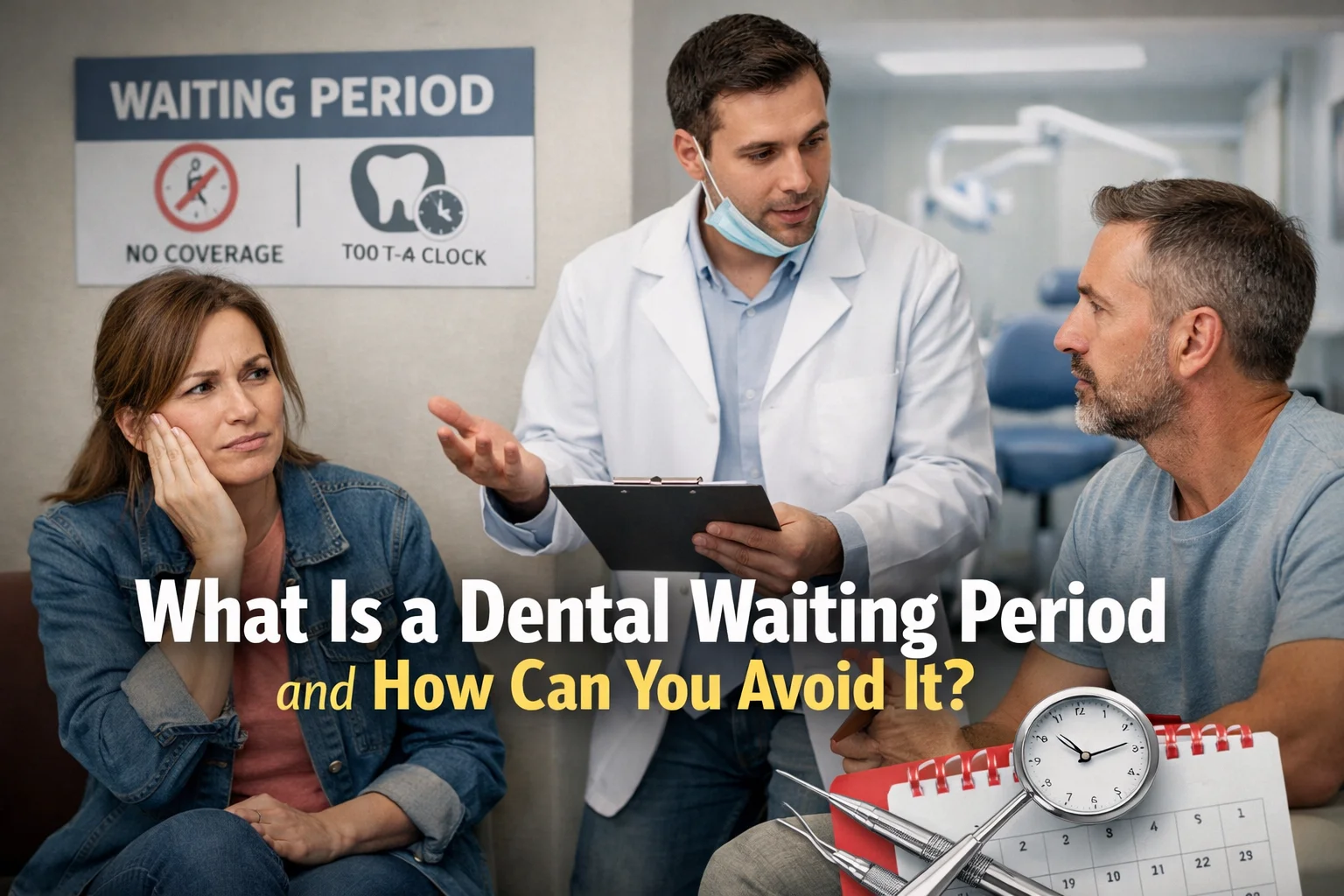
Some plans also include waiting periods. That means certain services are not covered right away. Preventive care may start immediately, while basic or major services might require you to wait several months or longer.
What dental insurance usually covers
Preventive care is typically where dental insurance is strongest. Many plans cover two cleanings per year, periodic exams, and standard X-rays at a high level, sometimes even at no additional cost beyond the premium if you use an in-network provider.
Basic restorative care often gets moderate coverage. Fillings are a common example. Depending on the plan, you might pay a deductible first and then a percentage of the remaining cost.
Major care is where consumers need to slow down and read carefully. Crowns, bridges, dentures, implants, and root canals may be covered, but often at lower percentages, with waiting periods, annual maximum limits, or exclusions. Implants in particular are not covered consistently across plans.
Orthodontic coverage is even more variable. Some plans offer no orthodontic benefits at all, while others cover part of the cost for children and, less often, adults. Lifetime maximums are common.
Plan types change how you use coverage
Not all dental plans work the same way. PPOs, DHMOs, and dental discount plans each handle costs and provider access differently.
A PPO usually gives you a network of dentists and some flexibility to go outside that network. You will generally save more by staying in-network because contracted rates are lower and the plan pays based on those agreements. For independent buyers who want choice, PPOs are often the easiest format to understand and use, though premiums can be higher.
A DHMO, sometimes called a prepaid plan, usually requires you to choose a primary dentist in the network and use that network for coverage to apply. These plans may have lower premiums and little or no deductible, but they often trade flexibility for lower upfront cost. If your priority is budget control and you’re comfortable with a narrower network, a DHMO may work well.
A discount dental plan is not insurance, but people often compare it alongside insurance because it can reduce treatment costs. You pay a membership fee and get access to discounted rates from participating dentists. There are no insurance claims in the traditional sense, no annual maximums, and often no waiting periods. The trade-off is that you are still paying the dentist directly, just at a negotiated lower price.
Why your actual bill may be different than expected
This is where most frustration happens. A consumer sees “covered” on a plan summary, schedules treatment, and then gets a bill that feels too high.
Part of the issue is that coverage percentages do not tell the whole story. The allowed amount may be lower than the dentist’s standard fee. The deductible may still apply. The annual maximum may already be partly used up by other visits. Some procedures have frequency limits or replacement rules, such as only covering a crown replacement after a set number of years.
Network status matters too. In-network dentists agree to contracted rates, which can lower your total cost. Out-of-network care may still be covered under some PPO plans, but reimbursement may be lower, and balance billing can increase what you owe.
Pre-treatment estimates can help. For larger procedures, your dentist can often submit a proposed treatment plan to the insurer in advance. That won’t eliminate every surprise, but it gives you a better sense of what the plan is likely to pay.
How to choose the right plan for your situation
The best plan depends on what kind of care you expect to use, how much provider flexibility you want, and how steady your budget needs to be.
If you mostly want checkups, cleanings, and basic peace of mind, a lower-cost plan with good preventive coverage may be enough. If you know you may need restorative work soon, the cheapest premium may not be the cheapest overall option. In that case, look closely at waiting periods, major service coverage, annual maximums, and whether your preferred dentist is in-network.
Families should also check whether the plan handles pediatric care differently, and whether orthodontic benefits are included if braces may be a possibility. Self-employed buyers often do best when they think in yearly totals rather than monthly premiums alone. A plan that costs a little more each month may save more if it gives stronger coverage for the services you actually need.
For readers using resources like DentalCoverageGuide.com, the most useful mindset is to compare plans as cost structures, not just price tags. You’re not simply buying a premium amount. You’re choosing how costs are split between you and the plan when real dental work comes up.
A simple way to read a dental plan before you buy
Start with the provider network. If your dentist isn’t included and you want to keep seeing them, that can change the value of the plan immediately.
Then check the deductible, coverage percentages, and annual maximum. After that, look for waiting periods and exclusions, especially for crowns, root canals, dentures, implants, and orthodontics. Finally, read any limitations on how often services are covered.
This takes a little time, but it is usually the difference between feeling prepared and feeling blindsided.
Dental insurance works best when you know what it is trying to do – support routine care, reduce part of the cost of bigger services, and do it within clearly defined limits. Once you see those limits clearly, it becomes much easier to choose coverage that fits your budget and your dental needs.